Advanced Search
Search across all country profiles and data fields
Found 100 results for "monarchy"
Background
<p>During the late 18th and early 19th centuries, the principality of Gorkha united many of the other principalities and states of the sub-Himalayan region into a Nepali Kingdom. Nepal retained its independence after the Anglo-Nepalese War of 1814-16, and the subsequent peace treaty laid the foundations for two centuries of amicable relations between Britain and Nepal. In 1951, the Nepali monarch ...
Background
Established in the 1600s, the Burundi Kingdom has had borders similar to those of modern Burundi since the 1800s. Burundi’s two major ethnic groups, the majority Hutu and minority Tutsi, share a common language and culture and largely lived in peaceful cohabitation under Tutsi monarchs in pre-colonial Burundi. Regional, class, and clan distinctions contributed to social status in the Burundi Kingd...
Government type
ecclesiastical elective monarchy; self-described as an "absolute monarchy"
Background
<p>In 788, about a century after the Arab conquest of North Africa, a series of Muslim dynasties began to rule in Morocco. In the 16th century, the Sa'adi monarchy, particularly under Ahmad al-MANSUR (1578-1603), repelled foreign invaders and inaugurated a golden age. The Alaouite Dynasty, to which the current Moroccan royal family belongs, dates from the 17th century. In 1860, Spain occupied nort...
Military - note
the missions of the Royal Thai Armed Forces (RTARF) include defending the country’s territory and sovereignty, protecting the monarchy, ensuring internal security, and responding to natural disasters; key areas of emphasis are disputed international borders and a low-level insurgency in the country's south; the military has historically had a large role in domestic politics and has attempted as ma...
Executive branch › Election/appointment process
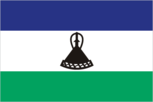
the monarchy is hereditary but has no executive or legislative powers under the constitution; under traditional law, the College of Chiefs has the power to depose the monarch, determine next in line of succession, or serve as regent in the event that a successor is not of mature age
Executive branch › Election/appointment process
the monarchy is hereditary; monarch appoints the prime minister from the majority party following legislative elections

Executive branch › Election/appointment process
none; the monarchy is hereditary; governor appointed by the monarch
Executive branch › Election/appointment process
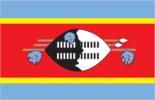
the monarchy is hereditary; prime minister appointed by the monarch from among members of the House of Assembly

Executive branch › Election/appointment process
the monarchy is hereditary; governor general appointed by the monarch on the recommendation of the prime minister; following legislative elections, the leader of the majority party or majority coalition is sworn in as prime minister by the governor general
Background
<p>Tanzania contains some of Africa’s most iconic national parks and famous paleoanthropological sites, and its diverse cultural heritage reflects the multiple ethnolinguistic groups that live in the country. Its long history of integration into trade networks spanning the Indian Ocean and the African interior led to the development of Swahili as a common language in much of east Africa and the in...
Background
A Swazi kingdom was founded in the mid-18th century and ruled by a series of kings, including MSWATI II, a 19th century ruler whose name was adopted for the country and its predominant ethnic group. European countries defined the kingdom’s modern borders during the late-19th century, and Swaziland (as it became known) was administered as a UK high commission territory from 1903 until its independe...
Government type
federal parliamentary democracy under a constitutional monarchy; a Commonwealth realm
Executive branch › Election/appointment process
the monarchy is hereditary; governor general appointed by the monarch on the advice of the National Parliament for up to 5 years (eligible for a second term); following legislative elections, the National Parliament usually elects the leader of the majority party or majority coalition as prime minister; deputy prime minister appointed by the governor general on the advice of the prime minister
Government type
parliamentary democracy under a constitutional monarchy; a Commonwealth realm

Executive branch › Election/appointment process
the monarchy is hereditary; governor general appointed by the monarch on the recommendation of the Australian prime minister; administrator appointed by the governor-general for a 2-year term and represents the monarch and Australia

Executive branch › Election/appointment process
the monarchy is hereditary; UK representative appointed by the monarch; New Zealand high commissioner appointed by the New Zealand Government; following legislative elections, the leader of the majority party or majority coalition usually becomes prime minister
National holiday › note
<strong>note 1:</strong> the local holiday is Internal Autonomy Day, 29 June (1880)<br><br><strong>note 2:</strong> often incorrectly referred to as Bastille Day, France's national celebration commemorates the storming of the Bastille prison on 14 July 1789 and the establishment of a constitutional monarchy; other names for the holiday are <em>la Fête nationale</em> (National Holiday) and <em>le Q...

Executive branch › Election/appointment process
the monarchy is hereditary; governor general appointed by the monarch on the recommendation of the Australian prime minister; administrator appointed by the governor-general of Australia for a 2-year term and represents the monarch and Australia

National holiday › note
<strong>note 1:</strong> the local holiday is New Caledonia Day, 24 September (1853)<br><br><strong>note 2:</strong> often incorrectly referred to as Bastille Day, France's national celebration commemorates the storming of the Bastille prison on 14 July 1789 and the establishment of a constitutional monarchy; other names for the holiday are <em>la Fête nationale</em> (National Holiday) and <em>le ...

Executive branch › Election/appointment process
the monarchy is hereditary; prime minister indirectly elected by the Legislative Assembly for a 3-year term

Executive branch › Election/appointment process
the monarchy is hereditary; governor general appointed by the monarch; administrator appointed by the governor general of Australia for a 2-year term and represents the monarch and Australia

Executive branch › Election/appointment process
the monarchy is hereditary; governor-general appointed by the monarch on the advice of the prime minister; following legislative elections, the governor-general appoints the leader of the majority party or majority coalition as prime minister; deputy prime minister also appointed by the governor-general
Government type
parliamentary democracy under a constitutional monarchy; a Commonwealth realm
Executive branch › Election/appointment process
the monarchy is hereditary; governor and commissioner appointed by the monarch; island mayor directly elected by majority popular vote for a 3-year term

Executive branch › Election/appointment process
the monarchy is hereditary; governor general appointed by the monarch; administrator appointed by the Minister of Foreign Affairs and Trade in New Zealand; head of government chosen from the Council of Faipule to serve a 1-year term

Executive branch › Election/appointment process
the monarchy is hereditary; prime minister and deputy prime minister indirectly elected by the Legislative Assembly and appointed by the monarch

Executive branch › Election/appointment process
the monarchy is hereditary; governor general appointed by the monarch on recommendation of the prime minister and the parliament; prime minister and deputy prime minister elected by and from members of House of Assembly following parliamentary elections
Background
The first humans arrived in Tonga around 1000 B.C. The islands’ politics were highly centralized under the Tu’i Tonga, or Tongan king, by A.D. 950, and by 1200, the Tu’i Tonga had expanded his influence throughout Polynesia and into Melanesia and Micronesia. The Tongan Empire began to decline in the 1300s, with civil wars, a military defeat to Samoa, and internal political strife. By the mid-1500s...
Government type
parliamentary democracy under a constitutional monarchy; a Commonwealth realm
National holiday › note
<strong>note:</strong> often incorrectly referred to as Bastille Day, the celebration commemorates the storming of the Bastille prison on 14 July 1789 and the establishment of a constitutional monarchy; other names for the holiday are <em>la Fête nationale</em> (National Holiday) and <em>le Quatorze Juillet</em> (14th of July)

Background
The first Austronesian settlers arrived in Samoa around 1000 B.C., and early Samoans traded and intermarried with Fijian and Tongan nobility. The fa’amatai system of titles and nobility developed, which dominates Samoan politics to this day; all but two seats in the legislature are reserved for matai, or heads of families. A Dutch explorer was the first European to spot the islands in 1722. Christ...

Executive branch › Election/appointment process
the monarchy is hereditary; governor general appointed by the monarch for a 6-year term; prime minister and deputy prime minister indirectly elected by the Staten for 4-year term
Executive branch › Election/appointment process
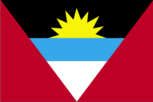
the monarchy is hereditary; governor general appointed by the monarch on the advice of the prime minister; following legislative elections, the governor general usually appoints the leader of the majority party or majority coalition as prime minister
Government type
parliamentary democracy under a constitutional monarchy; a Commonwealth realm

Executive branch › Election/appointment process
the monarchy is hereditary; governor appointed by the monarch; following legislative elections, the governor usually appoints the leader of the majority party or majority coalition as premier
Executive branch › Election/appointment process
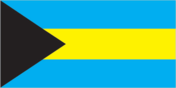
the monarchy is hereditary; governor-general appointed by the monarch on the advice of the prime minister; following legislative elections, the governor-general appoints the leader of the majority party or majority coalition as prime minister; the prime minister recommends the deputy prime minister
Government type
parliamentary democracy under a constitutional monarchy; a Commonwealth realm
Executive branch › Election/appointment process
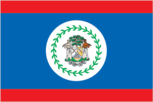
the monarchy is hereditary; governor-general appointed by the monarch; following legislative elections, the leader of the majority party or majority coalition usually appointed prime minister by the governor-general; prime minister recommends the deputy prime minister
Government type
parliamentary democracy (National Assembly) under a constitutional monarchy; a Commonwealth realm

Executive branch › Election/appointment process
the monarchy is hereditary; governor appointed by the monarch; following legislative elections, the governor appoints the leader of the majority party or majority coalition as premier
Executive branch › Election/appointment process
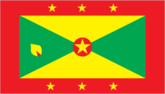
the monarchy is hereditary; governor general appointed by the monarch; following legislative elections, the governor general usually appoints the leader of the majority party or majority coalition as prime minister
Government type
parliamentary democracy under a constitutional monarchy; a Commonwealth realm
Executive branch › Election/appointment process
the monarchy is hereditary; governor general appointed by the monarch on the recommendation of the prime minister; following legislative elections, the governor general appoints the leader of the majority party or majority coalition in the House of Representatives as prime minister
Government type
parliamentary democracy (Parliament) under a constitutional monarchy; a Commonwealth realm

Executive branch › Election/appointment process
the monarchy is hereditary; governor appointed by the monarch; following legislative elections, the leader of the majority party usually becomes premier
Government type
<p>parliamentary democracy under a constitutional monarchy</p>

National holiday › note
<strong>note 1:</strong> local holiday is Schoelcher Day (Slavery Abolition Day) 12 July (1848), as well as St. Martin's Day, 11 November (1985); the latter holiday celebrated on both halves of the island<br><br><strong>note 2:</strong> often incorrectly referred to as Bastille Day, France's national celebration commemorates the storming of the Bastille prison on 14 July 1789 and the establishment...
Executive branch › Election/appointment process
the monarchy is hereditary; governor general appointed by the monarch; following legislative elections, the governor general usually appoints the leader of the majority party or majority coalition as prime minister; deputy prime minister also appointed by governor general
Government type
federal parliamentary democracy under a constitutional monarchy; a Commonwealth realm

Executive branch › Election/appointment process
the monarchy is hereditary; governor general appointed by the monarch; following legislative elections, the governor general usually appoints the leader of the majority party or majority coalition as prime minister; deputy prime minister also appointed by governor general
Government type
parliamentary democracy under a constitutional monarchy; a Commonwealth realm

National holiday › note
<strong>note 1:</strong> local holiday is St. Barthelemy Day, 24 August (1572)<br><br><strong>note 2:</strong> often incorrectly referred to as Bastille Day, France's national celebration commemorates the storming of the Bastille prison on 14 July 1789 and the establishment of a constitutional monarchy; other names for the holiday are <em>la Fête nationale</em> (National Holiday) and <em>le Quator...

Executive branch › Election/appointment process
the monarchy is hereditary; governor general appointed by the monarch; following legislative elections, the governor general usually appoints the leader of the majority party or majority coalition as prime minister; deputy prime minister also appointed by governor general on the advice of the prime minister
Government type
parliamentary democracy under a constitutional monarchy; a Commonwealth realm

Executive branch › Election/appointment process
the monarchy is hereditary; governor appointed by the monarch; following legislative elections, the governor usually appoints the leader of the majority party or majority coalition as premier
Constitution › Amendment process
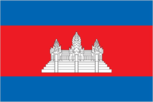
proposed by the monarch, by the prime minister, or by the president of the National Assembly if supported by one fourth of the Assembly membership; passage requires two-thirds majority of the Assembly membership; constitutional articles on the multiparty democratic form of government and the monarchy cannot be amended

Executive branch › Election/appointment process
the monarchy is hereditary; the leader of the majority party or majority coalition in the House of Representatives usually becomes prime minister
Flag
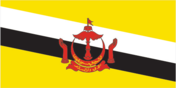
<strong>description:</strong> yellow with a diagonal white band and second below it in black, both starting from the upper left; the national emblem in red is at the center; the state motto, "Always render service with God's guidance," appears in yellow Arabic script on the emblem's crescent; a ribbon below the crescent reads "Brunei, the Abode of Peace"<br><br><strong>meaning:</strong> yellow sym...
Background
Most Cambodians consider themselves to be Khmers, descendants of the Angkor Empire that extended over much of Southeast Asia and reached its zenith between the 10th and 13th centuries. Attacks by the Thai and Cham (from present-day Vietnam) weakened the empire, ushering in a long period of decline. The king placed the country under French protection in 1863, and it became part of French Indochina...
Independence
3 May 1947 (current constitution adopted as amendment to Meiji Constitution); notable earlier dates: 11 February 660 B.C. (mythological date of Emperor JIMMU founding the nation); 29 November 1890 (Meiji Constitution provides for constitutional monarchy)

Background
Modern-day Laos has its roots in the ancient Lao kingdom of Lan Xang, established in the 14th century under King FA NGUM. For 300 years, Lan Xang had influence reaching into present-day Cambodia and Thailand, as well as over all of what is now Laos. After centuries of gradual decline, Laos came under the domination of Siam (Thailand) from the late 18th century until the late 19th century, when it ...
Executive branch › Election/appointment process
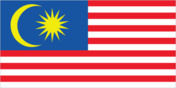
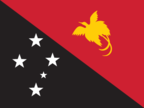
the monarchy is hereditary; governor general nominated by the National Parliament and appointed by the chief of state; following legislative elections, the governor general usually appoints the leader of the majority party or majority coalition as prime minister, pending a National Parliament vote
Government type
parliamentary democracy under a constitutional monarchy; a Commonwealth realm
Executive branch › Election/appointment process
the monarchy is hereditary; prime minister candidate approved by House of Representatives and appointed by the king
Flag
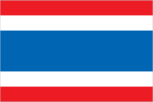
<strong>description: </strong>five horizontal bands of red (top), white, blue (double-width), white, and red<br><br><strong>meaning: </strong>red stands for the nation and the blood of life, white for religion and the purity of Buddhism, and blue for the monarchy
Background
<p>Two unified Thai kingdoms emerged in the mid-13th century. The Sukhothai Kingdom, located in the south-central plains, gained its independence from the Khmer Empire to the east. By the late 13th century, Sukhothai’s territory extended into present-day Burma and Laos. Sukhothai lasted until the mid-15th century. The Thai Lan Na Kingdom was established in the north with its capital at Chang Mai; ...
Background
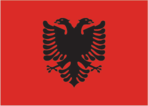
<p>After declaring independence from the Ottoman Empire in 1912, Albania experienced a period of political upheaval that led to a short-lived monarchy, which ended in 1939 when Italy conquered the country. Germany then occupied Albania in 1943, and communist partisans took over the country in 1944. Albania allied itself first with the USSR (until 1960) and then with China (until 1978). In the earl...

Independence
no official date of independence: 976 (Margravate of Austria established); 17 September 1156 (Duchy of Austria founded); 6 January 1453 (Archduchy of Austria acknowledged); 11 August 1804 (Austrian Empire proclaimed); 30 March 1867 (Austro-Hungarian dual monarchy established); 12 November 1918 (First Republic proclaimed); 27 April 1945 (Second Republic proclaimed)

Executive branch › Elections/appointments
the monarchy is hereditary; administrator appointed by the monarch on the advice of the Ministry of Defense

Executive branch › Election/appointment process
the monarchy is hereditary and constitutional; following legislative elections, the monarch usually appoints the leader of the majority party or majority coalition as prime minister, which the legislature approves
Executive branch › Election/appointment process
the monarchy is hereditary; following legislative elections, the monarch usually appoints the leader of the majority party or majority coalition as prime minister
Independence
ca. 965 (unified and Christianized under Harald I GORMSSON); 5 June 1849 (became a parliamentary constitutional monarchy)

Executive branch › Elections/appointments
the monarchy is hereditary; administrator appointed by the monarch on the advice of the Ministry of Defense
Executive branch › Election/appointment process
the monarchy is hereditary; high commissioner appointed by the monarch; following legislative elections, the Parliament usually elects the leader of the majority party or majority coalition as the prime minister

Independence
no official date of independence: 486 (Frankish tribes unified under Merovingian kingship); 10 August 843 (Western Francia established from the division of the Carolingian Empire); 14 July 1789 (French monarchy overthrown); 22 September 1792 (First French Republic established); 4 October 1958 (Fifth French Republic established)
National holiday › note
<strong>note:</strong> often incorrectly referred to as Bastille Day, the celebration commemorates the storming of the Bastille prison on 14 July 1789 and the establishment of a constitutional monarchy; other names for the holiday are <em>la Fête nationale</em> (National Holiday) and <em>le Quatorze Juillet</em> (14th of July)
Executive branch › Election/appointment process
the monarchy is hereditary; governor appointed by the monarch; following legislative elections, the governor usually appoints the leader of the majority party or majority coalition as chief minister
Executive branch › Election/appointment process
the monarchy is hereditary; lieutenant governor and bailiff appointed by the monarch; chief minister, who is the president of the Policy and Resources Committee, indirectly elected by the States of Deliberation for a 4-year term

Background
Greece won independence from the Ottoman Empire in 1830 and became a kingdom. During the second half of the 19th century and the first half of the 20th century, it gradually added neighboring islands and territories, most with Greek-speaking populations. In World War II, Greece was first invaded by Italy (1940) and subsequently occupied by Germany (1941-44); fighting endured in a protracted civil ...
Independence
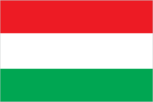
16 November 1918 (republic proclaimed); notable earlier dates: 25 December 1000 (crowning of King STEPHEN I, traditional founding date); 30 March 1867 (Austro-Hungarian dual monarchy established)
Executive branch › Election/appointment process
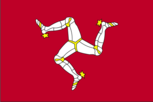
the monarchy is hereditary; lieutenant governor appointed by the monarch; chief minister indirectly elected by the Tynwald for a 5-year term (eligible for second term)

Background
<p>Italy became a nation-state in 1861 when the regional states of the peninsula, along with Sardinia and Sicily, were united under King Victor EMMANUEL II. An era of parliamentary government came to a close in the early 1920s when Benito MUSSOLINI established a Fascist dictatorship. His alliance with Nazi Germany led to Italy's defeat in World War II. A democratic republic replaced the monarchy i...
Executive branch › Election/appointment process
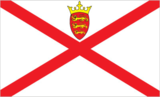
the monarchy is hereditary; Council of Ministers, including the chief minister, indirectly elected by the Assembly of States; lieutenant governor and bailiff appointed by the monarch
Background
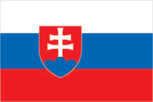
Slovakia traces its roots to the 9th century state of Great Moravia. The Slovaks then became part of the Hungarian Kingdom, where they remained for the next 1,000 years. After the formation of the dual Austro-Hungarian monarchy in 1867, language and education policies favoring the use of Hungarian (known as "Magyarization") led to a public backlash that boosted Slovak nationalism and strengthened ...
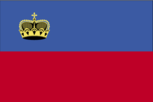
Executive branch › Election/appointment process
the monarchy is hereditary; following legislative elections, the monarch usually appoints the leader of the majority party in Parliament as the head of government, and also appoints the leader of the largest minority party in Parliament as the deputy head of government if there is a coalition government