1996 Edition
CIA World Factbook 1996 (Project Gutenberg)
Introduction
Description
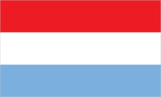
three equal horizontal bands of red (top), white, and light blue; similar to the flag of the Netherlands, which uses a darker blue and is shorter; design was based on the flag of France
Location
49 45 N, 6 10 E -- Western Europe, between France and Germany Flag ----
Geography
Area
- comparative area
- slightly smaller than Rhode Island
- land area
- 2,586 sq km
- total area
- 2,586 sq km
Climate
modified continental with mild winters, cool summers
Coastline
0 km (landlocked)
Environment
- current issues
- deforestation; air and water pollution in urban areas
- international agreements
- party to - Air Pollution, Air Pollution-Nitrogen Oxides, Air Pollution-Sulphur 85, Air Pollution-Volatile Organic Compounds, Biodiversity, Climate Change, Endangered Species, Hazardous Wastes, Marine Dumping, Nuclear Test Ban, Ozone Layer Protection, Ship Pollution, Tropical Timber 83; signed, but not ratified - Air Pollution-Sulphur 94, Desertification, Environmental Modification, Law of the Sea
- natural hazards
- NA
Geographic coordinates
49 45 N, 6 10 E
Geographic note
landlocked
International disputes
none
Irrigated land
NA sq km
Land boundaries
- border countries
- Belgium 148 km, France 73 km, Germany 138 km
- total
- 359 km
Land use
- arable land
- 24%
- forest and woodland
- 21%
- meadows and pastures
- 20%
- other
- 34%
- permanent crops
- 1%
Location
Western Europe, between France and Germany
Map references
Europe
Maritime claims
none (landlocked)
Natural resources
iron ore (no longer exploited)
Terrain
- mostly gently rolling uplands with broad, shallow valleys; uplands to slightly mountainous in the north; steep slope down to Moselle floodplain in the southeast
- highest point
- Burgplatz 559 m
- lowest point
- Moselle River 133 m
People and Society
Age structure
0-14 years: 18% (male 39,199; female 37,239) 15-64 years: 68% (male 142,394; female 138,349) 65 years and over: 14% (male 23,118; female 35,571) (July 1996 est.)
Birth rate
13.14 births/1,000 population (1996 est.)
Death rate
8.32 deaths/1,000 population (1996 est.)
Ethnic divisions
Celtic base (with French and German blend), Portuguese, Italian, and European (guest and worker residents)
Infant mortality rate
4.7 deaths/1,000 live births (1996 est.)
Languages
Luxembourgisch, German, French, English
Life expectancy at birth
- female
- 81.56 years (1996 est.)
- male
- 75.24 years
- total population
- 78.26 years
Literacy
- age 15 and over can read and write (1980 est.)
- female
- 100%
- male
- 100%
- total population
- 100%
Nationality
- adjective
- Luxembourg
- noun
- Luxembourger(s)
Net migration rate
10.93 migrant(s)/1,000 population (1996 est.)
Population
415,870 (July 1996 est.)
Population growth rate
1.57% (1996 est.)
Religions
Roman Catholic 97%, Protestant and Jewish 3%
Sex ratio
- all ages
- 0.97 male(s)/female (1996 est.)
- at birth
- 1.09 male(s)/female
- under 15 years
- 1.05 male(s)/female 15-64 years: 1.03 male(s)/female 65 years and over: 0.65 male(s)/female
Total fertility rate
1.76 children born/woman (1996 est.)
Government
Administrative divisions
3 districts; Diekirch, Grevenmacher,
Capital
Luxembourg
Data code
LU
Name of country
- conventional long form
- Grand Duchy of Luxembourg
- conventional short form
- Luxembourg
- local long form
- Grand-Duche de Luxembourg
- local short form
- Luxembourg
Type of government
constitutional monarchy