2011 Edition
CIA World Factbook 2011 Archive (HTML)
Introduction
Background
A former British colony, Cyprus became independent in 1960 following years of resistance to British rule. Tensions between the Greek Cypriot majority and Turkish Cypriot minority came to a head in December 1963, when violence broke out in the capital of Nicosia. Despite the deployment of UN peacekeepers in 1964, sporadic intercommunal violence continued forcing most Turkish Cypriots into enclaves throughout the island. In 1974, a Greek Government-sponsored attempt to seize control of Cyprus was met by military intervention from Turkey, which soon controlled more than a third of the island. In 1983, the Turkish Cypriot-occupied area declared itself the "Turkish Republic of Northern Cyprus" ("TRNC"), but it is recognized only by Turkey. The election of a new Cypriot president in 2008 served as the impetus for the UN to encourage both the Greek Cypriot and Turkish Cypriot communities to reopen unification negotiations. In September 2008, the leaders of the two communities began negotiations under UN auspices aimed at reuniting the divided island; the talks remain ongoing. The entire island entered the EU on 1 May 2004, although the EU acquis - the body of common rights and obligations - applies only to the areas under the internationally recognized government, and is suspended in the areas administered by Turkish Cypriots. However, individual Turkish Cypriots able to document their eligibility for Republic of Cyprus citizenship legally enjoy the same rights accorded to other citizens of European Union states.
Geography
Area
- 9,251 sq km (of which 3,355 sq km are in north Cyprus) 9,241 sq km 10 sq km
- total
- 9,251 sq km (of which 3,355 sq km are in north Cyprus)
- water
- 10 sq km
Area - comparative
about 0.6 times the size of Connecticut
Climate
temperate; Mediterranean with hot, dry summers and cool winters
Coastline
648 km
Elevation extremes
- Mediterranean Sea 0 m Mount Olympus 1,951 m
- highest point
- Mount Olympus 1,951 m
- lowest point
- Mediterranean Sea 0 m
Environment - current issues
water resource problems (no natural reservoir catchments, seasonal disparity in rainfall, sea water intrusion to island's largest aquifer, increased salination in the north); water pollution from sewage and industrial wastes; coastal degradation; loss of wildlife habitats from urbanization
Environment - international agreements
- Air Pollution, Air Pollution-Nitrogen Oxides, Air Pollution-Persistent Organic Pollutants, Air Pollution-Sulfur 94, Biodiversity, Climate Change, Climate Change-Kyoto Protocol, Desertification, Endangered Species, Environmental Modification, Hazardous Wastes, Law of the Sea, Marine Dumping, Ozone Layer Protection, Ship Pollution, Wetlands none of the selected agreements
- party to
- Air Pollution, Air Pollution-Nitrogen Oxides, Air Pollution-Persistent Organic Pollutants, Air Pollution-Sulfur 94, Biodiversity, Climate Change, Climate Change-Kyoto Protocol, Desertification, Endangered Species, Environmental Modification, Hazardous Wastes, Law of the Sea, Marine Dumping, Ozone Layer Protection, Ship Pollution, Wetlands
- signed, but not ratified
- none of the selected agreements
Freshwater withdrawal (domestic/industrial/agricultural)
- 0.21 cu km/yr (27%/1%/71%) 250 cu m/yr (2000)
- per capita
- 250 cu m/yr (2000)
- total
- 0.21 cu km/yr (27%/1%/71%)
Geographic coordinates
35 00 N, 33 00 E
Geography - note
the third largest island in the Mediterranean Sea (after Sicily and Sardinia)
Irrigated land
460 sq km (2008)
Land boundaries
- 150.4 km (approximately) Akrotiri 47.4 km, Dhekelia 103 km (approximately)
- border sovereign base areas
- Akrotiri 47.4 km, Dhekelia 103 km (approximately)
- total
- 150.4 km (approximately)
Land use
- 10.81% 4.32% 84.87% (2005)
- arable land
- 10.81%
- other
- 84.87% (2005)
- permanent crops
- 4.32%
Location
Middle East, island in the Mediterranean Sea, south of Turkey
Map references
Europe
Maritime claims
- 12 nm 24 nm 200 m depth or to the depth of exploitation
- contiguous zone
- 24 nm
- continental shelf
- 200 m depth or to the depth of exploitation
- territorial sea
- 12 nm
Natural hazards
moderate earthquake activity; droughts
Natural resources
copper, pyrites, asbestos, gypsum, timber, salt, marble, clay earth pigment
Terrain
central plain with mountains to north and south; scattered but significant plains along southern coast
Total renewable water resources
0.4 cu km (2005)
People and Society
Age structure
- 16.2% (male 93,280/female 88,022) 73.4% (male 427,752/female 394,578) 10.4% (male 50,761/female 66,096) (2011 est.)
- 0-14 years
- 16.2% (male 93,280/female 88,022)
- 15-64 years
- 73.4% (male 427,752/female 394,578)
- 65 years and over
- 10.4% (male 50,761/female 66,096) (2011 est.)
Birth rate
11.41 births/1,000 population (2011 est.)
Death rate
6.45 deaths/1,000 population (July 2011 est.)
Drinking water source
- urban: 100% of population rural: 100% of population total: 100% of population (2008)
- rural
- 100% of population
- total
- 100% of population (2008)
- urban
- 100% of population
Education expenditures
4.1% of GDP (2007)
Ethnic groups
Greek 77%, Turkish 18%, other 5% (2001)
Health expenditures
6% of GDP (2009)
HIV/AIDS - adult prevalence rate
0.1% (2003 est.)
HIV/AIDS - deaths
NA
HIV/AIDS - people living with HIV/AIDS
fewer than 1,000 (2007 est.)
Hospital bed density
3.72 beds/1,000 population (2006)
Infant mortality rate
- 9.38 deaths/1,000 live births 11.23 deaths/1,000 live births 7.43 deaths/1,000 live births (2011 est.)
- female
- 7.43 deaths/1,000 live births (2011 est.)
- total
- 9.38 deaths/1,000 live births
Languages
Greek (official), Turkish (official), English
Life expectancy at birth
- 77.82 years 75.04 years 80.74 years (2011 est.)
- female
- 80.74 years (2011 est.)
- total population
- 77.82 years
Literacy
- age 15 and over can read and write 97.6% 98.9% 96.3% (2001 census)
- definition
- age 15 and over can read and write
- female
- 96.3% (2001 census)
- male
- 98.9%
- total population
- 97.6%
Major cities - population
NICOSIA (capital) 240,000 (2009)
Maternal mortality rate
10 deaths/100,000 live births (2008)
Median age
- 34.8 years 33.5 years 36.6 years (2011 est.)
- female
- 36.6 years (2011 est.)
- male
- 33.5 years
- total
- 34.8 years
Nationality
- Cypriot(s) Cypriot
- adjective
- Cypriot
- noun
- Cypriot(s)
Net migration rate
11.21 migrant(s)/1,000 population (2011 est.)
Obesity - adult prevalence rate
12.3% (2003)
Physicians density
2.3 physicians/1,000 population (2006)
Population
1,120,489 (July 2011 est.)
Population growth rate
1.617% (2011 est.)
Religions
Greek Orthodox 78%, Muslim 18%, other (includes Maronite and Armenian Apostolic) 4%
Sanitation facility access
- urban: 100% of population rural: 100% of population total: 100% of population (2008)
- rural
- 100% of population
- total
- 100% of population (2008)
- urban
- 100% of population
School life expectancy (primary to tertiary education)
- 14 years 14 years 14 years (2008)
- female
- 14 years (2008)
- male
- 14 years
- total
- 14 years
Sex ratio
- 1.05 male(s)/female 1.06 male(s)/female 1.08 male(s)/female 0.77 male(s)/female 1.04 male(s)/female (2011 est.)
- 15-64 years
- 1.08 male(s)/female
- 65 years and over
- 0.77 male(s)/female
- at birth
- 1.05 male(s)/female
- total population
- 1.04 male(s)/female (2011 est.)
- under 15 years
- 1.06 male(s)/female
Total fertility rate
1.45 children born/woman (2011 est.)
Unemployment, youth ages 15-24
- 9% 8.6% 9.4% (2008)
- female
- 9.4% (2008)
- total
- 9%
Urbanization
- 70% of total population (2010) 1.3% annual rate of change (2010-15 est.)
- rate of urbanization
- 1.3% annual rate of change (2010-15 est.)
- urban population
- 70% of total population (2010)
Government
Administrative divisions
6 districts; Famagusta, Kyrenia, Larnaca, Limassol, Nicosia, Paphos; note - Turkish Cypriot area's administrative divisions include Kyrenia, all but a small part of Famagusta, and small parts of Nicosia (Lefkosia) and Larnaca
Capital
- Nicosia (Lefkosia) 35 10 N, 33 22 E UTC+2 (7 hours ahead of Washington, DC during Standard Time) +1hr, begins last Sunday in March; ends last Sunday in October
- daylight saving time
- +1hr, begins last Sunday in March; ends last Sunday in October
- geographic coordinates
- 35 10 N, 33 22 E
- name
- Nicosia (Lefkosia)
- time difference
- UTC+2 (7 hours ahead of Washington, DC during Standard Time)
Constitution
16 August 1960 from December 1963, the Turkish Cypriots no longer participated in the government; negotiations to create the basis for a new or revised constitution to govern the island and for better relations between Greek and Turkish Cypriots have been held intermittently since the mid-1960s; in 1975, following the 1974 Turkish intervention, Turkish Cypriots created their own constitution and governing bodies within the "Turkish Federated State of Cyprus," which they then called the "Turkish Republic of Northern Cyprus (TRNC)" when the Turkish Cypriots declared independence in 1983; a new constitution for the "TRNC" passed by referendum on 5 May 1985, although the "TRNC" remains unrecognized by any country other than Turkey
Country name
- Republic of Cyprus Cyprus Kypriaki Dimokratia/Kibris Cumhuriyeti Kypros/Kibris the Turkish Cypriot community, which administers the northern part of the island, refers to itself as the "Turkish Republic of Northern Cyprus" ("TRNC")
- conventional long form
- Republic of Cyprus
- conventional short form
- Cyprus
- local long form
- Kypriaki Dimokratia/Kibris Cumhuriyeti
- local short form
- Kypros/Kibris
Diplomatic representation from the US
- Ambassador Frank C. URBANCIC, Jr. corner of Metochiou and Ploutarchou Streets, 2407 Engomi, Nicosia P. O. Box 24536, 1385 Nicosia [357] (22) 393939 [357] (22) 780944
- chief of mission
- Ambassador Frank C. URBANCIC, Jr.
- embassy
- corner of Metochiou and Ploutarchou Streets, 2407 Engomi, Nicosia
- FAX
- [357] (22) 780944
- mailing address
- P. O. Box 24536, 1385 Nicosia
- telephone
- [357] (22) 393939
Diplomatic representation in the US
- Ambassador Pavlos ANASTASIADES 2211 R Street NW, Washington, DC 20008 [1] (202) 462-5772, 462-0873 [1] (202) 483-6710 New York representative of the Turkish Cypriot community in the US is Dilek Yavuz YANIK; office at 1667 K Street NW, Washington, DC; telephone [1] (202) 887-6198
- chancery
- 2211 R Street NW, Washington, DC 20008
- chief of mission
- Ambassador Pavlos ANASTASIADES
- consulate(s) general
- New York
- FAX
- [1] (202) 483-6710
- telephone
- [1] (202) 462-5772, 462-0873
Executive branch
- President Demetris CHRISTOFIAS (since 28 February 2008); note - the president is both the chief of state and head of government; post of vice president is currently vacant; under the 1960 constitution, the post is reserved for a Turkish Cypriot President Demetris CHRISTOFIAS (since 28 February 2008) Council of Ministers appointed jointly by the president and vice president president elected by popular vote for a five-year term; election last held on 17 and 24 February 2008 (next to be held in February 2013) Demetris CHRISTOFIAS elected president; percent of vote (first round) - Ioannis KASOULIDES 33.5%, Demetris CHRISTOFIAS 33.3%, Tassos PAPADOPOULOS 31.8%, other 1.4%; (second round) Demetris CHRISTOFIAS 53.4%, Ioannis KASOULIDES 46.6% Dervis EROGLU became "president" of the "TRNC" on 23 April 2010 after "presidential" elections on 18 April 2010; results - Dervis EROGLU 50.4%, Mehmet Ali TALAT 42.9%; Irsen KUCUK is "TRNC acting prime minister"
- cabinet
- Council of Ministers appointed jointly by the president and vice president
- chief of state
- President Demetris CHRISTOFIAS (since 28 February 2008); note - the president is both the chief of state and head of government; post of vice president is currently vacant; under the 1960 constitution, the post is reserved for a Turkish Cypriot
- election results
- Demetris CHRISTOFIAS elected president; percent of vote (first round) - Ioannis KASOULIDES 33.5%, Demetris CHRISTOFIAS 33.3%, Tassos PAPADOPOULOS 31.8%, other 1.4%; (second round) Demetris CHRISTOFIAS 53.4%, Ioannis KASOULIDES 46.6%
- elections
- president elected by popular vote for a five-year term; election last held on 17 and 24 February 2008 (next to be held in February 2013)
- head of government
- President Demetris CHRISTOFIAS (since 28 February 2008)
Flag description
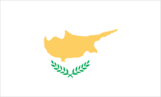
white with a copper-colored silhouette of the island (the name Cyprus is derived from the Greek word for copper) above two green crossed olive branches in the center of the flag; the branches symbolize the hope for peace and reconciliation between the Greek and Turkish communities the "Turkish Republic of Northern Cyprus" flag retains the white field of the Cyprus national flag but displays narrow horizontal red stripes positioned a small distance from the top and bottom edges between which are centered a red crescent and a red five-pointed star; the banner is modeled after the Turkish national flag but with the colors reversed
Government type
republic a separation of the two ethnic communities inhabiting the island began following the outbreak of communal strife in 1963; this separation was further solidified after the Turkish intervention in July 1974, following a Greek military-junta-supported coup attempt that gave the Turkish Cypriots de facto control in the north; Greek Cypriots control the only internationally recognized government; on 15 November 1983 Turkish Cypriot "President" Rauf DENKTASH declared independence and the formation of a "Turkish Republic of Northern Cyprus" ("TRNC"), which is recognized only by Turkey
Independence
16 August 1960 (from the UK); note - Turkish Cypriots proclaimed self-rule on 13 February 1975 and independence in 1983, but these proclamations are only recognized by Turkey
International law organization participation
accepts compulsory ICJ jurisdiction with reservations; accepts ICCt jurisdiction
International organization participation
Australia Group, C, CE, EBRD, EIB, EMU, EU, FAO, IAEA, IBRD, ICAO, ICC, IDA, IFAD, IFC, IFRCS (observer), IHO, ILO, IMF, IMO, IMSO, Interpol, IOC, IOM, IPU, ISO, ITSO, ITU, ITUC, MIGA, NSG, OAS (observer), OIF, OPCW, OSCE, PCA, UN, UNCTAD, UNESCO, UNHCR, UNIDO, UNIFIL, UNWTO, UPU, WCO, WFTU, WHO, WIPO, WMO, WTO
Judicial branch
Supreme Court (judges are appointed jointly by the president and vice president); subordinate courts there is also a "Supreme Court" in the area administered by Turkish Cypriots
Legal system
mixed legal system of English common law and civil law with Greek Orthodox religious law influence
Legislative branch
- unicameral - area under government control: House of Representatives or Vouli Antiprosopon (80 seats; 56 assigned to the Greek Cypriots, 24 to Turkish Cypriots; note - only those assigned to Greek Cypriots are filled; members are elected by popular vote to serve five-year terms); area administered by Turkish Cypriots: Assembly of the Republic or Cumhuriyet Meclisi (50 seats; members elected by popular vote to serve five-year terms) area under government control: last held on 22 May 2011 (next to be held in May 2016); area administered by Turkish Cypriots: last held on 19 April 2009 (next to be held in 2014) area under government control: House of Representatives - percent of vote by party - DISY 34.3%, AKEL 32.7%, DIKO 15.8%, EDEK 8.9%, EURO.KO 3.9%, other 4.5%; seats by party - DISY 20, AKEL 19, DIKO 9, EDEK 5, EURO.KO 2, other 1; area administered by Turkish Cypriots: Assembly of the Republic - percent of vote by party - UBP 44.1%, CTP 29.3%, DP 10.6%, other 16%; seats by party - UBP 26, CTP 15, DP 5, other 4
- election results
- area under government control: House of Representatives - percent of vote by party - DISY 34.3%, AKEL 32.7%, DIKO 15.8%, EDEK 8.9%, EURO.KO 3.9%, other 4.5%; seats by party - DISY 20, AKEL 19, DIKO 9, EDEK 5, EURO.KO 2, other 1; area administered by Turkish Cypriots: Assembly of the Republic - percent of vote by party - UBP 44.1%, CTP 29.3%, DP 10.6%, other 16%; seats by party - UBP 26, CTP 15, DP 5, other 4
- elections
- area under government control: last held on 22 May 2011 (next to be held in May 2016); area administered by Turkish Cypriots: last held on 19 April 2009 (next to be held in 2014)
- unicameral - area under government control
- House of Representatives or Vouli Antiprosopon (80 seats; 56 assigned to the Greek Cypriots, 24 to Turkish Cypriots; note - only those assigned to Greek Cypriots are filled; members are elected by popular vote to serve five-year terms); area administered by Turkish Cypriots: Assembly of the Republic or Cumhuriyet Meclisi (50 seats; members elected by popular vote to serve five-year terms)
National anthem
- "Ymnos eis tin Eleftherian" (Hymn to Liberty) Dionysios SOLOMOS/Nikolaos MANTZAROS adopted 1960; Cyprus adopted the Greek national anthem as its own; the Turkish community in Cyprus uses the anthem of Turkey
- lyrics/music
- Dionysios SOLOMOS/Nikolaos MANTZAROS
- name
- "Ymnos eis tin Eleftherian" (Hymn to Liberty)
National holiday
Independence Day, 1 October (1960); note - Turkish Cypriots celebrate 15 November (1983) as "Independence Day"
National symbol(s)
Cypriot mouflon (wild sheep); white dove
Political parties and leaders
- Democratic Party or DIKO [Marios KAROYIAN]; Democratic Rally or DISY [Nikos ANASTASIADES]; European Party or EURO.KO [Demetris SYLLOURIS]; Fighting Democratic Movement or ADIK [Dinos MIKHAILIDES]; Green Party of Cyprus [George PERDIKIS]; Movement for Social Democrats or EDEK [Yiannakis OMIROU]; Progressive Party of the Working People or AKEL (Communist Party) [Andros KYPRIANOU]; United Democrats or EDI [Praxoula ANTONIADOU] Communal Democracy Party or TDP [Mehmet CAKICI]; Cyprus Socialist Party or KSP [Yusuf ALKIM]; Democratic Party or DP [Serdaer DENKTASH]; Freedom and Reform Party or ORP [Turgay AVCI]; National Unity Party or UBP [Irsen KUCUK]; Nationalist Justice Party or MAP [Ata TEPE]; New Cyprus Party or YKP [Murat KANATLI]; Politics for the People Party or HIS [Ahmet YONLUER]; Republican Turkish Party or CTP [Ferdi Sabit SOYER]; United Cyprus Party or BKP [Izzet IZCAN]
- area administered by Turkish Cypriots
- Communal Democracy Party or TDP [Mehmet CAKICI]; Cyprus Socialist Party or KSP [Yusuf ALKIM]; Democratic Party or DP [Serdaer DENKTASH]; Freedom and Reform Party or ORP [Turgay AVCI]; National Unity Party or UBP [Irsen KUCUK]; Nationalist Justice Party or MAP [Ata TEPE]; New Cyprus Party or YKP [Murat KANATLI]; Politics for the People Party or HIS [Ahmet YONLUER]; Republican Turkish Party or CTP [Ferdi Sabit SOYER]; United Cyprus Party or BKP [Izzet IZCAN]
- area under government control
- Democratic Party or DIKO [Marios KAROYIAN]; Democratic Rally or DISY [Nikos ANASTASIADES]; European Party or EURO.KO [Demetris SYLLOURIS]; Fighting Democratic Movement or ADIK [Dinos MIKHAILIDES]; Green Party of Cyprus [George PERDIKIS]; Movement for Social Democrats or EDEK [Yiannakis OMIROU]; Progressive Party of the Working People or AKEL (Communist Party) [Andros KYPRIANOU]; United Democrats or EDI [Praxoula ANTONIADOU]
Political pressure groups and leaders
Confederation of Cypriot Workers or SEK (pro-West); Confederation of Revolutionary Labor Unions or Dev-Is; Federation of Turkish Cypriot Labor Unions or Turk-Sen; Pan-Cyprian Labor Federation or PEO (Communist controlled)
Suffrage
18 years of age; universal
Economy
Agriculture - products
citrus, vegetables, barley, grapes, olives, vegetables; poultry, pork, lamb; dairy, cheese
Budget
- $9.576 billion $10.81 billion (2010 est.)
- expenditures
- : $10.81 billion (2010 est.)
- revenues
- : $9.576 billion
Budget surplus (+) or deficit (-)
-5.3% of GDP (2010 est.)
Central bank discount rate
1.75% (31 December 2010) 1.75% (31 December 2009) this is the European Central Bank's rate on the marginal lending facility, which offers overnight credit to banks in the euro area
Commercial bank prime lending rate
6.815% (31 December 2010 est.) 7.493% (31 December 2009 est.)
Current account balance
-$1.321 billion (2010 est.) -$1.745 billion (2009 est.)
Debt - external
$NA (31 December 2010 est.) $32.61 billion (31 December 2008 est.)
Distribution of family income - Gini index
29 (2005)
Economy - overview
The area of the Republic of Cyprus under government control has a market economy dominated by the service sector, which accounts for nearly four-fifths of GDP. Tourism, financial services, and real estate are the most important sectors. Erratic growth rates over the past decade reflect the economy's reliance on tourism, the profitability of which often fluctuates with political instability in the region and economic conditions in Western Europe. Nevertheless, the economy in the area under government control has grown at a rate well above the EU average since 2000. Cyprus joined the European Exchange Rate Mechanism (ERM2) in May 2005 and adopted the euro as its national currency on 1 January 2008. An aggressive austerity program in the preceding years, aimed at paving the way for the euro, helped turn a soaring fiscal deficit (6.3% in 2003) into a surplus of 1.2% in 2008, and reduced inflation to 4.7%. This prosperity came under pressure in 2009, as construction and tourism slowed in the face of reduced foreign demand triggered by the ongoing global financial crisis. Although Cyprus lagged behind its EU peers in showing signs of stress from the global crisis, the economy tipped into recession in 2009, contracting by 1.8%, and has been slow to bounce back since, posting an anemic growth rate of 0.6% in 2010. In addition, the budget deficit is on the rise and reached 5.3% of GDP in 2010, a violation of the EU's budget deficit criteria of no more than 3% of GDP. In response to the country's deteriorating finances, Nicosia is promising to implement measures to cut the cost of the state payroll, curb tax evasion, and revamp social benefits. However, it has been slow to act, lacking a consensus in parliament and among the social partners for its proposed measures.
Economy of the area administered by Turkish Cypriots
- The Turkish Cypriot economy has roughly half the per capita GDP of the south, and economic growth tends to be volatile, given the north's relative isolation, bloated public sector, reliance on the Turkish lira, and small market size. The Turkish Cypriots are heavily dependent on transfers from the Turkish Government. Ankara directly finances about one-third of the Turkish Cypriot "administration's" budget. Aid from Turkey has exceeded $400 million annually in recent years. The Turkish Cypriot economy experienced a sharp slowdown in 2008-09 due to the global financial crisis and to its reliance on British and Turkish tourism, both of which declined due to the recession. The Turkish Cypriot budget deficit also deteriorated in 2009 due to decreased state revenues and increased government expenditures on public sector salaries and social services. The Turkish Cypriot economy declined about 0.6% in 2010. $1.829 billion (2007 est.) -0.6% (2010 est.) $11,700 (2007 est.) agriculture: 8.6%, industry: 22.5%, services: 69.1% (2006 est.) 95,030 (2007 est.) agriculture: 14.5%, industry: 29%, services: 56.5% (2004) 9.4% (2005 est.) %NA 11.4% (2006) revenues: $2.5 billion, expenditures: $2.5 billion (2006) citrus fruit, dairy, potatoes, grapes, olives, poultry, lamb foodstuffs, textiles, clothing, ship repair, clay, gypsum, copper, furniture -0.3% (2007 est.) 998.9 million kWh (2005) 797.9 million kWh (2005) $68.1 million, f.o.b. (2007 est.) citrus, dairy, potatoes, textiles Turkey 40%; direct trade between the area administered by Turkish Cypriots and the area under government control remains limited $1.2 billion, f.o.b. (2007 est.) vehicles, fuel, cigarettes, food, minerals, chemicals, machinery Turkey 60%; direct trade between the area administered by Turkish Cypriots and the area under government control remains limited $NA $NA Turkish new lira (YTL) Turkish new lira per US dollar: 1.5181 (2010) 1.319 (2007) 1.4286 (2006) 1.3436 (2005)
- Agriculture - products
- citrus fruit, dairy, potatoes, grapes, olives, poultry, lamb
- Budget
- revenues: $2.5 billion, expenditures: $2.5 billion (2006)
- Currency (code)
- Turkish new lira (YTL)
- Debt - external
- $NA
- Economy - overview
- The Turkish Cypriot economy has roughly half the per capita GDP of the south, and economic growth tends to be volatile, given the north's relative isolation, bloated public sector, reliance on the Turkish lira, and small market size. The Turkish Cypriots are heavily dependent on transfers from the Turkish Government. Ankara directly finances about one-third of the Turkish Cypriot "administration's" budget. Aid from Turkey has exceeded $400 million annually in recent years. The Turkish Cypriot economy experienced a sharp slowdown in 2008-09 due to the global financial crisis and to its reliance on British and Turkish tourism, both of which declined due to the recession. The Turkish Cypriot budget deficit also deteriorated in 2009 due to decreased state revenues and increased government expenditures on public sector salaries and social services. The Turkish Cypriot economy declined about 0.6% in 2010.
- Electricity consumption
- 797.9 million kWh (2005)
- Electricity production
- 998.9 million kWh (2005)
- Exchange rates
- Turkish new lira per US dollar: 1.5181 (2010) 1.319 (2007) 1.4286 (2006) 1.3436 (2005)
- Export - commodities
- citrus, dairy, potatoes, textiles
- Export - partners
- Turkey 40%; direct trade between the area administered by Turkish Cypriots and the area under government control remains limited
- Exports
- $68.1 million, f.o.b. (2007 est.)
- GDP - composition by sector
- agriculture: 8.6%, industry: 22.5%, services: 69.1% (2006 est.)
- GDP - per capita
- $11,700 (2007 est.)
- GDP - real growth rate
- -0.6% (2010 est.)
- GDP (purchasing power parity)
- $1.829 billion (2007 est.)
- Import - commodities
- vehicles, fuel, cigarettes, food, minerals, chemicals, machinery
- Import - partners
- Turkey 60%; direct trade between the area administered by Turkish Cypriots and the area under government control remains limited
- Imports
- $1.2 billion, f.o.b. (2007 est.)
- Industrial production growth rate
- -0.3% (2007 est.)
- Industries
- foodstuffs, textiles, clothing, ship repair, clay, gypsum, copper, furniture
- Inflation rate
- 11.4% (2006)
- Labor force
- 95,030 (2007 est.)
- Labor force - by occupation
- agriculture: 14.5%, industry: 29%, services: 56.5% (2004)
- Population below poverty line
- %NA
- Reserves of foreign exchange and gold
- $NA
- Unemployment rate
- 9.4% (2005 est.)
Electricity - consumption
4.556 billion kWh (2008 est.)
Electricity - exports
0 kWh (2009 est.)
Electricity - imports
0 kWh (2010 est.)
Electricity - production
4.709 billion kWh (2008 est.)
Exchange rates
euros (EUR) per US dollar - 0.755 (2010) 0.7198 (2009) 0.6827 (2008) on 1 January 2008 Cyprus adopted the euro as legal tender
Exports
$2.089 billion (2010 est.) $2.137 billion (2009 est.)
Exports - commodities
citrus, potatoes, pharmaceuticals, cement, clothing
Exports - partners
Greece 24.5%, Germany 10.5%, UK 8.6% (2010)
GDP - composition by sector
- 2.3% 16.4% 81.3% (2010 est.)
- agriculture
- 2.3%
- industry
- 16.4%
- services
- 81.3% (2010 est.)
GDP - per capita (PPP)
$21,000 (2010 est.) $21,200 (2009 est.) $21,900 (2008 est.) data are in 2010 US dollars
GDP - real growth rate
1% (2010 est.) -1.7% (2009 est.) 3.6% (2008 est.)
GDP (official exchange rate)
$23.17 billion (2010 est.)
GDP (purchasing power parity)
$23.19 billion (2010 est.) $22.95 billion (2009 est.) $23.34 billion (2008 est.) data are in 2010 US dollars
Household income or consumption by percentage share
- NA% NA%
- highest 10%
- NA%
- lowest 10%
- NA%
Imports
$8.465 billion (2010 est.) $8.159 billion (2009 est.)
Imports - commodities
consumer goods, petroleum and lubricants, machinery, transport equipment
Imports - partners
Greece 19%, Italy 9.5%, Germany 9%, UK 8.4%, Israel 8%, China 5.3%, France 5.2%, Netherlands 4.6% (2010)
Industrial production growth rate
-0.3% (2010 est.)
Industries
tourism, food and beverage processing, cement and gypsum production, ship repair and refurbishment, textiles, light chemicals, metal products, wood, paper, stone, and clay products
Inflation rate (consumer prices)
2.4% (2010 est.) 0.4% (2009 est.)
Investment (gross fixed)
18.4% of GDP (2010 est.)
Labor force
407,700 (2010 est.)
Labor force - by occupation
- 8.5% 20.5% 71% (2006 est.)
- agriculture
- 8.5%
- industry
- 20.5%
- services
- 71% (2006 est.)
Market value of publicly traded shares
$6.834 billion (31 December 2010) $4.993 billion (31 December 2009) $7.955 billion (31 December 2008)
Natural gas - consumption
0 cu m (2009 est.)
Natural gas - exports
0 cu m (2009 est.)
Natural gas - imports
0 cu m (2010 est.)
Natural gas - production
0 cu m (2009 est.)
Natural gas - proved reserves
0 cu m (1 January 2011 est.)
Oil - consumption
61,000 bbl/day (2010 est.)
Oil - exports
0 bbl/day (2009 est.)
Oil - imports
57,290 bbl/day (2009 est.)
Oil - production
0 bbl/day (2010 est.)
Oil - proved reserves
0 bbl (1 January 2011 est.)
Population below poverty line
NA%
Public debt
60.8% of GDP (2010 est.) 58% of GDP (2009 est.)
Reserves of foreign exchange and gold
$1.144 billion (31 December 2010 est.) $1.289 billion (31 December 2009 est.)
Stock of broad money
$52.97 billion (31 December 2010 est.) $55 billion (31 December 2009 est.)
Stock of direct foreign investment - abroad
$19.95 billion (31 December 2010 est.) $15.76 billion (31 December 2009 est.)
Stock of direct foreign investment - at home
$31.41 billion (31 December 2010 est.) $26.56 billion (31 December 2009 est.)
Stock of domestic credit
$101.2 billion (31 December 2009 est.) $80.68 billion (31 December 2008 est.)
Stock of narrow money
$4.559 billion (31 December 2010 est.) $4.734 billion (31 December 2009 est.) see entry for the European Union for money supply in the euro area; the European Central Bank (ECB) controls monetary policy for the 17 members of the EMU; individual members of the EMU do not control the quantity of money circulating within their own borders
Taxes and other revenues
41.3% of GDP (2010 est.)
Unemployment rate
4.6% (2010 est.) 4.3% (2009 est.)
Communications
Broadcast media
mixture of state and privately-run television and radio services; the public broadcaster operates 2 TV channels and 4 radio stations; 6 private TV broadcasters, satellite and cable TV services including telecasts from Greece and Turkey, and a number of private radio stations are available; in areas administered by Turkish Cypriots, there are 2 public TV stations, 4 public radio stations, and privately-owned TV and radio broadcast stations (2007)
Internet country code
.cy
Internet hosts
187,881 (2010)
Internet users
433,900 (2009)
Telephone system
- excellent in both area under government control and area administered by Turkish Cypriots open-wire, fiber-optic cable, and microwave radio relay country code - 357 (area administered by Turkish Cypriots uses the country code of Turkey - 90); a number of submarine cables, including the SEA-ME-WE-3, combine to provide connectivity to Western Europe, the Middle East, and Asia; tropospheric scatter; satellite earth stations - 8 (3 Intelsat - 1 Atlantic Ocean and 2 Indian Ocean, 2 Eutelsat, 2 Intersputnik, and 1 Arabsat)
- domestic
- open-wire, fiber-optic cable, and microwave radio relay
- general assessment
- excellent in both area under government control and area administered by Turkish Cypriots
- international
- country code - 357 (area administered by Turkish Cypriots uses the country code of Turkey - 90); a number of submarine cables, including the SEA-ME-WE-3, combine to provide connectivity to Western Europe, the Middle East, and Asia; tropospheric scatter; satellite earth stations - 8 (3 Intelsat - 1 Atlantic Ocean and 2 Indian Ocean, 2 Eutelsat, 2 Intersputnik, and 1 Arabsat)
Telephones - main lines in use
- area under government control: 414,700 (2010); area administered by Turkish Cypriots: 86,228 (2002)
- area under government control
- 414,700 (2010); area administered by Turkish Cypriots: 86,228 (2002)
Telephones - mobile cellular
- area under government control: 1.034 million (2010); area administered by Turkish Cypriots: 147,522 (2002)
- area under government control
- 1.034 million (2010); area administered by Turkish Cypriots: 147,522 (2002)
Transportation
Airports
15 (2010)
Airports - with paved runways
- 1 (2010)
- 1,524 to 2,437 m
- 3
- 2,438 to 3,047 m
- 6
- 914 to 1,523 m
- 3
- total
- 13
- under 914 m
- 1 (2010)
Airports - with unpaved runways
- 2 (2010)
- total
- 2
- under 914 m
- 2 (2010)
Heliports
9 (2010)
Merchant marine
- bulk carrier 267, cargo 173, chemical tanker 77, container 193, liquefied gas 10, passenger 3, passenger/cargo 24, petroleum tanker 69, refrigerated cargo 6, roll on/roll off 13, vehicle carrier 4 637 (Austria 1, Belgium 2, Bermuda 1, Canada 2, Chile 1, China 6, Cuba 1, Denmark 6, Estonia 7, France 16, Germany 189, Greece 216, Hong Kong 2, India 2, Iran 10, Ireland 3, Israel 1, Italy 6, Japan 19, Monaco 1, Netherlands 24, Norway 12, Philippines 1, Poland 20, Portugal 2, Russia 47, Singapore 1, Slovenia 4, Spain 7, Sweden 5, Syria 1, UAE 5, UK 7, Ukraine 2, US 7) this country allows large numbers of ships owned by foreign entities to be registered in its national shipping registry and to fly its flag; these ships operate under the laws of the flag state 138 (Bahamas 14, Belize 1, Burma 1, Cambodia 8, Comoros 2, Finland 1, Gibraltar 1, Greece 4, Hong Kong 3, Liberia 7, Malta 29, Marshall Islands 38, Norway 1, Panama 8, Russia 11, Saint Vincent and the Grenadines 2, Sierra Leone 1, Singapore 3, unknown 3) (2010)
- foreign-owned
- 637 (Austria 1, Belgium 2, Bermuda 1, Canada 2, Chile 1, China 6, Cuba 1, Denmark 6, Estonia 7, France 16, Germany 189, Greece 216, Hong Kong 2, India 2, Iran 10, Ireland 3, Israel 1, Italy 6, Japan 19, Monaco 1, Netherlands 24, Norway 12, Philippines 1, Poland 20, Portugal 2, Russia 47, Singapore 1, Slovenia 4, Spain 7, Sweden 5, Syria 1, UAE 5, UK 7, Ukraine 2, US 7)
- registered in other countries
- 138 (Bahamas 14, Belize 1, Burma 1, Cambodia 8, Comoros 2, Finland 1, Gibraltar 1, Greece 4, Hong Kong 3, Liberia 7, Malta 29, Marshall Islands 38, Norway 1, Panama 8, Russia 11, Saint Vincent and the Grenadines 2, Sierra Leone 1, Singapore 3, unknown 3) (2010)
- total
- 839
Pipelines
oil 0 km
Ports and terminals
- area under government control: Larnaca, Limassol, Vasilikos; area administered by Turkish Cypriots: Famagusta, Kyrenia
- area under government control
- Larnaca, Limassol, Vasilikos; area administered by Turkish Cypriots: Famagusta, Kyrenia
Roadways
- 14,671 km 12,321 km under government control (includes 257 km of expressways), 2,350 km administered by Turkish Cypriots (2008)
- total
- 14,671 km
Military and Security
Manpower available for military service
- 327,875 287,891 (2010 est.)
- females age 16-49
- 287,891 (2010 est.)
- males age 16-49
- 327,875
Manpower fit for military service
- 275,842 239,862 (2010 est.)
- females age 16-49
- 239,862 (2010 est.)
- males age 16-49
- 275,842
Manpower reaching militarily significant age annually
- 8,167 7,398 (2010 est.)
- female
- 7,398 (2010 est.)
- male
- 8,167
Military branches
- Republic of Cyprus: Greek Cypriot National Guard (Ethniki Forea, EF; includes naval and air elements); Northern Cyprus: Turkish Cypriot Security Force (GKK) (2011)
- Republic of Cyprus
- Greek Cypriot National Guard (Ethniki Forea, EF; includes naval and air elements); Northern Cyprus: Turkish Cypriot Security Force (GKK) (2011)
Military expenditures
3.8% of GDP (2005 est.) (U)
Military service age and obligation
- Greek Cypriot National Guard (GCNG): 18-50 years of age for compulsory military service for all Greek Cypriot males; 17 years of age for voluntary service; women may volunteer for a 3-year term; length of service is 25 months (2009)
- Greek Cypriot National Guard (GCNG)
- 18-50 years of age for compulsory military service for all Greek Cypriot males; 17 years of age for voluntary service; women may volunteer for a 3-year term; length of service is 25 months (2009)
Transnational Issues
Disputes - international
hostilities in 1974 divided the island into two de facto autonomous entities, the internationally recognized Cypriot Government and a Turkish-Cypriot community (north Cyprus); the 1,000-strong UN Peacekeeping Force in Cyprus (UNFICYP) has served in Cyprus since 1964 and maintains the buffer zone between north and south; on 1 May 2004, Cyprus entered the European Union still divided, with the EU's body of legislation and standards (acquis communitaire) suspended in the north; Turkey protests Cypriot Government creating hydrocarbon blocks and maritime boundary with Lebanon in March 2007
Illicit drugs
minor transit point for heroin and hashish via air routes and container traffic to Europe, especially from Lebanon and Turkey; some cocaine transits as well; despite a strengthening of anti-money-laundering legislation, remains vulnerable to money laundering; reporting of suspicious transactions in offshore sector remains weak (2008)
Refugees and internally displaced persons
- 210,000 (both Turkish and Greek Cypriots; many displaced for over 30 years) (2007)
- IDPs
- 210,000 (both Turkish and Greek Cypriots; many displaced for over 30 years) (2007)
Trafficking in persons
- Cyprus is a destination country for men and women who are subjected to forced labor and forced prostitution; trafficking victims in Cyprus originate from Russia, Moldova, Ukraine, Hungary, Bulgaria, Romania, Belarus, the Philippines, Morocco, China, Vietnam, Uzbekistan, Greece, the United Kingdom, Colombia and the Dominican Republic; sex trafficking occurs within commercial sex industry outlets in Cyprus, including cabarets, bars, pubs, and massage parlors disguised as private apartments Tier 2 Watch List - the government failed to demonstrate evidence of increasing efforts to address human trafficking over the previous reporting period; trafficking-related complicity significantly hampered the government's anti-trafficking efforts though the government took some initial steps to address it; very few prosecutions resulted in traffickers being held accountable; the government made few improvements in the protection of victims; it did not ensure procedures for the safe repatriation of foreign victims; a nationwide campaign to specifically address demand within Cyprus has yet to be implemented (2011)
- current situation
- Cyprus is a destination country for men and women who are subjected to forced labor and forced prostitution; trafficking victims in Cyprus originate from Russia, Moldova, Ukraine, Hungary, Bulgaria, Romania, Belarus, the Philippines, Morocco, China, Vietnam, Uzbekistan, Greece, the United Kingdom, Colombia and the Dominican Republic; sex trafficking occurs within commercial sex industry outlets in Cyprus, including cabarets, bars, pubs, and massage parlors disguised as private apartments
- tier rating
- Tier 2 Watch List - the government failed to demonstrate evidence of increasing efforts to address human trafficking over the previous reporting period; trafficking-related complicity significantly hampered the government's anti-trafficking efforts though the government took some initial steps to address it; very few prosecutions resulted in traffickers being held accountable; the government made few improvements in the protection of victims; it did not ensure procedures for the safe repatriation of foreign victims; a nationwide campaign to specifically address demand within Cyprus has yet to be implemented (2011)