1986 Edition
CIA World Factbook 1986 (Internet Archive)
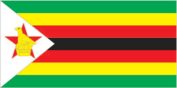
Geography
Agriculture
main crops — tobacco, corn, tea, sugar, cotton; livestock
Aid
economic commitments — Western (non-US) countries, ODA and OOF (1970-83), $1.0 billion; US, including Ex-Im (1980-84), $271 million; Communist countries (1970-84), $100 million
Airfields
- 129 total, 1 14 usable; 12 with permanent-surface runways; 1 with runways over 3,659 m, 4 with runways 2,440-3,659 m, 19 with runways 1,2202,439 m
- 497 total, 444 usable; 22 with permanent-surface runways; 2 with runways over 3,659 m, 3 with runways 2,440-3,659 m, 36 with runways 1,2202,439 m
Branches
- Army, Air Force, paramilitary Police Mobile Force, Police Paramilitary
- legislative authority resides in a Parliament consisting of a 100-member House of Assembly (with 20 seats reserved for whites) and a 40-member Senate (10 elected by white members of the House, 14 elected by the other members of the House; 10 chiefs, 5 from Mashonaland and 5 from Matabeleland, elected by members of the Council of Chiefs; 6 appointed by the President, on the advice of the Prime Minister); executive authority lies with a Cabinet led by the Prime Minister; the High Court is the superior judicial authority
- Zimbabwe National Army, Air Force of Zimbabwe, Police Support Unit, People's Militia
Budget
(FY83/84 est.) revenues, $1.82 billion; expenditures, $2.223 billion; deficit, $400 million
Capital
Harare
Civil air
- 9 major transport aircraft
- 12 major transport aircraft
Coastline
1,240 km Taiwan, 327 km Pescadores People
Communists
negligible
Elections
last held July 1985 Political parties and leaders: Zimbabwe African National Union (ZANU), Robert Mugabe; Zimbabwe African People's Union (ZAPU), Joshua Nkomo; Conservative Alliance of Zimbabwe (CAZ), Ian Smith; Independent Zimbabwe Group (IZG), Bill Irving; Zimbabwe African National Union - Sithole (ZANU-S), Ndabaningi Sithole; others failed to win any seats in Parliament Taiwan (China listed in alphabetic order)
Electric power
1,608,500 kW capacity (1985); 4.691 billion kWh produced (1985), 541 kWh per capita
Ethnic divisions
- about 96% African (over 73% members of Shona-speaking subtribes, 19% speak Ndebele); about 3% white, 1% mixed and Asian
- 84% Taiwanese, 14% mainland Chinese, 2% aborigine
Exports
$1.17 billion (f.o.b., 1984), including net gold sales and reexports; tobacco, asbestos, cotton, copper, tin, chrome, gold, nickel, meat, clothing, sugar, iron ore, silver
Fiscal year
1 July-30 June Communications
GDP
$6.6 billion (1982), $870 per capita; real growth 12% (1980 and 1981), 2% (1982)
Government leaders
Rev. Canaan Sodindo BANANA, President (since April 1980); Robert Gabriel MUGABE, Prime Minister (since April 1980)
Highways
85,237 km total; 12,243 km paved, 28,090 km crushed stone, gravel, stabilized soil: 23,097 km improved earth; 21,807 km unimproved earth
Imports
$989 million (f.o.b. 1984); machinery, petroleum products, wheat, transport equipment
Infant mortality rate
- 66/1,000(1985)
- 11.01/1,000(1983)
Inland waterways
- 2,250 km, including Zambezi River, Luapula River, Lake Tanganyika; Mpulungu is small port on Lake Tanganyika
- Lake Kariba is a potential line of communication
Labor force
1,985,000(1985); 78% agriculture; 18% mining, manufacturing, construction; 4% transport and services
Land boundaries
3,017 km People
Language
- English (official); ChiShona and Si Ndebele
- Mandarin Chinese (official); Taiwanese and Hakka dialects also used
Legal system
Roman-Dutch
Life expectancy
- men 53.3, women 56.8
- men 69.9, women 74.9
Limits of territorial waters (claimed)
3 nm (200 nm exclusive economic zone)
Literacy
- 45-55%
- 94%
Major industries
mining, steel, textiles, chemicals, vehicles
Major trade partner
South Africa
Member of
AfDB, Commonwealth, FAO, G-77, GATT, IBRD, ICAO, IDA, IFAD, IFC, ILO, IMF, INTERPOL, ITO, NAM, OAU, SADCC, UN, UNESCO, UPU, WFTU, WHO, WMO Economy
Military budget
for fiscal year ending 30 June 1985, $307.4 million; 10.4% of central government budget 100km ht-lung Su-ao Taiwan \ fhilippin Sta Quemov and Matsu stands are not shown Land 32,260 km2 (Taiwan and Pescadores); the size of Maryland and Delaware combined; 55% forest, 24% cultivated, 6% pasture, 15% other (urban, industrial, waste, or water) Water
Military manpower
- males 15-49, 1,472,000; 768,000 fit for military service not necessarily author Land 391,090 km2; nearly as large as California; 40% arable (of which 6% cultivated), 60% extensive grazing; of this total 48% worked communally by Africans, 39% owned by Europeans (farmed by modern methods), 7% national land, 6% other
- males 15-49, 1,927,000; 1,184,000 fit for military service
Monetary conversion rate
1.67 Zimbabwean dollars=US$l (November 1985)
Nationality
- noun — Zimbabwean(s); adjective— Zimbabwean
- noun — Chinese (sing., pi.); adjective— Chinese
Natural resources
coal, chrome, asbestos, gold, nickel, copper, iron ore, vanadium, lithium
Official name
Republic of Zimbabwe
Organized labor
about one-third of European wage earners are unionized, but only a small minority of Africans Covernment
Pipelines
- 1,724 km crude oil
- 8 km refined products
Political subdivisions
eight provinces
Population
- 8,984,000 (July 1986), average annual growth rate 3.5%
- 19,601,000, excluding the population of Quemoy and Matsu Islands and foreigners (July 1986), average annual growth rate 1.4%
Railroads
3,394 km 1.067-meter gauge; 42 km double track; 335 km electrified
Religion
- 50% syncretic (part Christian, part indigenous beliefs), 25% Christian, 24% indigenous beliefs, a few Muslim
- 93% mixture of Buddhist, Confucian, and Taoist; 4.5% Christian; 2.5% other
Suffrage
universal over age 18; for at least seven years after independence (1980), white, mixed, and Asians vote on a separate roll for 20 seats in the House of Assembly
Telecommunications
- facilities are among the best in Sub-Saharan Africa; high-capacity radio relay connects most larger towns and cities; 71,700 telephones (1.2 per 100 popl.); 9 AM, 2 FM, 10 TV stations; 1 Indian Ocean satellite station Defense Forces
- system was one of the best in Africa but now suffers from poor maintenance; consists of radio-relay links, open-wire lines, and radio communication stations; principal center Harare, secondary center Bulawayo; 246,800 telephones (3.3 per 100 popl.); 8 AM, 15 FM, 8 TV stations; 1 Atlantic Ocean satellite station Defense Forces
Type
independent; a British-style parliamentary democracy
Voting strength
(July 1985 elections) ZANU (also known as ZANU-PF), 64 seats; ZAPU, 15 seats; CAZ, 15 seats; IZG, 4 seats; ZANU-S, 1 seat; independents, 1