1982 Edition
CIA World Factbook 1982 (Wikisource)
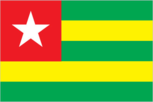
Geography
Area
56,980 km2; nearly one-half is arable, under 15% cultivated
Coastline
56 km
Land boundaries
1,646 km WATER
Limits of territorial waters (claimed)
30 nm (fishing 200 nm; exclusive economic zone 200 nm)
People and Society
Ethnic divisions
37 tribes; largest and most important are Ewe in south and Cabrais in north; under 1% European and Syrian-Lebanese
Labor force
over 90% of population engaged in subsistence agriculture; about 30,000 wage earners, evenly divided between public and private sectors
Language
French, both official and language of commerce; major African languages are Ewe and Mina in the south and Dagomba and Kabie in the north
Literacy
54.9% of school age (7-14) currently in school
Nationality
noun—Togolese (sing. and pl.); adjective—Togolese
Organized labor
1 national union, the CNTT organized in 1972
Population
2,783,000 (July 1982), average annual growth rate 3.0%
Religion
about 20% Christian, 5% Muslim, 75% animist
Government
Branches
military government, with civilian-dominated Cabinet, took over on 14 April 1967, replacing provisional government created after January coup; no legislature; separate judiciary including State Security Court established 1970
Capital
Lomé
Communists
no Communist Party; possibly some sympathizers
Elections
presidential referendum of January 1972 elected Gen. Eyadema for indefinite period
Government leader
Gen. Gnassingbe EYADEMA, President, Minister of National Defense, and Armed Forces Chief of Staff
Legal system
based on French civil law and customary practice; no constitution; has not accepted compulsory ICJ jurisdiction
Member of
AFDB, CEAO (observer), EAMA, ECA, ECOWAS, ENTENTE, FAO, G-77, GATT, IBRD, ICAO, ICO, IDA, IFAD, IFC, ILO, IMF, ITU, NAM, OAU, OCAM, UN, UNESCO, UPU, WHO, WIPO, WMO, WTO
National holiday
Independence Day, 27 April
Official name
Republic of Togo
Political party
single party formed by President Eyadema in September 1969, Rally of the Togolese People (RPT), structure and staffing of party closely controlled by government
Political subdivisions
21 circumscriptions
Suffrage
universal adult
Type
republic; under military rule since January 1967
Economy
Agriculture
main cash crops—coffee, cocoa, cotton; major food crops—yams, cassava, corn, beans, rice, millet, sorghum, fish; must import some foodstuffs
Budget
(1980), revenues, $294.41 million; current expenditures, $277.77 million, development expenditures $16.63 Monetary conversion rate: Communaute Financiere Africaine 286 francs=US$1 (1981)
Electric power
75,000 kW capacity (1980); 188 million kWh produced (1980), 71 kWh per capita
Exports
$384.3 million (c.i.f., 1980); phosphates, cocoa, coffee, and palm kernels
Fiscal year
calendar year
Fishing
catch 2,000 metric tons (1979)
GNP
$1,200 million (1980), about $462 per capita; -2.0% real growth in 1980
Imports
$536.2 million (c.i.f., 1980); consumer goods, fuels, machinery, tobacco, foodstuffs
Major industries
phosphate mining, agricultural processing, handicrafts, textiles, beverages
Major trade partners
mostly with France and other EC countries
Communications
Airfields
11 total, 11 usable; 2 with permanent-surface runways 2,440-3,659 m
Civil air
1 major transport aircraft
Highways
7,000 km total; 1,320 km paved, 1,280 km improved earth, remainder unimproved earth
Inland waterways
section of Mono River and about 50 km of coastal lagoons and tidal creeks
Ports
1 major (Lomé), 1 minor
Railroads
442 km meter gauge (1.00 m), single track
Telecommunications
fair system based on skeletal network of open-wire lines supplemented by a radio-relay route and radiocommunication stations; only center is Lome; 7,500 telephones (0.4 per 100 popl.); 2 AM, no FM, and 3 TV stations; 1 Atlantic Ocean satellite station and 1 SYMPHONIE station
Military and Security
Military budget
for fiscal year ending 31 December 1981, $20.8 million; 8.5% of central government budget
Military manpower
males 15-49, 600,000; 313,000 fit for military service; no conscription