1986 Edition
CIA World Factbook 1986 (Internet Archive)
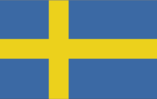
Geography
Agriculture
- main crops — maize, cotton, rice, sugar, and citrus fruits
- animal husbandry predominates, with milk and dairy products accounting for 37% of farm income; main crops — grains, sugar beets, potatoes; 100% self-sufficient in grains and potatoes, 85% self-sufficient in sugar beets
Aid
- economic commitments — Western (non-US) countries, ODA and OOF (1970-83), $340 million; US (FY70-84), $80 million
- donor — ODA and OOF economic aid commitments (1970-83), $5.4 billion
Airfields
27 total, 27 usable; 1 with runways 2,440-3,659, 1 with runways 1,220-2,439 m
Branches
- Umbutfo Swaziland Defense Force, Royal Swaziland Police Force
- legislative authority rests with unicameral parliament (Riksdag); executive power vested in Cabinet, responsible to parliament; Supreme Court, 6 superior courts, 108 lower courts
Budget
- 1984/85 (est.)— revenues, $204 million; current expenditures, $149 million
- (1984/85) revenues $31.0 billion, expenditures $38.7 billion, deficit $7.7 billion
Capital
Stockholm
Civil air
6 major transport aircraft
Coastline
3,218 km People
Communists
VPK and SKP; VPK, the major Communist party, is reported to have roughly 17,800 members; in the 1985 election, the VPK attracted 293,543 votes; in addition, there are 4 other active Communist parties, including the SKP, for which membership figures are not available; in the 1985 elections, these parties obtained an additional 16,000 votes
Crude steel
4.7 million metric tons produced (1984), 564 kg per capita
Elections
every three years; next scheduled for September 1988 Political parties and leaders: Moderate Coalition (conservative), Ulf Adelsohn; Center, Karen Soder; Liberal People's Party, Bengt Westerberg; Social Democratic, Ingvar Carlsson; Left Party-Communist (VPK), Lars Werner; Swedish Communist Party (SKP), Roland Pettersson; Communist Workers' Party, Rolf Hagel
Electric power
- 60,000 kW capacity (1985); 84 million kWh produced (1985), 125 kWh per capita
- 38,956,000 kW capacity (1985); 129.6 billion kWh produced (1985), 15,543 kWh per capita
Ethnic divisions
homogeneous white population; small Lappish minority; est. 12% foreign born or first generation immigrants (Finns, Yugoslavs, Danes, Norwegians, Greeks)
Exports
- $360 million (f.o.b., 1984); sugar, asbestos, wood and forest products, citrus, and canned fruit
- $29.0 billion (f.o.b., 1984); machinery, motor vehicles, paper products, pulp and wood, iron and steel products, chemicals, petroleum and petroleum products
Fiscal year
- 1 April-31 March Communications
- 1 July-30 June Communications
Fishing
catch 285,000 metric tons (1984), exports $77 million, imports $196.0 million
GDP
$96.0 billion, $1 1,510 per capita (1984); 51.9% private consumption, 28.8% government consumption, 12.9% private investment; 6.0% public investment; — 1.0% change in stock building; 1.4% net exports of goods and services; 1984 growth rate, 3.3%
GNP
approximately $478 million (1984), about $900 per capita; real growth 11% (1984)
Government leaders
CARL XVI Gustaf, King (since September 1973); Ingvar CARLSSON, Prime Minister (since March 1986)
Highways
2,853 km total; 510 km paved, 1,230 km crushed stone, gravel, or stabilized soil, and 1,1 13 km improved earth
Imports
- $498 million (f.o.b., 1984); motor vehicles, chemicals, petroleum products, and foodstuffs
- $26.33 billion (c.i.f., 1984); machinery, petroleum and petroleum products, chemicals, motor vehicles, foodstuffs, iron and steel, clothing
Infant mortality rate
7/1,000 (1983)
Labor force
4.41 million (1984); 32.8% private services; 30.0% government services; 22.0% mining and manufacturing; 5.9% construction; 5.0% agriculture, forestry, and fishing; 0.9% electricity, gas, and waterworks; 3. 1 % unemployed (1984 average)
Land boundaries
2,196 km Water
Language
Swedish, small Lappand Finnish-speaking minorities; immigrants speak native languages
Legal system
civil law system influenced by customary law; a new constitution was adopted in 1975 replacing the Acts of 1809, 1866, and 1949; legal education at Universities of Lund, Stockholm, and Uppsala; accepts compulsory ICJ jurisdiction, with reservations
Life expectancy
men 75, women 81
Limits of territorial waters (claimed)
12 nm (fishing 200 nm)
Literacy
99%
Major industries
iron and steel, precision equipment (bearings, radio and telephone parts, armaments), wood pulp and paper products, processed foods, motor vehicles
Major industry
mining, pulping
Major trade partners
- South Africa, UK, US; member of South African Customs Union
- EC 50.2%, other developed 34.9%, non-OPEC less developed countries 5.5%, OPEC 4.5%, CEMA 4.9% (1984)
Member of
- AfDB, FAO, G-77, GATT (de facto), IBRD, ICAO, IDA, IFAD, IFC, ILO, IMF, INTERPOL, ISO, ITU, NAM, OAU, SADCC, UN, UNESCO, UPU, WHO Economy
- ADB, Council of Europe, DAC, EC (Free Trade Agreement), EFTA, ESRO, FAO, GATT, IAEA, IBRD, ICAC, ICAO, ICES, ICO, IDA, IDE— Inter-American Development Bank.lEA, IFAD, IFC, IHO, ILO, IMF, IMO, INTERPOL, INTELSAT, International Lead and Zinc Study Group, IPU, ISO, ITU, IWC— International Whaling Commission, IWC — International Wheat Council, Nordic Council, OECD, UN, UNESCO, UPU, WHO, WIPO, WMO, WSG Economy
Military manpower
males 15-49, 151,000; 87,000 fit for military service Turnaby, Gbteboi Kattegat Mai mo' Land 449,964 km2; larger than Calitornia; 55% forest, 7% arable, 2% meadow and pasture, 36% other
Monetary conversion rate
- the Swazi lilangeni exchanges at par with the South African rand; 2.3 emalangeni=US$l (29 January 1986)
- 7.8 kronor=US$l (November 1985 average)
National holiday
no national holiday; King's birthday, 30 April, celebrated as such by Swedish embassies
Nationality
noun — Swede(s); adjective — Swedish
Natural resources
- asbestos, coal, clay, tin, diamonds, hydroelelectric power, forests
- zinc, iron, lead, copper, silver, gold, forests, hydroelectric power
Official name
Kingdom of Sweden
Organized labor
90% of labor force (1985 est.) Government
Political subdivisions
24 counties, 284 municipalities (townships)
Population
8,357,000 (July 1986), average annual growth rate 0. 1 %
Railroads
- 515 km 1.067-meter gauge, single track
- 12,518 km total; Swedish State Railways (SJ)— 11,179km 1.435-meter standard gauge, 6,959 km electrified and 1,152 km double track; 182 km 0.891-meter gauge; 117 km rail ferry service; privately owned railways — 511 km 1.435-meter standard gauge, 332 km electrified; 371 km 0.891 -meter gauge electrified
Religion
93.5% Evangelical Lutheran, 1.0% Roman Catholic, 5.5% other
Shortages
coal, petroleum, textile fibers, potash, salt, oils and fats, tropical products
Suffrage
universal but not compulsory over age 18; after three years of legal residence immigrants may vote in county and municipal but not national elections
Telecommunications
system consists of carrier-equipped openwire lines and low capacity radio-relay links; 15,400 telephones (2.3 per 100 popl.); 4 AM, 8 FM, 1 1 TV stations; Atlantic Ocean satellite station Defense Forces
Type
constitutional monarchy
Voting strength
(1985 election) 45.0% Social Democratic, 21.3% Moderate Coalition, 12.5% Center (includes votes for Christian Democratic Alliance), 14.3% Liberal, 5.4% Communist, 1.5% other