2012 Edition
CIA World Factbook 2012 Archive (HTML)
Introduction
Background
Military regimes favoring Islamic-oriented governments have dominated national politics since independence from the UK in 1956. Sudan was embroiled in two prolonged civil wars during most of the remainder of the 20th century. These conflicts were rooted in northern economic, political, and social domination of largely non-Muslim, non-Arab southern Sudanese. The first civil war ended in 1972 but broke out again in 1983. The second war and famine-related effects resulted in more than four million people displaced and, according to rebel estimates, more than two million deaths over a period of two decades. Peace talks gained momentum in 2002-04 with the signing of several accords. The final North/South Comprehensive Peace Agreement (CPA), signed in January 2005, granted the southern rebels autonomy for six years followed by a referendum on independence for Southern Sudan. The referendum was held in January 2011 and indicated overwhelming support for independence. South Sudan became independent on 9 July 2011. Since southern independence Sudan has been combating rebels from the Sudan People's Liberation Movement-North (SPLM-N) in Southern Kordofan and Blue Nile states. A separate conflict, which broke out in the western region of Darfur in 2003, has displaced nearly two million people and caused an estimated 200,000 to 400,000 deaths. The UN took command of the Darfur peacekeeping operation from the African Union in December 2007. Peacekeeping troops have struggled to stabilize the situation, which has become increasingly regional in scope and has brought instability to eastern Chad. Sudan also has faced large refugee influxes from neighboring countries primarily Ethiopia and Chad. Armed conflict, poor transport infrastructure, and lack of government support have chronically obstructed the provision of humanitarian assistance to affected populations.
Geography
Area
- 1,861,484 sq km NA NA
- total
- 1,861,484 sq km
- water
- NA
Area - comparative
slightly less than one-fifth the size of the US
Climate
hot and dry; arid desert; rainy season varies by region (April to November)
Coastline
853 km
Elevation extremes
- Red Sea 0 m Jabal Marrah 3,071 m
- highest point
- Jabal Marrah 3,071 m
- lowest point
- Red Sea 0 m
Environment - current issues
inadequate supplies of potable water; wildlife populations threatened by excessive hunting; soil erosion; desertification; periodic drought
Environment - international agreements
- Biodiversity, Climate Change, Climate Change-Kyoto Protocol, Desertification, Endangered Species, Hazardous Wastes, Law of the Sea, Ozone Layer Protection, Wetlands none of the selected agreements
- party to
- Biodiversity, Climate Change, Climate Change-Kyoto Protocol, Desertification, Endangered Species, Hazardous Wastes, Law of the Sea, Ozone Layer Protection, Wetlands
- signed, but not ratified
- none of the selected agreements
Freshwater withdrawal (domestic/industrial/agricultural)
- 37.32 cu km/yr (3%/1%/97%) 1,030 cu m/yr (2000)
- per capita
- 1,030 cu m/yr (2000)
- total
- 37.32 cu km/yr (3%/1%/97%)
Geographic coordinates
15 00 N, 30 00 E
Geography - note
dominated by the Nile and its tributaries
Irrigated land
18,630 sq km (2003)
Land boundaries
- 6,751 km Central African Republic 175 km, Chad 1,360 km, Egypt 1,275 km, Eritrea 605 km, Ethiopia 769 km, Libya 383 km, South Sudan 2,184 km Sudan-South Sudan boundary represents 1 January 1956 alignment; final alignment pending negotiations and demarcation; final sovereignty status of Abyei region pending negotiations between Sudan and South Sudan
- border countries
- Central African Republic 175 km, Chad 1,360 km, Egypt 1,275 km, Eritrea 605 km, Ethiopia 769 km, Libya 383 km, South Sudan 2,184 km
- total
- 6,751 km
Land use
- NA NA NA (2005)
- arable land
- NA
- other
- NA (2005)
- permanent crops
- NA
Location
north-eastern Africa, bordering the Red Sea, between Egypt and Eritrea
Map references
Africa
Maritime claims
- 12 nm 18 nm 200 m depth or to the depth of exploitation
- contiguous zone
- 18 nm
- continental shelf
- 200 m depth or to the depth of exploitation
- territorial sea
- 12 nm
Natural hazards
dust storms and periodic persistent droughts
Natural resources
petroleum; small reserves of iron ore, copper, chromium ore, zinc, tungsten, mica, silver, gold; hydropower
Terrain
generally flat, featureless plain; desert dominates the north
Total renewable water resources
154 cu km (1997)
People and Society
Age structure
- 42% (male 7,305,175/ female 7,056,966) 54.7% (male 9,351,327/ female 9,360,358) 3.3% (male 627,014/ female 505,870) (2012 est.)
- 0-14 years
- 42% (male 7,305,175/ female 7,056,966)
- 15-64 years
- 54.7% (male 9,351,327/ female 9,360,358)
- 65 years and over
- 3.3% (male 627,014/ female 505,870) (2012 est.)
Birth rate
31.7 births/1,000 population (2012 est.)
Children under the age of 5 years underweight
31.7% (2006)
Death rate
8.3 deaths/1,000 population (July 2012 est.)
Education expenditures
NA
Ethnic groups
Sudanese Arab (approximately 70%), Fur, Beja, Nuba, Fallata
Health expenditures
7.3% of GDP (2009)
HIV/AIDS - adult prevalence rate
1.1% (2009 est.)
HIV/AIDS - deaths
12,000 (2009 est.)
HIV/AIDS - people living with HIV/AIDS
260,000 (2009 est.)
Hospital bed density
0.7 beds/1,000 population (2008)
Infant mortality rate
- 55.6 deaths/1,000 live births 61.2 deaths/1,000 live births 49.7 deaths/1,000 live births (2012 est.)
- female
- 49.7 deaths/1,000 live births (2012 est.)
- total
- 55.6 deaths/1,000 live births
Languages
Arabic (official), English (official), Nubian, Ta Bedawie, Fur program of "Arabization" in process
Life expectancy at birth
- 62.57 years 60.58 years 64.67 years (2012 est.)
- female
- 64.67 years (2012 est.)
- total population
- 62.57 years
Literacy
- age 15 and over can read and write 61.1% 71.8% 50.5% (2003 est.)
- definition
- age 15 and over can read and write
- female
- 50.5% (2003 est.)
- male
- 71.8%
- total population
- 61.1%
Major cities - population
KHARTOUM (capital) 5.021 million (2009)
Major infectious diseases
- very high bacterial and protozoal diarrhea, hepatitis A and E, and typhoid fever malaria, dengue fever, African trypanosomiasis (sleeping sickness) schistosomiasis meningococcal meningitis rabies highly pathogenic H5N1 avian influenza has been identified in this country; it poses a negligible risk with extremely rare cases possible among US citizens who have close contact with birds (2009)
- animal contact disease
- rabies
- degree of risk
- very high
- food or waterborne diseases
- bacterial and protozoal diarrhea, hepatitis A and E, and typhoid fever
- respiratory disease
- meningococcal meningitis
- vectorborne diseases
- malaria, dengue fever, African trypanosomiasis (sleeping sickness)
- water contact disease
- schistosomiasis
Maternal mortality rate
730 deaths/100,000 live births (2010)
Median age
- 18.7 years 18.5 years 19 years (2012 est.)
- female
- 19 years (2012 est.)
- male
- 18.5 years
- total
- 18.7 years
Nationality
- Sudanese (singular and plural) Sudanese
- adjective
- Sudanese
- noun
- Sudanese (singular and plural)
Net migration rate
-4.52 migrant(s)/1,000 population (2012 est.)
Physicians density
0.28 physicians/1,000 population (2008)
Population
34,206,710 includes the population of South Sudan (8,260,490); demographic data includes South Sudan (July 2012 est.)
Population growth rate
1.88% (2012 est.)
Religions
Sunni Muslim, small Christian minority
Sanitation facility access
- urban: 55% of population rural: 18% of population total: 34% of population urban: 45% of population rural: 82% of population total: 66% of population
- rural
- 82% of population
- total
- 66% of population
- urban
- 45% of population
School life expectancy (primary to tertiary education)
- 4 years (2000)
- total
- 4 years (2000)
Sex ratio
- 1.05 male(s)/female 1.03 male(s)/female 1 male(s)/female 1.24 male(s)/female 1.02 male(s)/female (2011 est.)
- 15-64 years
- 1 male(s)/female
- 65 years and over
- 1.24 male(s)/female
- at birth
- 1.05 male(s)/female
- total population
- 1.02 male(s)/female (2011 est.)
- under 15 years
- 1.03 male(s)/female
Total fertility rate
4.17 children born/woman (2012 est.)
Urbanization
- 40% of total population (2010) 3.7% annual rate of change (2010-15 est.)
- rate of urbanization
- 3.7% annual rate of change (2010-15 est.)
- urban population
- 40% of total population (2010)
Government
Administrative divisions
17 states (wilayat, singular - wilayah); Al Bahr al Ahmar (Red Sea), Al Jazira (Gezira), Al Khartoum (Khartoum), Al Qadarif (Gedaref), An Nil al Abyad (White Nile), An Nil al Azraq (Blue Nile), Ash Shimaliyya (Northern), Gharb Darfur (Western Darfur), Janub Darfur (Southern Darfur), Janub Kurdufan (Southern Kordofan), Kassala, Nahr an Nil (River Nile), Sharq Darfur (Eastern Darfur), Shimal Darfur (Northern Darfur), Shimal Kurdufan (Northern Kordofan), Sinnar, Wasat Darfur (Central Darfur)
Capital
- Khartoum 15 36 N, 32 32 E UTC+3 (8 hours ahead of Washington, DC during Standard Time)
- geographic coordinates
- 15 36 N, 32 32 E
- name
- Khartoum
- time difference
- UTC+3 (8 hours ahead of Washington, DC during Standard Time)
Constitution
the Government of Sudan is in the process of drafting a new constitution to replace the Interim National Constitution ratified 5 July 2005
Country name
- Republic of the Sudan Sudan Jumhuriyat as-Sudan As-Sudan Anglo-Egyptian Sudan
- conventional long form
- Republic of the Sudan
- conventional short form
- Sudan
- former
- Anglo-Egyptian Sudan
- local long form
- Jumhuriyat as-Sudan
- local short form
- As-Sudan
Diplomatic representation from the US
- Ambassador (vacant); Charge d'Affaires Joseph D. STAFFORD, III Sharia Ali Abdul Latif Street, Khartoum P.O. Box 699, Khartoum; APO AE 09829 [249] (183) 774-700 through 704 [249] (183) 774-137
- chief of mission
- Ambassador (vacant); Charge d'Affaires Joseph D. STAFFORD, III
- embassy
- Sharia Ali Abdul Latif Street, Khartoum
- FAX
- [249] (183) 774-137
- mailing address
- P.O. Box 699, Khartoum; APO AE 09829
- telephone
- [249] (183) 774-700 through 704
Diplomatic representation in the US
- Ambassador (vacant); Charge d'Affaires Emad Mirghani ALTOHAMY 2210 Massachusetts Avenue NW, Washington, DC 20008 [1] (202) 338-8565 [1] (202) 667-2406
- chancery
- 2210 Massachusetts Avenue NW, Washington, DC 20008
- chief of mission
- Ambassador (vacant); Charge d'Affaires Emad Mirghani ALTOHAMY
- FAX
- [1] (202) 667-2406
- telephone
- [1] (202) 338-8565
Executive branch
- President Umar Hassan Ahmad al-BASHIR (since 16 October 1993); note - the president is both the chief of state and head of government President Umar Hassan Ahmad al-BASHIR (since 16 October 1993) Council of Ministers appointed by the president; note - the NCP (formerly the National Islamic Front or NIF) dominates al-BASHIR's cabinet election on 11-15 April 2010; next to be held in 2015 Umar Hassan Ahmad al-BASHIR reelected president; percent of vote - Umar Hassan Ahmad al-BASHIR 68.2%, Yasir ARMAN 21.7%, Abdullah Deng NHIAL 3.9%, others 6.2% al-BASHIR assumed power as chairman of Sudan's Revolutionary Command Council for National Salvation (RCC) in June 1989 and served concurrently as chief of state, chairman of the RCC, prime minister, and minister of defense until mid-October 1993 when he was appointed president by the RCC; he was elected president by popular vote for the first time in March 1996
- cabinet
- Council of Ministers appointed by the president; note - the NCP (formerly the National Islamic Front or NIF) dominates al-BASHIR's cabinet
- chief of state
- President Umar Hassan Ahmad al-BASHIR (since 16 October 1993); note - the president is both the chief of state and head of government
- election results
- Umar Hassan Ahmad al-BASHIR reelected president; percent of vote - Umar Hassan Ahmad al-BASHIR 68.2%, Yasir ARMAN 21.7%, Abdullah Deng NHIAL 3.9%, others 6.2%
- elections
- election on 11-15 April 2010; next to be held in 2015
- head of government
- President Umar Hassan Ahmad al-BASHIR (since 16 October 1993)
Flag description
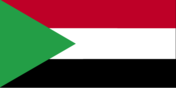
- three equal horizontal bands of red (top), white, and black with a green isosceles triangle based on the hoist side; colors and design based on the Arab Revolt flag of World War I, but the meanings of the colors are expressed as follows: red signifies the struggle for freedom, white is the color of peace, light, and love, black represents Sudan itself (in Arabic 'Sudan' means black), green is the color of Islam, agriculture, and prosperity
- three equal horizontal bands of red (top), white, and black with a green isosceles triangle based on the hoist side; colors and design based on the Arab Revolt flag of World War I, but the meanings of the colors are expressed as follows
- red signifies the struggle for freedom, white is the color of peace, light, and love, black represents Sudan itself (in Arabic 'Sudan' means black), green is the color of Islam, agriculture, and prosperity
Government type
Federal republic ruled by the National Congress Party the (NCP), which came to power by military coup in 1989; the CPA-mandated Government of National Unity, which since 2005 provided a percentage of leadership posts to the south Sudan-based Sudan People's Liberation Movement (SPLM), was disbanded following the secession of South Sudan.
Independence
1 January 1956 (from Egypt and the UK)
International law organization participation
accepts compulsory ICJ jurisdiction with reservations; withdrew acceptance of ICCt jurisdiction in 2008
International organization participation
ABEDA, ACP, AfDB, AFESD, AMF, AU, CAEU, COMESA, FAO, G-77, IAEA, IBRD, ICAO, ICC (NGOs), ICRM, IDA, IDB, IFAD, IFC, IFRCS, IGAD, ILO, IMF, IMO, Interpol, IOC, IOM, IPU, ISO, ITSO, ITU, LAS, MIGA, NAM, OIC, OPCW, PCA, UN, UNCTAD, UNESCO, UNHCR, UNIDO, UNWTO, UPU, WCO, WFTU (NGOs), WHO, WIPO, WMO, WTO (observer)
Judicial branch
Constitutional Court of nine justices; National Supreme Court; National Courts of Appeal; other national courts; National Judicial Service Commission will undertake overall management of the National Judiciary
Legal system
mixed legal system of Islamic law and English common law
Legislative branch
- bicameral National Legislature consists of a Council of States (50 seats; members indirectly elected by state legislatures to serve six-year terms) and a National Assembly (450 seats; 60% from geographic constituencies, 25% from a women's list, and 15% from party lists; members to serve six-year terms) last held on 11-15 April 2010 (next to be held in 2016) National Assembly - percent of vote by party - NA; seats by party - NCP 323, SPLM 99, PCP 4, DUP 4, UFP 3, URRP 2, DUPO 2, SPLM-DC 2, other 7, vacant 4
- election results
- National Assembly - percent of vote by party - NA; seats by party - NCP 323, SPLM 99, PCP 4, DUP 4, UFP 3, URRP 2, DUPO 2, SPLM-DC 2, other 7, vacant 4
- elections
- last held on 11-15 April 2010 (next to be held in 2016)
National anthem
- "Nahnu Djundulla Djundulwatan" (We Are the Army of God and of Our Land) Sayed Ahmad Muhammad SALIH/Ahmad MURJAN adopted 1956; the song originally served as the anthem of the Sudanese military
- lyrics/music
- Sayed Ahmad Muhammad SALIH/Ahmad MURJAN
- name
- "Nahnu Djundulla Djundulwatan" (We Are the Army of God and of Our Land)
National holiday
Independence Day, 1 January (1956)
National symbol(s)
secretary bird
Political parties and leaders
Democratic Unionist Party or DUP [Hatim al-SIR]; Democratic Unionist Party-Original or DUPO; National Congress Party or NCP [Umar Hassan al-BASHIR]; Popular Congress Party or PCP [Hassan al-TURABI]; Umma Federal Party or UFP; Umma Renewal and Reform Party or URRP
Political pressure groups and leaders
Umma Party [SADIQ Siddiq al-Mahdi]; Popular Congress Party or PCP [Hassan al-TURABI]; Democratic Unionist Party [Muhammad Uthman al-MIRGHANI]; Darfur rebel groups including the Justice and Equality Movement or JEM [Jabril IBRAHIM and other factional leaders] and the Sudan Liberation Movement or SLM [various factional leaders]
Suffrage
17 years of age; universal
Economy
Agriculture - products
cotton, groundnuts (peanuts), sorghum, millet, wheat, gum arabic, sugarcane, cassava (tapioca), mangoes, papaya, bananas, sweet potatoes, sesame; sheep and other livestock
Budget
- $4.521 billion $10.07 billion (2012 est.)
- expenditures
- $10.07 billion (2012 est.)
- revenues
- $4.521 billion
Budget surplus (+) or deficit (-)
-10.8% of GDP (2012 est.)
Current account balance
-$3.575 billion (2012 est.) $208.1 million (2011 est.)
Debt - external
$39.7 billion (31 December 2012 est.) $38.62 billion (31 December 2011 est.)
Economy - overview
Sudan is an extremely poor country that has had to deal with social conflict, civil war, and the July 2011 secession of South Sudan - the region of the country that had been responsible for about three-fourths of the former Sudan's total oil production. The oil sector had driven much of Sudan's GDP growth since it began exporting oil in 1999. For nearly a decade, the economy boomed on the back of increases in oil production, high oil prices, and significant inflows of foreign direct investment. Following South Sudan's secession, Sudan has struggled to maintain economic stability, because oil earnings now provide a far lower share of the country's need for hard currency and for budget revenues. Sudan is attempting to generate new sources of revenues, such as from gold mining, while carrying out an austerity program to reduce expenditures. Agricultural production continues to employ 80% of the work force. Sudan introduced a new currency, still called the Sudanese pound, following South Sudan's secession, but the value of the currency has fallen since its introduction. Khartoum formally devalued the currency in June when it passed austerity measures that included gradually repealing fuel subsidies. Sudan also faces rising inflation, which reached 47% on an annual basis in November. Ongoing conflicts in Southern Kordofan, Darfur, and the Blue Nile states, lack of basic infrastructure in large areas, and reliance by much of the population on subsistence agriculture ensure that much of the population will remain at or below the poverty line for years to come.
Exchange rates
Sudanese pounds (SDG) per US dollar - 4.4 (2012 est.) 2.68 (2011 est.) 2.31 (2010 est.) 2.3 (2009) 2.1 (2008)
Exports
$4.548 billion (2012 est.) $9.694 billion (2011 est.)
Exports - commodities
gold; oil and petroleum products; cotton, sesame, livestock, groundnuts, gum arabic, sugar
Exports - partners
Macau 65.2%, UAE 15.5% (2011)
Fiscal year
calendar year
GDP - composition by sector
- 32% 25% 43% (2012 est.)
- agriculture
- 32%
- industry
- 25%
- services
- 43% (2012 est.)
GDP - per capita (PPP)
$2,400 (2012 est.) $2,800 (2011 est.) $2,400 (2010 est.) data are in 2012 US dollars
GDP - real growth rate
-11.2% (2012 est.) -4.5% (2011 est.) 2.2% (2010 est.)
GDP (official exchange rate)
$51.58 billion (2012 est.)
GDP (purchasing power parity)
$80.43 billion (2012 est.) $90.61 billion (2011 est.) $94.87 billion (2010 est.) data are in 2012 US dollars
Household income or consumption by percentage share
- 2.7% 26.7%
- highest 10%
- 26.7%
- lowest 10%
- 2.7%
Imports
$6.645 billion (2012 est.) $8.205 billion (2011 est.)
Imports - commodities
foodstuffs, manufactured goods, refinery and transport equipment, medicines and chemicals, textiles, wheat
Imports - partners
Macau 21.5%, UAE 10.1%, Saudi Arabia 6.9%, India 6.7%, Egypt 5.8%, Germany 4.8% (2011)
Industrial production growth rate
3.5% (2010 est.)
Inflation rate (consumer prices)
31.5% (2012 est.) 18% (2011 est.)
Investment (gross fixed)
26% of GDP (2012 est.)
Labor force
11.92 million (2007 est.)
Labor force - by occupation
- 80% 7% 13% (1998 est.)
- agriculture
- 80%
- industry
- 7%
- services
- 13% (1998 est.)
Market value of publicly traded shares
$NA
Population below poverty line
46.5% (2009 est.)
Public debt
89.3% of GDP (2012 est.) 89.2% of GDP (2011 est.)
Reserves of foreign exchange and gold
$297.9 million (31 December 2012 est.) $295 million (31 December 2011 est.)
Stock of broad money
$12.83 billion (31 December 2012 est.) $15.6 billion (31 December 2011 est.)
Stock of domestic credit
$10.97 billion (31 December 2012 est.) $13.99 billion (31 December 2011 est.)
Stock of narrow money
$7.847 billion (31 December 2012 est.) $9.272 billion (31 December 2011 est.)
Taxes and other revenues
8.8% of GDP (2012 est.)
Unemployment rate
20% (2012 est.) 18.7% (2002 est.)
Energy
Carbon dioxide emissions from consumption of energy
13.79 million Mt (2010 est.)
Crude oil - exports
370,700 bbl/day (2009 est.)
Crude oil - imports
0 bbl/day (2009 est.)
Crude oil - production
120,000 bbl/day (2012 est.)
Crude oil - proved reserves
5 billion bbl (1 January 2012 est.)
Electricity - consumption
4.611 billion kWh (2009 est.)
Electricity - exports
0 kWh (2010 est.)
Electricity - from fossil fuels
30.7% of total installed capacity (2009 est.)
Electricity - from hydroelectric plants
66.3% of total installed capacity (2009 est.)
Electricity - from nuclear fuels
0% of total installed capacity (2009 est.)
Electricity - from other renewable sources
3% of total installed capacity (2009 est.)
Electricity - imports
0 kWh (2010 est.)
Electricity - installed generating capacity
2.338 million kW (2009 est.)
Electricity - production
6.509 billion kWh (2009 est.)
Natural gas - consumption
0 cu m (2010 est.)
Natural gas - exports
0 cu m (2010 est.)
Natural gas - imports
0 cu m (2010 est.)
Natural gas - production
0 cu m (2010 est.)
Natural gas - proved reserves
84.95 billion cu m (1 January 2012 est.)
Refined petroleum products - consumption
95,450 bbl/day (2011 est.)
Refined petroleum products - exports
14,950 bbl/day (2008 est.)
Refined petroleum products - imports
24,820 bbl/day (2008 est.)
Refined petroleum products - production
85,890 bbl/day (2008 est.)
Communications
Broadcast media
the Sudanese Government directly controls TV and radio, requiring that both media reflect government policies; TV has a permanent military censor; a private radio station is in operation (2007)
Internet country code
.sd
Internet hosts
99 (2012)
Internet users
4.2 million (2008)
Telephone system
- well-equipped system by regional standards and being upgraded; cellular communications started in 1996 and have expanded substantially with wide coverage of most major cities consists of microwave radio relay, cable, fiber optic, radiotelephone communications, tropospheric scatter, and a domestic satellite system with 14 earth stations country code - 249; linked to the EASSy and FLAG fiber-optic submarine cable systems; satellite earth stations - 1 Intelsat (Atlantic Ocean), 1 Arabsat (2010)
- domestic
- consists of microwave radio relay, cable, fiber optic, radiotelephone communications, tropospheric scatter, and a domestic satellite system with 14 earth stations
- general assessment
- well-equipped system by regional standards and being upgraded; cellular communications started in 1996 and have expanded substantially with wide coverage of most major cities
- international
- country code - 249; linked to the EASSy and FLAG fiber-optic submarine cable systems; satellite earth stations - 1 Intelsat (Atlantic Ocean), 1 Arabsat (2010)
Telephones - main lines in use
483,600 (2011)
Telephones - mobile cellular
25.056 million (2011)
Transportation
Airports
72 (2012)
Airports - with paved runways
- 1 (2012)
- 1,524 to 2,437 m
- 2
- 2,438 to 3,047 m
- 9
- over 3,047 m
- 3
- total
- 15
- under 914 m
- 1 (2012)
Airports - with unpaved runways
- 12 (2012)
- 1,524 to 2,437 m
- 17
- 2,438 to 3,047 m
- 1
- 914 to 1,523 m
- 27
- total
- 57
- under 914 m
- 12 (2012)
Heliports
6 (2012)
Merchant marine
- cargo 2 (2010)
- total
- 2
Pipelines
gas 156 km; oil 4,070 km; refined products 1,613 km (2010)
Ports and terminals
Port Sudan
Railways
- 5,978 km 4,578 km 1.067-m gauge; 1,400 km 0.600-m gauge for cotton plantations (2008)
- total
- 5,978 km
Roadways
- 11,900 km 4,320 km 7,580 km (2000)
- total
- 11,900 km
- unpaved
- 7,580 km (2000)
Waterways
4,068 km (1,723 km open year round on White and Blue Nile rivers) (2011)
Military and Security
Manpower available for military service
- 10,433,973 10,411,443 (2010 est.)
- females age 16-49
- 10,411,443 (2010 est.)
- males age 16-49
- 10,433,973
Manpower fit for military service
- 6,475,530 6,840,885 (2010 est.)
- females age 16-49
- 6,840,885 (2010 est.)
- males age 16-49
- 6,475,530
Manpower reaching militarily significant age annually
- 532,030 512,476 (2010 est.)
- female
- 512,476 (2010 est.)
- male
- 532,030
Military branches
- Sudanese Armed Forces (SAF): Land Forces, Navy (includes Marines), Sudanese Air Force (Sikakh al-Jawwiya as-Sudaniya), Popular Defense Forces (2011)
- Sudanese Armed Forces (SAF)
- Land Forces, Navy (includes Marines), Sudanese Air Force (Sikakh al-Jawwiya as-Sudaniya), Popular Defense Forces (2011)
Military expenditures
3% of GDP (2005 est.)
Military service age and obligation
18-33 years of age for male and female compulsory and voluntary military service; 1-2 year service obligation; a requirement that completion of national service was mandatory before entering public or private sector employment has been cancelled (2009)
Transnational Issues
Disputes - international
the effects of Sudan's almost constant ethnic and rebel militia fighting since the mid-20th century have penetrated all of the neighboring states; Chad wishes to be a helpful mediator in resolving the Darfur conflict, and in 2010 established a joint border monitoring force with Sudan, which has helped to reduce cross-border banditry and violence; as of 2006, Chad, Ethiopia, Kenya, Central African Republic, Democratic Republic of the Congo, and Uganda provided shelter for over a half million Sudanese refugees, which include 240,000 Darfur residents driven from their homes by Janjawid armed militia and Sudanese military forces; as of January 2011, Sudan, in turn, hosted about 138,700 Eritreans, 43,000 Chadians, and smaller numbers of Ethiopians; Sudan accuses Eritrea of supporting Sudanese rebel groups; efforts to demarcate the porous boundary with Ethiopia proceed slowly due to civil and ethnic fighting in eastern Sudan; Sudan claims but Egypt de facto administers security and economic development of Halaib region north of the 22nd parallel boundary; periodic violent skirmishes with Sudanese residents over water and grazing rights persist among related pastoral populations along the border with the Central African Republic; South Sudan-Sudan boundary represents 1 January 1956 alignment, final alignment pending negotiations and demarcation; final sovereignty status of Abyei Area pending negotiations between South Sudan and Sudan
Refugees and internally displaced persons
- 100,464 (Eritrea); 31,871 (Chad); 4,421 (Ethiopia) (2011) more than 2.4 million (civil war 1983-2005; ongoing conflict in Darfur region; government and rebel fighting along South Sudan border) (2011)
- IDPs
- more than 2.4 million (civil war 1983-2005; ongoing conflict in Darfur region; government and rebel fighting along South Sudan border) (2011)
- refugees (country of origin)
- 100,464 (Eritrea); 31,871 (Chad); 4,421 (Ethiopia) (2011)
Trafficking in persons
- Sudan is a source, transit, and destination country for men, women, and children who are subjected to forced labor and sex trafficking; Sudanese women and girls, particularly those from rural areas or who are internally displaced, are vulnerable to forced labor as domestic workers in homes throughout the country; some of these women and girls are subsequently sexually abused by male occupants of the household or forced to engage in commercial sex acts; Sudanese women and girls are subjected to domestic servitude in Middle Eastern countries, such as Bahrain, Saudi Arabia, and Qatar, and to forced sex trafficking in European countries; some Sudanese men who voluntarily migrate to the Middle East as low-skilled laborers face conditions indicative of forced labor; Sudanese children transit Yemen en route to Saudi Arabia, where they are used in forced begging and street vending, and reportedly work in exploitative labor situations for Sudanese traders in the Central African Republic; Sudan is a transit and destination country for Ethiopian and Eritrean women subjected to domestic servitude in Sudan and Middle Eastern countries; Sudan is a destination for Ethiopian, Somali, and possibly Thai women subjected to forced prostitution; Sudanese children in Darfur were forcibly conscripted, at times through abduction, and used by armed groups Tier 3 - Sudan does not fully comply with the minimum standards for the elimination of trafficking and is not making significant efforts to do so; while the government took some initial steps to acknowledge the existence of trafficking, draft anti-trafficking legislation, prosecute suspected traffickers, demobilize and reintegrate child soldiers, and waive overstay fines for foreign domestic workers, its efforts to combat human trafficking through law enforcement, protection, or prevention measures were undertaken in an ad hoc fashion, rather than as the result of strategic planning; the government convicted three traffickers, but did not officially identify trafficking victims or make public data regarding its efforts to combat human trafficking; its proxy militias reportedly unlawfully recruited and used child soldiers during the reporting period, and it did not take action to conclude a propsed action plan with the UN to address the problem (2012)
- current situation
- Sudan is a source, transit, and destination country for men, women, and children who are subjected to forced labor and sex trafficking; Sudanese women and girls, particularly those from rural areas or who are internally displaced, are vulnerable to forced labor as domestic workers in homes throughout the country; some of these women and girls are subsequently sexually abused by male occupants of the household or forced to engage in commercial sex acts; Sudanese women and girls are subjected to domestic servitude in Middle Eastern countries, such as Bahrain, Saudi Arabia, and Qatar, and to forced sex trafficking in European countries; some Sudanese men who voluntarily migrate to the Middle East as low-skilled laborers face conditions indicative of forced labor; Sudanese children transit Yemen en route to Saudi Arabia, where they are used in forced begging and street vending, and reportedly work in exploitative labor situations for Sudanese traders in the Central African Republic; Sudan is a transit and destination country for Ethiopian and Eritrean women subjected to domestic servitude in Sudan and Middle Eastern countries; Sudan is a destination for Ethiopian, Somali, and possibly Thai women subjected to forced prostitution; Sudanese children in Darfur were forcibly conscripted, at times through abduction, and used by armed groups
- tier rating
- Tier 3 - Sudan does not fully comply with the minimum standards for the elimination of trafficking and is not making significant efforts to do so; while the government took some initial steps to acknowledge the existence of trafficking, draft anti-trafficking legislation, prosecute suspected traffickers, demobilize and reintegrate child soldiers, and waive overstay fines for foreign domestic workers, its efforts to combat human trafficking through law enforcement, protection, or prevention measures were undertaken in an ad hoc fashion, rather than as the result of strategic planning; the government convicted three traffickers, but did not officially identify trafficking victims or make public data regarding its efforts to combat human trafficking; its proxy militias reportedly unlawfully recruited and used child soldiers during the reporting period, and it did not take action to conclude a propsed action plan with the UN to address the problem (2012)