1987 Edition
CIA World Factbook 1987 (Internet Archive)
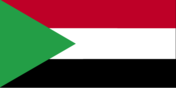
Geography
Boundary disputes
none; international boundary and Administrative Boundary with Kenya; international boundary and Administrative Boundary with Egypt
Climate
tropical in south; arid desert in north; rainy season (April to October)
Coastline
853 km
Comparative area
- about one-fourth the size of US
- about the size of
Contiguous zone
18 nm
Continental shelf
200 meters or to depth of exploitation
Environment
dominated by Nile River and tributaries; dust storms; desertification
Land boundaries
7,805 km total
Land use
5% arable land; NEGL% permanent crops; 24% meadows and pastures; 20% forest and woodland; 51% other; includes 1% irrigated
Special notes
largest country in Africa
Terrain
generally flat, featureless plain; mountains in east and west
Territorial sea
12 nm
Total area
- 500 km Red Dunqulah Sea * Agbarah , KHARTOUM, Kassalé Alfishir, © Wed Madani” a 2 AUbavvid” kia Nyala Matekal > authoritative
- 2,505,810 km?; land area: 2,376,000 km?
- 163,270 km?; land area: 161,470 km?
People and Society
Ethnic divisions
52% black, 39% Arab, 6% Beja, 2% foreigners, 1% other
Infant mortality rate
118.9/1,000 (1985)
Labor force
6.086 million (1982); roughly 78.4% agriculture, 9.8% industry and commerce, 6.0% government; labor shortages for almost all categories of employment coexist with urban unemployment
Language
Arabic (official), Nubian, Ta Bedawie, diverse dialects of Nilotic, NiloHamitic, and Sudanic languages, English; program of Arabization in process
Life expectancy
47
Literacy
20%
Nationality
noun—Sudanese (sing. and pl.); adjective—Sudanese
Population
23,524,622 (July 1987), average annual growth rate 1.90%
Religion
70% Sunni Muslim in north, 20% indigenous beliefs, 5% Christian (mostly in south)
Government
Administrative divisions
9 regions
Branches
Supreme Council and Civilian Cabinet; regional military governors
Capital
Khartoum
Elections
elections held in April 1986; selected representation to a Constituent Assembly that was to draft a new constitution in one year and thereafter turn itself into a parliament to serve for three years Political parties and leaders: following coup in April 1985, more than 30 different political parties declared; most significant include the Umma Party (Ansar Muslim Sect), the Democratic Unionist Party (Khatmiyyah Muslim Sect), the rightist Islamic fundamentalist National Islamic Front (Muslim Brotherhood), the Sudanese Communist Party, and the B‘ath Party; major southern parties include the Sudan African Congress and the Southern Sudanese Political Association
Government leaders
Ahmad al-MIRGHANI, Chairman, Supreme Council (since May 1986); Sadiq alMAHDI, Prime Minister (since May 1986)
Legal system
based on English common law and Islamic law; in September 1983 President Nimeiri declared the penal code would conform to Islamic law; some separate religious courts; interim constitution promulgated August 1985; accepts compulsory ICJ jurisdiction, with reservations
Member of
AfDB, APC, Arab League, FAO, G-77, IAEA, IBRD, ICAC, ICAO, IDA, IDB—Islamic Development Bank, (IFAD, IFC, ILO, IMF, IMO, INTELSAT, INTERPOL, ITU, NAM, OAU, OIC, UN, UNESCO, UPU, WFTU, WHO, WIPO, WMO, WTO
National holiday
I January, Independence Day
Official name
Republic of the Sudan
Suffrage
universal adult
Type
republic
Economy
Agriculture
main crops—sorghum, millet, wheat, sesame, peanuts, beans, barley; not self-sufficient in food production; main cash crops—cotton, gum arabic, peanuts, sesame
Budget
(FY86) public revenues $630 million, total expenditures $1,023 million, including development expenditure of $255 million
Electric power
552,000 kW capacity; 1,210 million kWh produced, 52 kWh per capita (1986)
Exports
$557 million (f.o.b., 1985); cotton (26%), gum arabic, livestock, peanuts, sesame; $40 million to Communist countries (FY82)
Fiscal year
1 July-30 June
GDP
$7.31 billion at current prices (FY84), $330 per capita (FY84)
Imports
$1,235 million (c.i.f., 1985); textiles, petroleum products, foodstuffs, machinery and equipment, manufactured goods
Major industries
cotton ginning, textiles, brewery, cement, edible oils, livestock, soap, distilling, shoes, pharmaceuticals
Major trade partners
UK, FRG, US, Saudi Arabia, France, Egypt, Japan
Monetary conversion rate
2.50 Sudanese pounds=US$] (October 1986) official; 5.00 Sudanese pounds=US$1 free market (December 1986)
Natural resources
modest reserves of oil, iron ore, copper, chrome, and other industrial minerals
Communications
Airfields
88 total, 79 usable; 8 with permanent-surface runways; 4 with runways 2,440-3,659 m, 3] with runways 1,220-2,489 m
Civil air
13 major transport aircraft
Highways
20,000 km total; 2,000 km bituminous treated, 4,000 km gravel, 2,304 km improved earth; remainder unimproved earth and track
Inland waterways
5,310 km navigable
Pipelines
refined products, 815 km
Ports
1 major (Port Sudan)
Railroads
5,516 km total; 4,800 km 1.067meter gauge, 716 km 1.6096-meter gauge plantation line
Telecommunications
large system by African standards, but barely adequate; consists of radio relay, cables, radio communications, and troposcatter,; domestic satellite system with 14 stations; 68,500 telephones (0.3 per 100 popl.}; 4 AM, 1 FM, 2 TV stations; 1 Atlantic Ocean satellite station
Military and Security
Branches
Army, Navy, Air Force, Air Defense Force
Military budget
for fiscal year ending 30 June 1986, $134.4 million; 5.5% of central government budget Suriname North Atlantic Ocean Nieuw Nickerie Brokopando, Prof. Dr, tr. W. # van Blommestein Meer km
Military manpower
males 15-49, 5,314,000; 3,247,000 fit for military service; 249,000 reach military age (18) annually