2019 Edition
CIA World Factbook 2019 Archive (Wayback Machine)
Introduction
Background
Slovakia traces its roots to the 9th century state of Great Moravia. Subsequently, the Slovaks became part of the Hungarian Kingdom, where they remained for the next 1,000 years. After the formation of the dual Austro-Hungarian monarchy in 1867, backlash to language and education policies favoring the use of Hungarian (Magyarization) encouraged the strengthening of Slovak nationalism and a cultivation of cultural ties with the closely related Czechs, who fell administratively under the Austrian half of the empire. After the dissolution of the Austro-Hungarian Empire at the close of World War I, the Slovaks joined the Czechs to form Czechoslovakia. The new state was envisioned as a nation with Czech and Slovak branches. During the interwar period, Slovak nationalist leaders pushed for autonomy within Czechoslovakia, and in 1939 Slovakia became an independent state created by and allied with Nazi Germany. Following World War II, Czechoslovakia was reconstituted and came under communist rule within Soviet-dominated Eastern Europe. In 1968, an invasion by Warsaw Pact troops ended the efforts of Czechoslovakia's leaders to liberalize communist rule and create "socialism with a human face," ushering in a period of repression known as "normalization." The peaceful "Velvet Revolution" swept the Communist Party from power at the end of 1989 and inaugurated a return to democratic rule and a market economy. On 1 January 1993, Czechoslovakia underwent a nonviolent "velvet divorce" into its two national components, Slovakia and the Czech Republic. Slovakia joined both NATO and the EU in the spring of 2004 and the euro zone on 1 January 2009.
Geography
Area
- Land
- 48,105 sq km
- Total
- 49,035 sq km
- Water
- 930 sq km
Area Comparative
about one and a half times the size of Maryland; about twice the size of New Hampshire
Climate
temperate; cool summers; cold, cloudy, humid winters
Coastline
0 km (landlocked)
Elevation
- Highest Point
- Gerlachovsky Stit 2,655 m
- Lowest Point
- Bodrok River 94 m
- Mean Elevation
- 458 m
Environment Current Issues
air pollution and acid rain present human health risks and damage forests; land erosion caused by agricultural and mining practices; water pollution
Environment International Agreements
- Party To
- Air Pollution, Air Pollution-Nitrogen Oxides, Air Pollution-Persistent Organic Pollutants, Air Pollution-Sulfur 85, Air Pollution-Sulfur 94, Air Pollution-Volatile Organic Compounds, Antarctic Treaty, Biodiversity, Climate Change, Climate Change-Kyoto Protocol, Desertification, Endangered Species, Environmental Modification, Hazardous Wastes, Law of the Sea, Ozone Layer Protection, Ship Pollution, Wetlands, Whaling
- Signed But Not Ratified
- none of the selected agreements
Geographic Coordinates
48 40 N, 19 30 E
Geography Note
landlocked; most of the country is rugged and mountainous; the Tatra Mountains in the north are interspersed with many scenic lakes and valleys
Irrigated Land
869 sq km (2012)
Land Boundaries
- Border Countries
- Austria 105 km, Czech Republic 241 km, Hungary 627 km, Poland 541 km, Ukraine 97 km
- Total
- 1,611 km
Land Use
- Agricultural Land
- 40.1% (2011 est.)
- Agricultural Land Arable Land
- 28.9% (2011 est.)
- Agricultural Land Permanent Crops
- 0.4% (2011 est.)
- Agricultural Land Permanent Pasture
- 10.8% (2011 est.)
- Forest
- 40.2% (2011 est.)
- Other
- 19.7% (2011 est.)
Location
Central Europe, south of Poland
Map References
Europe
Maritime Claims
none (landlocked)
Natural Hazards
flooding
Natural Resources
lignite, small amounts of iron ore, copper and manganese ore; salt; arable land
Population Distribution
a fairly even distribution throughout most of the country; slightly larger concentration in the west in proximity to the Czech border
Terrain
rugged mountains in the central and northern part and lowlands in the south
People and Society
Age Structure
- 0 14 Years
- 15.2% (male 424,921 /female 402,483)
- 15 24 Years
- 10.48% (male 293,573 /female 277,041)
- 25 54 Years
- 45.04% (male 1,239,670 /female 1,212,687)
- 55 64 Years
- 13.32% (male 345,114 /female 380,077)
- 65 Years And Over
- 15.97% (male 339,350 /female 530,124) (2018 est.)
Birth Rate
9.6 births/1,000 population (2018 est.)
Current Health Expenditure
7.1% (2016)
Death Rate
9.9 deaths/1,000 population (2018 est.)
Dependency Ratios
- Elderly Dependency Ratio
- 19.9 (2015 est.)
- Potential Support Ratio
- 5 (2015 est.)
- Total Dependency Ratio
- 41.5 (2015 est.)
- Youth Dependency Ratio
- 21.6 (2015 est.)
Drinking Water Source
- Improved Rural
- 100% of population
- Improved Total
- 100% of population
- Improved Urban
- 100% of population
- Unimproved Rural
- 0% of population
- Unimproved Total
- 0% of population (2015 est.)
- Unimproved Urban
- 0% of population
Education Expenditures
3.9% of GDP (2016)
Ethnic Groups
Slovak 80.7%, Hungarian 8.5%, Romani 2%, other 1.8% (includes Czech, Ruthenian, Ukrainian, Russian, German, Polish), unspecified 7% (2011 est.)
HIV/AIDS Adult Prevalence Rate
<.1% (2018 est.)
HIV/AIDS Deaths
<100 (2018 est.)
HIV/AIDS People Living With HIV/AIDS
1,200 (2018 est.)
Hospital Bed Density
5.8 beds/1,000 population (2015)
Infant Mortality Rate
- Female
- 4.4 deaths/1,000 live births
- Male
- 5.7 deaths/1,000 live births
- Total
- 5 deaths/1,000 live births (2018 est.)
Languages
Slovak (official) 78.6%, Hungarian 9.4%, Roma 2.3%, Ruthenian 1%, other or unspecified 8.8% (2011 est.)
Life Expectancy at Birth
- Female
- 81.2 years
- Male
- 73.9 years
- Total Population
- 77.4 years (2018 est.)
Major Urban Areas Population
433,000 BRATISLAVA (capital) (2019)
Maternal Mortality Rate
5 deaths/100,000 live births (2017 est.)
Median Age
- Female
- 42.7 years
- Male
- 39.3 years
- Total
- 41 years (2018 est.)
Mother's Mean Age at First Birth
27.6 years (2014 est.)
Nationality
- Adjective
- Slovak
- Noun
- Slovak(s)
Net Migration Rate
0.1 migrant(s)/1,000 population (2018 est.)
Obesity Adult Prevalence Rate
20.5% (2016)
Physicians Density
2.46 physicians/1,000 population (2016)
Population
5,445,040 (July 2018 est.)
Population Growth Rate
-0.02% (2018 est.)
Religions
Roman Catholic 62%, Protestant 8.2%, Greek Catholic 3.8%, other or unspecified 12.5%, none 13.4% (2011 est.)
Sanitation Facility Access
- Improved Rural
- 98.2% of population (2015 est.)
- Improved Total
- 98.8% of population (2015 est.)
- Improved Urban
- 99.4% of population (2015 est.)
- Unimproved Rural
- 1.8% of population (2015 est.)
- Unimproved Total
- 1.2% of population (2015 est.)
- Unimproved Urban
- 0.6% of population (2015 est.)
School Life Expectancy Primary To Tertiary Education
- Female
- 16 years (2016)
- Male
- 14 years
- Total
- 15 years
Sex Ratio
- 0 14 Years
- 1.06 male(s)/female
- 15 24 Years
- 1.06 male(s)/female
- 25 54 Years
- 1.02 male(s)/female
- 55 64 Years
- 0.91 male(s)/female
- 65 Years And Over
- 0.64 male(s)/female
- At Birth
- 1.07 male(s)/female
- Total Population
- 0.94 male(s)/female (2018 est.)
Total Fertility Rate
1.42 children born/woman (2018 est.)
Unemployment Youth Ages 15 24
- Female
- 20.2% (2017 est.)
- Male
- 18.1%
- Total
- 18.9%
Urbanization
- Rate Of Urbanization
- 0% annual rate of change (2015-20 est.)
- Urban Population
- 53.7% of total population (2019)
Government
Administrative Divisions
8 regions (kraje, singular - kraj); Banskobystricky, Bratislavsky, Kosicky, Nitriansky, Presovsky, Trenciansky, Trnavsky, Zilinsky
Capital
- Daylight Saving Time
- +1hr, begins last Sunday in March; ends last Sunday in October
- Geographic Coordinates
- 48 09 N, 17 07 E
- Name
- Bratislava
- Time Difference
- UTC+1 (6 hours ahead of Washington, DC, during Standard Time)
Citizenship
- Citizenship By Birth
- no
- Citizenship By Descent Only
- at least one parent must be a citizen of Slovakia
- Dual Citizenship Recognized
- no
- Residency Requirement For Naturalization
- 5 years
Constitution
- Amendments
- proposed by the National Council; passage requires at least three-fifths majority vote of Council members; amended many times, last in 2017 (2017)
- History
- several previous (preindependence); latest passed by the National Council 1 September 1992, signed 3 September 1992, effective 1 October 1992
Country Name
- Conventional Long Form
- Slovak Republic
- Conventional Short Form
- Slovakia
- Etymology
- related to the Slavic autonym (self-designation) "Slovenin," a derivation from "slovo" (meaning "word"), denoting "people who speak (the same language)" (i.e., people who understand each other)
- Local Long Form
- Slovenska republika
- Local Short Form
- Slovensko
Diplomatic Representation From The Us
- Chief Of Mission
- Ambassador Bridget A. BRINK (since 20 August 2019)
- Embassy
- P.O. Box 309, 814 99 Bratislava
- Fax
- [421] (2) 5441-5148
- Mailing Address
- P.O. Box 309, 814 99 Bratislava
- Telephone
- [421] (2) 5443-3338
Diplomatic Representation In The Us
- Chancery
- 3523 International Court NW, Washington, DC 20008
- Chief Of Mission
- Ambassador Ivan KORCOK (since 17 September 2018)
- Consulate's General
- Los Angeles, New York
- Fax
- [1] (202) 237-6438
- Telephone
- [1] (202) 237-1054
Executive Branch
- Cabinet
- Cabinet appointed by the president on the recommendation of the prime minister
- Chief Of State
- President Zuzana CAPUTOVA (since 15 June 2014)
- Election Results
- Zuzana CAPUTOVA elected president in second round; percent of vote - Zuzana CAPUTOVA (PS) 58.4%, Maros SEFCOVIC (independent) 41.6%
- Elections Appointments
- president directly elected by absolute majority popular vote in 2 rounds if needed for a 5-year term (eligible for a second term); election last held on 16 March and 30 March 2019 (next to be held March 2024); following National Council elections (every 4 years), the president designates a prime minister candidate, usually the leader of the party or coalition that wins the most votes, who must win a vote of confidence in the National Council
- Head Of Government
- Prime Minister Peter PELLIGRINI (since 22 March 2018); Deputy Prime Ministers Richard RASI (since 22 March 2018), Laszlo SOLYMOS (since 22 March 2018), Gabriela MATECNA (since 29 November 2017)
Flag Description
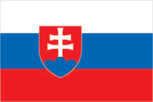
three equal horizontal bands of white (top), blue, and red derive from the Pan-Slav colors; the Slovakian coat of arms (consisting of a red shield bordered in white and bearing a white double-barred cross of St. Cyril and St. Methodius surmounting three blue hills) is centered over the bands but offset slightly to the hoist side
Government Type
parliamentary republic
Independence
1 January 1993 (Czechoslovakia split into the Czech Republic and Slovakia)
International Law Organization Participation
accepts compulsory ICJ jurisdiction with reservations; accepts ICCt jurisdiction
International Organization Participation
Australia Group, BIS, BSEC (observer), CBSS (observer), CD, CE, CEI, CERN, EAPC, EBRD, ECB, EIB, EMU, EU, FAO, IAEA, IBRD, ICAO, ICC (national committees), ICRM, IDA, IEA, IFC, IFRCS, ILO, IMF, IMO, IMSO, Interpol, IOC, IOM, IPU, ISO, ITU, ITUC (NGOs), MIGA, NATO, NEA, NSG, OAS (observer), OECD, OIF (observer), OPCW, OSCE, PCA, Schengen Convention, SELEC (observer), UN, UNCTAD, UNESCO, UNFICYP, UNIDO, UNTSO, UNWTO, UPU, WCO, WFTU (NGOs), WHO, WIPO, WMO, WTO, ZC
Judicial Branch
- Highest Courts
- Supreme Court of the Slovak Republic (consists of the court president, vice president, and approximately 80 judges organized into criminal, civil, commercial, and administrative divisions with 3- and 5-judge panels); Constitutional Court of the Slovak Republic (consists of 13 judges organized into 3-judge panels)
- Judge Selection And Term Of Office
- Supreme Court judge candidates nominated by the Judicial Council of the Slovak Republic, an 18-member self-governing body that includes the Supreme Court chief justice and presidential, governmental, parliamentary, and judiciary appointees; judges appointed by the president serve for life subject to removal by the president at age 65; Constitutional Court judges nominated by the National Council of the Republic and appointed by the president; judges serve 12-year terms
- Subordinate Courts
- regional and district civil courts; Special Criminal Court; Higher Military Court; military district courts; Court of Audit;
Legal System
civil law system based on Austro-Hungarian codes; note - legal code modified to comply with the obligations of Organization on Security and Cooperation in Europe
Legislative Branch
- Description
- unicameral National Council or Narodna Rada (150 seats; members directly elected in a single- and multi-seat constituencies by closed, party-list proportional representation vote; members serve 4-year terms)
- Election Results
- percent of vote by party - Smer-SD 28.3%, SaS 12.1%, OLaNO-NOVA 11%, SNS 8.6%, LSNS 8%, Sme-Rodina 6.6%, Most-Hid 6.5%, Siet 5.6%, other 13.3%; seats by party - Smer-SD 49, SaS 21, OLaNO-NOVA 19, SNS 15, LSNS 14, Sme-Rodina 11, Most-Hid 11, Siet 10; composition - men 120, women 30, percent of women 20% note - seats by party as of May 2019 - Smer-SD 48, SaS 20, OLaNO-NOVA 16, SNS 15, LSNS 13, Sme-Rodina 8, Most-Hid 13, independent 17; composition as of May 2019 - men 118, women 32, percent of women 21.3%
- Elections
- last held on 5 March 2016 (next to be held in March 2020)
National Anthem
- Lyrics Music
- Janko MATUSKA/traditional
- Name
- "Nad Tatrou sa blyska" (Lightning Over the Tatras)
National Holiday
Constitution Day, 1 September (1992)
National Symbol S
double-barred cross (Cross of St. Cyril and St. Methodius) surmounting three peaks; national colors: white, blue, red
Political Parties And Leaders
Christian Democratic Movement or KDH [Alojz HLINA] Bridge or Most-Hid [Bela BUGAR] Direction-Social Democracy or Smer-SD [Robert FICO] Freedom and Solidarity or SaS [Richard SULIK] Kotleba-People's Party Our Slovakia or LSNS [Marian KOTLEBA] Ordinary People and Independent Personalities - New Majority or OLaNO-NOVA [Igor MATOVIC] Party of the Hungarian Community or SMK [Jozsef MENYHART] Progressive Slovakia or PS [Michal TRUBAN] Slovak National Party or SNS [Andrej DANKO] Together or Spolu [Miroslav BEBLAVY] We Are Family or Sme-Rodina [Boris KOLLAR]
Suffrage
18 years of age; universal
Economy
Agriculture Products
grains, potatoes, sugar beets, hops, fruit; pigs, cattle, poultry; forest products
Budget
- Expenditures
- 38.79 billion (2017 est.)
- Revenues
- 37.79 billion (2017 est.)
Budget Surplus Or Deficit
-1% (of GDP) (2017 est.)
Central Bank Discount Rate
- 31 December 2016
- 0%
- 31 December 2017
- 0%
Commercial Bank Prime Lending Rate
- 31 December 2016
- 2.7%
- 31 December 2017
- 2.44%
Current Account Balance
- 2016
- -$1.309 billion
- 2017
- -$2.005 billion
Debt External
- 31 March 2015
- $74.19 billion
- 31 March 2016
- $75.04 billion
Distribution Of Family Income Gini Index
- 2014
- 26.1
- 2015
- 23.7
Economy Overview
Slovakia’s economy suffered from a slow start in the first years after its separation from the Czech Republic in 1993, due to the country’s authoritarian leadership and high levels of corruption, but economic reforms implemented after 1998 have placed Slovakia on a path of strong growth. With a population of 5.4 million, the Slovak Republic has a small, open economy driven mainly by automobile and electronics exports, which account for more than 80% of GDP. Slovakia joined the EU in 2004 and the euro zone in 2009. The country’s banking sector is sound and predominantly foreign owned.Slovakia has been a regional FDI champion for several years, attractive due to a relatively low-cost yet skilled labor force, and a favorable geographic location in the heart of Central Europe. Exports and investment have been key drivers of Slovakia’s robust growth in recent years. The unemployment rate fell to historical lows in 2017, and rising wages fueled increased consumption, which played a more prominent role in 2017 GDP growth. A favorable outlook for the Eurozone suggests continued strong growth prospects for Slovakia during the next few years, although inflation is also expected to pick up.Among the most pressing domestic issues potentially threatening the attractiveness of the Slovak market are shortages in the qualified labor force, persistent corruption issues, and an inadequate judiciary, as well as a slow transition to an innovation-based economy. The energy sector in particular is characterized by unpredictable regulatory oversight and high costs, in part driven by government interference in regulated tariffs. Moreover, the government’s attempts to maintain low household energy prices could harm the profitability of domestic energy firms while undercutting energy efficiency initiatives.
Exchange Rates
- 2013
- 0.7634
- 2014
- 0.885
- 2015
- 0.9214
- 2016
- 0.903
- 2017
- 0.885
- Currency
- euros (EUR) per US dollar -
Exports
- 2016
- $75.53 billion
- 2017
- $80.8 billion
Exports Commodities
vehicles and related parts 27%, machinery and electrical equipment 20%, nuclear reactors and furnaces 12%, iron and steel 4%, mineral oils and fuels 5% (2015 est.)
Exports Partners
Germany 20.7%, Czech Republic 11.6%, Poland 7.7%, France 6.3%, Italy 6.1%, UK 6%, Hungary 6%, Austria 6% (2017)
Fiscal Year
calendar year
GDP Composition By End Use
- Exports Of Goods And Services
- 96.3% (2017 est.)
- Government Consumption
- 19.2% (2017 est.)
- Household Consumption
- 54.7% (2017 est.)
- Imports Of Goods And Services
- -92.9% (2017 est.)
- Investment In Fixed Capital
- 21.2% (2017 est.)
- Investment In Inventories
- 1.2% (2017 est.)
GDP Composition By Sector Of Origin
- Agriculture
- 3.8% (2017 est.)
- Industry
- 35% (2017 est.)
- Services
- 61.2% (2017 est.)
GDP Official Exchange Rate
$95.96 billion (2017 est.)
GDP Per Capita Ppp
- 2015
- $31,000
- 2016
- $32,000
- 2017
- $33,100
GDP Purchasing Power Parity
- 2015
- $168.2 billion
- 2016
- $173.8 billion
- 2017
- $179.7 billion
GDP Real Growth Rate
- 2015
- 3.9%
- 2016
- 3.3%
- 2017
- 3.4%
Gross National Saving
- 2015
- 22.5% of GDP
- 2016
- 21.1% of GDP
- 2017
- 20.6% of GDP
Household Income Or Consumption By Percentage Share
- Highest 10
- 19.3% (2015 est.)
- Lowest 10
- 3.3%
Imports
- 2016
- $72.51 billion
- 2017
- $80.07 billion
Imports Commodities
machinery and electrical equipment 20%, vehicles and related parts 14%, nuclear reactors and furnaces 12%, fuel and mineral oils 9% (2015 est.)
Imports Partners
Germany 19.1%, Czech Republic 16.3%, Austria 10.3%, Poland 6.5%, Hungary 6.4%, South Korea 4.5%, Russia 4.5%, France 4.3%, China 4.2% (2017)
Industrial Production Growth Rate
2.7% (2017 est.)
Industries
automobiles; metal and metal products; electricity, gas, coke, oil, nuclear fuel; chemicals, synthetic fibers, wood and paper products; machinery; earthenware and ceramics; textiles; electrical and optical apparatus; rubber products; food and beverages; pharmaceutical
Inflation Rate Consumer Prices
- 2016
- -0.5%
- 2017
- 1.3%
Labor Force
2.758 million (2017 est.)
Labor Force By Occupation
- Agriculture
- 3.9%
- Industry
- 22.7%
- Services
- 73.4% (2015)
Market Value Of Publicly Traded Shares
- 31 December 2014
- $4.732 billion
- 31 December 2015
- $4.634 billion
- 31 December 2016
- $4.567 billion
Population Below Poverty Line
12.3% (2015 est.)
Public Debt
- 2016
- 51.8% of GDP
- 2017
- 50.9% of GDP
Reserves Of Foreign Exchange And Gold
- 31 December 2016
- $2.892 billion
- 31 December 2017
- $3.622 billion
Stock Of Broad Money
- 31 December 2016
- $45.63 billion
- 31 December 2017
- $56.46 billion
Stock Of Direct Foreign Investment Abroad
- 31 December 2016
- $15.06 billion
- 31 December 2017
- $21.29 billion
Stock Of Direct Foreign Investment at Home
- 31 December 2016
- $54.03 billion
- 31 December 2017
- $69.92 billion
Stock Of Domestic Credit
- 31 December 2016
- $70.84 billion
- 31 December 2017
- $85.56 billion
Stock Of Narrow Money
- 31 December 2016
- $45.63 billion
- 31 December 2017
- $56.46 billion
Taxes And Other Revenues
39.4% (of GDP) (2017 est.)
Unemployment Rate
- 2016
- 9.7%
- 2017
- 8.1%
Energy
Carbon Dioxide Emissions From Consumption Of Energy
34.86 million Mt (2017 est.)
Crude Oil Exports
1,022 bbl/day (2017 est.)
Crude Oil Imports
111,200 bbl/day (2017 est.)
Crude Oil Production
200 bbl/day (2018 est.)
Crude Oil Proved Reserves
9 million bbl (1 January 2018 est.)
Electricity Access
100% (2016)
Electricity Consumption
26.64 billion kWh (2016 est.)
Electricity Exports
10.6 billion kWh (2016 est.)
Electricity From Fossil Fuels
36% of total installed capacity (2016 est.)
Electricity From Hydroelectric Plants
24% of total installed capacity (2017 est.)
Electricity From Nuclear Fuels
27% of total installed capacity (2017 est.)
Electricity From Other Renewable Sources
13% of total installed capacity (2017 est.)
Electricity Imports
13.25 billion kWh (2016 est.)
Electricity Installed Generating Capacity
7.644 million kW (2016 est.)
Electricity Production
25.32 billion kWh (2016 est.)
Natural Gas Consumption
4.672 billion cu m (2017 est.)
Natural Gas Exports
0 cu m (2017 est.)
Natural Gas Imports
4.984 billion cu m (2017 est.)
Natural Gas Production
104.8 million cu m (2017 est.)
Natural Gas Proved Reserves
14.16 billion cu m (1 January 2018 est.)
Refined Petroleum Products Consumption
85,880 bbl/day (2017 est.)
Refined Petroleum Products Exports
81,100 bbl/day (2017 est.)
Refined Petroleum Products Imports
38,340 bbl/day (2017 est.)
Refined Petroleum Products Production
131,300 bbl/day (2017 est.)
Communications
Broadband Fixed Subscriptions
- Subscriptions Per 100 Inhabitants
- 26 (2017 est.)
- Total
- 1,404,751
Broadcast Media
state-owned public broadcaster, Radio and Television of Slovakia (RTVS), operates 2 national TV stations and multiple national and regional radio networks; roughly 50 privately owned TV stations operating nationally, regionally, and locally; about 40% of households are connected to multi-channel cable or satellite TV; 32 privately owned radio stations
Internet Country Code
.sk
Internet Users
- Percent Of Population
- 80.5% (July 2016 est.)
- Total
- 4,382,558
Telephone System
- Domestic
- four companies have a license to operate cellular networks and provide nationwide cellular services (cellular operators); a few other companies provide services but do not have their own networks; fixed-line 14 per 100 and mobile-cellular 131 per 100 teledesity (2018)
- General Assessment
- a modern telecommunications system; near monopoly of fixed-line market; competition in mobile and fixed broadband market; poor mobile virtual network operator (MVNO); regulatory preparing for 5G; broadband growth in recent years; competition among DSL, cable and fibre platforms; wireless broadband options from mobile network operators; FttP growth in cities (2018)
- International
- country code - 421; 3 international exchanges (1 in Bratislava and 2 in Banska Bystrica) are available; Slovakia is participating in several international telecommunications projects that will increase the availability of external services (2017)
Telephones Fixed Lines
- Subscriptions Per 100 Inhabitants
- 14 (2017 est.)
- Total Subscriptions
- 758,842
Telephones Mobile Cellular
- Subscriptions Per 100 Inhabitants
- 131 (2017 est.)
- Total Subscriptions
- 7,117,753
Transportation
Airports
35 (2013)
Airports With Paved Runways
- 1 524 To 2 437 M
- 3
- 2 438 To 3 047 M
- 2
- 914 To 1 523 M
- 3
- Over 3 047 M
- 2
- Total
- 19 (2019)
- Under 914 M
- 9
Airports With Unpaved Runways
- 914 To 1 523 M
- 10
- Total
- 15 (2019)
- Under 914 M
- 5
Civil Aircraft Registration Country Code Prefix
OM (2016)
Heliports
1 (2019)
National Air Transport System
- Annual Freight Traffic On Registered Air Carriers
- 0 mt-km (2015)
- Annual Passenger Traffic On Registered Air Carriers
- 11,100 (2015)
- Inventory Of Registered Aircraft Operated By Air Carriers
- 23 (2015)
- Number Of Registered Air Carriers
- 4 (2015)
Pipelines
2270 km gas transmission pipelines, 6278 km high-pressure gas distribution pipelines, 27023 km mid- and low-pressure gas distribution pipelines (2016), 510 km oil (2015)
Ports And Terminals
Bratislava, Komarno (Danube)
Railways
- Broad Gauge
- 99 km 1.520-m gauge (2016)
- Narrow Gauge
- 46 km 1.000-m or 0.750-m gauge (2016)
- Standard Gauge
- 3,435 km 1.435-m gauge (1,587 km electrified) (2016)
- Total
- 3,580 km (2016)
Roadways
56,926 km (includes local roads, national roads, and 464 km of highways) (2016)
Waterways
172 km (on Danube River) (2012)
Military and Security
Military And Security Forces
Armed Forces of the Slovak Republic (Ozbrojene Sily Slovenskej Republiky): Land Forces, Air and Air Defense Forces, and a Joint Training and Support Command. (2019)
Military Expenditures
- 2015
- 1.12% of GDP
- 2016
- 1.12% of GDP
- 2017
- 1.1% of GDP
- 2018
- 1.22% of GDP
- 2019
- 1.74% of GDP
Military Service Age And Obligation
18-30 years of age for voluntary military service; conscription in peacetime suspended in 2006; women are eligible to serve (2012)
Transnational Issues
Disputes International
bilateral government, legal, technical and economic working group negotiations continued between Slovakia and Hungary over Hungary's completion of its portion of the Gabcikovo-Nagymaros hydroelectric dam project along the Danube; as a member state that forms part of the EU's external border, Slovakia has implemented strict Schengen border rules
Illicit Drugs
transshipment point for Southwest Asian heroin bound for Western Europe; producer of synthetic drugs for regional market; consumer of ecstasy
Refugees And Internally Displaced Persons
1,523 (2018)