1988 Edition
CIA World Factbook 1988 (Internet Archive)
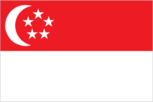
Geography
Climate
tropical; hot, humid, rainy; no pronounced rainy or dry seasons; thunderstorms occur on 40% of all days (67% of days in April)
Coastline
193 km
Comparative area
about three times the size of Washington, D. C.
Environment
mostly urban and industrialized
Ethnic divisions
76.4% Chinese, 14.9% Malay, 6.4% Indian, 2.3% other
Exclusive fishing zone
12 nm
Infant mortality rate
8.3/1,000 (1985)
Labor force
1,154,260 (June 1985); 30.2% services, 25.5% manufacturing, 23.5% trade, 10.1% transport and communication, 8.9% construction, 0.7% agriculture and fishing; 6.5% unemployment (June 1986)
Land use
4% arable land; 7% permanent crops; 0% meadows and pastures; 5% forest and woodland; 84% other
Language
Chinese, Malay, Tamil, and English (official); Malay (national)
Life expectancy
men 69, women 74
Literacy
84.2%
Nationality
noun — Singaporean(s), adjective— Singapore
Organized labor
202,302, 17.5% of labor force (1985)
Population
2,616,236 (July 1987), average annual growth rate 1.13%
Religion
majority of Chinese are Buddhists or atheists; Malays nearly all Muslim; minorities include Christians, Hindus, Sikhs, Taoists, Confucianists
Special notes
focal point for Southeast Asian sea routes
Terrain
lowland; gently undulating central plateau contains water catchment area and nature preserve
Territorial sea
3 nm
Total area
580 km2; land area: 570 km2
Government
Branches
ceremonial President; executive power exercised by Prime Minister and Cabinet responsible to unicameral legislature (Parliament)
Capital
Singapore
Communists
200-500; Barisan Sosialis infiltrated by Communists
Elections
normally held every five years; last held 1984 Political parties and leaders: government— People's Action Party (PAP), Lee Kuan Yew; opposition — Barisan Sosialis (BS), Dr. Lee Siew Choh; Workers' Party (WP), J. B. Jeyaretnam; United People's Front (UPF), Harbans Singh; Singapore Democratic Party (SDP), Chiam See Tong; Communist Party illegal
Gove.-nment leaders
WEE Kim Wee, President (since September 1985); LEE Kuan Yew, Prime Minister (since June 1959)
Legal system
based on English common law; constitution based on preindependence State of Singapore constitution; has not accepted compulsory ICJ jurisdiction
National holiday
9 August
Official name
Republic of Singapore
Suffrage
universal and compulsory over age 20
Type
republic within Commonwealth
Voting strength
(1984 election) PAP won 77 of 79 seats in Parliament and received 63% of the vote; WP and SDP won one seat each; WP member of Parliament expelled November 1986
Communications
Airfields
13 total, 10 usable; 5 with permanent-surface runways; 1 with runways 2,440-3,659 m, 3 with runways 1,220-2,439 m
Branches
Army, Navy
Civil air
3 major transport aircraft
Highways
7,400 km total; 1,150 km bituminous, 490 km laterite (some gravel), remainder improved earth
Inland waterways
800 km; 600 km navigable year round
Military manpower
males 15-49, 857,000; 413,000 fit for military service; no conscription 10km Singapore Strait Sec regional map IX
Ports
1 major (Freetown), 2 minor
Railroads
about 84 km 1. 067-meter narrow gauge privately owned mineral line operated by the Sierra Leone Development Company
Telecommunications
fair telephone and telegraph service; 16,000 telephones (0.4 per 100 popl.); 1 INTELSAT Atlantic Ocean satellite ground station; 3 AM, 1 FM, 2 TV stations Defense Forces