1981 Edition
CIA World Factbook 1981 (Internet Archive)
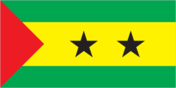
Geography
Area
Estimated at about 2,331,000 km2 (boundaries undefined and disputed); 1% agricultural, 1% forested, 98% desert, waste, or urban
Coastline
2,510 km
Communists
no Communist party, probably a few Communist sympathizers
Elections
da Costa reelected May 1980 by Popular Assembly; Assembly elections held March-April 1980 Political parties and leaders: Movement for the Liberation of Sao Tome and Principe (MLSTP), Secretary General Manuel Pinto da Costa
Land boundaries
4,537 km
Limits of territorial waters (claimed)
12 nm (plus 6 nm "necessary supervision zone")
Member of
AFDB, FAO, G-77, GATT (de facto), IBRD, ICCO, IDA, IMF, ITU, NAM, OAU, UN, UPU, WHO, WMO
Suffrage
universal for age 18 and over
People and Society
Ethnic divisions
90% Arab, 10% Afro-Asian (est.)
Labor force
about 33% (one-half foreign) of population; 44% commerce, services, and government; 28% agriculture, 21% construction, 4% industry, 3% oil and mining
Language
Arabic
Literacy
15-25% (est.)
Nationality
noun — Saudi(s); adjective — Saudi Arabian or Saudi
Population
19,795,000 (July 1982), average annual growth rate 2.8%
Religion
100% Muslim
Government
Branches
King Khalid (Al Sa'ud, Khalid ibn 'Abd al- 'Aziz) rules in consultation with royal family (especially Crown Prince Fahd), and Council of Ministers
Capital
Riyadh; foreign ministry and foreign diplomatic representatives located in Jiddah
Legal system
largely based on Islamic law, several secular codes have been introduced; commercial disputes handled by special committees; has not accepted compulsory ICJ jurisdiction
National holiday
23 September
Official name
Kingdom of Saudi Arabia
Political subdivisions
18 amirates
Type
monarchy
Economy
Agriculture
cash crops — cocoa, copra, coconut, coffee, palm oil, bananas
Aid
economic commitments — Western (non-US) countries, ODA and OOF (1970-79), $579 million; US (FY77-80), $0.6 million
Budget
(1979 est.) revenues $15.7 million, current expenditures $10.4 million, capital expenditures $9.1 million
Electric power
3,000 kW capacity (1980); 10 million kWh produced (1980), 120 kWh per capita
Exports
$26.6 million (f.o.b., 1979); mainly cocoa (90%), copra (7%), coffee, palm oil
Fiscal year
calendar year
Fishing
catch, 1,500 metric tons (1979 est.)
GNP
$40 million (1978); per capita income $490 (1978)
Imports
$15.5 million (f.o.b., 1979); food products, machinery and electrical equipment, fuels
Major industries
food processing on small scale, timber
Major trade partners
main partner, Netherlands; followed by Portugal, US, and West Germany
Monetary conversion rate
38.6 escudos=US$l (1981)
Communications
Airfields
3 total, 3 usable; 2 with permanent-surface runways; 2 with runways 1,220-2,439 m
Civil air
1 major transport aircraft
Ports
1 major (Sao Tome), 1 minor
Telecommunications
minimal system; 900 telephones (1.0 per 100 popl.); 1 AM, 1 FM, and no TV stations; 1 Atlantic Ocean satellite ground station