1981 Edition
CIA World Factbook 1981 (Internet Archive)
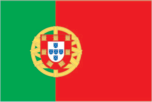
Geography
Area
About 10,360 km2; negligible amount forested; mostly desert, waste, or urban
Branches
executive with President and Prime Minister, with 19-member Revolutionary Council, made up of military officers, responsible for safeguarding the constitution; popularly elected Assembly of the Republic; independent judiciary
Capital
Lisbon
Civil air
36 major transport aircraft, including 5 leased in and 2 leased out Airfields (including Azores and Madeira Islands): 61 total, 60 usable; 31 with permanent-surface runways; 1 with runways over 3,659 m, 10 with runways 2,440-3,659 m, 11 with runways 1,220-2,439 m
Coastline
563 km
Communists
Portuguese Communist Party claims membership of 164,713 (April 1979)
Elections
national elections for Assembly of the Republic normally to be held every four years; new Assembly, with constituent powers, elected October 1980; national election for President to be held every five years, second constitutional president elected in December 1980; local elections to be held every three years, next elections in December 1982 Political parties and leaders: the Portuguese Socialist Party (PS) is led by Mario Scares; the Social Democratic Party (PSD), formerly the Popular Democratic Party (PPD), by Francisco Pinto Balsemao; the Social Democratic Center (CDS) by Diogo Freitas do Amaral; and the Portuguese Communist Party (PCP) by Alvaro Cunhal
Government leaders
President Gen. Antonio dos Santos Ramalho EANES; Prime Minister Francisco Pinto BALSEMAO
Inland waterways
820 km navigable; relatively unimportant to national economy, used by shallow-draft craft limited to 297 metric ton cargo capacity
Land boundaries
56 km
Legal system
civil law system; constitution adopted April 1976 to be amended by Assembly elected in October 1980; until then, legislative assembly acts to be reviewed for constitutionality by Revolutionary Council, with the advice of a Constitutional Commission of legal experts; laws judged unconstitutional by Council must be vetoed by President; Assembly can override veto by two-thirds majority; legal education at Universities of Lisbon and Coimbra; accepts compulsory ICJ jurisdiction, with reservations
Limits of territorial waters (claimed)
3 nm
Member of
Council of Europe, EFTA, FAO, GATT, IAEA, IATP, IBRD, ICAC, ICAO (restricted membership), ICES, ICO, IEA, IFAD, IFC, IHO, ILO, IMCO, IMF, IOOC, ISO, ITU, IWC— International Wheat Council, NATO, OECD, UN, UNESCO, UPU, WHO, WIPO, WMO, WSG
Military budget
proposed for fiscal year ending 31 December 1982, $761.5 million; about 11% of proposed central government budget
Military manpower
males 15-49, 2,372,000; 1,941,000 fit for military service; 91,000 reach military age (20) annually
National holiday
25 April
Pipelines
crude oil, 1 1 km
Political subdivisions
18 districts in mainland Portugal; Portugal's two autonomous regions, the Azores and Madeira Islands, have 4 districts (3 of them in the Azores); Macao, Portugal's remaining overseas territory, was granted broad executive and legislative autonomy in February 1976; Portugal has not officially recognized the unilateral annexation of Portuguese Timor by Indonesia
Ports
7 major, 34 minor
Suffrage
universal over age 18
Telecommunications
facilities are generally adequate; 1.31 million telephones (13.2 per 100 popl.); 39 AM, 52 FM, and 42 TV stations; 4 submarine coaxial cables; 2 Atlantic Ocean satellite stations (on mainland and Azores) DEFENSE FORCES
Type
republic, first government under new constitution formed July 1976
Voting strength
(1980 parliamentary election) the Democratic Alliance (AD) — consisting primarily of the PSD and the CDS — polled over 47.0% of the vote; the Socialists — in a coalition with two smaller parties — polled 28.0% of the vote; and the Communists — in a front coalition called the United Peoples Alliance (APU)— 16.9%, (1979 local elections) AD 47%, PS 27%, APU 21%
People and Society
Ethnic divisions
25% Qatari, 20% other Arab, 34% South Asian, 16% Iranian, 5% others
Labor force
100,000 (1980 est); 90% non-Qatari
Language
Arabic, English is commonly used as second language
Literacy
25%
Nationality
noun — Qatari(s); adjective — Qatari
Population
258,000 (July 1982), average annual growth rate 4.0%
Religion
Muslim
Government
Capital
Doha
Elections
constitution calls for elections for part of State Advisory Council, a consultative body, but none have been held
Government leader
Amir Khalifa bin Hamad Al THANI
Legal system
discretionary system of law controlled by the ruler, although civil codes are being implemented; Islamic law is significant in personal matters; a constitution was promulgated in 1970
National holiday
3 September
Offical name
State of Qatar
Suffrage
no specific provisions for suffrage laid down
Type
traditional monarchy; independence declared in
Economy
Agriculture
generally underdeveloped; main crops — grains, potatoes, olives, grapes for wine; deficit foods — sugar, grain, meat, fish, oilseed
Aid
economic authorizations — US including Ex-Im, $1.2 billion (FY70-80); other Western (ODA and OOF), $396 million (1977-79); military authorizations — US, $137 million (FY70-80)
Budget
(1980) expenditures, $7.7 billion; revenues, $5.0 billion; deficit, $2.7 billion
Crude steel
661,000 tons produced (1979), 70 kg per capita
Electric power
4,762,700 kW capacity (1981); 19.06 billion kWh produced (1981), 3,129 kWh per capita
Exports
$4.6 billion (f.o.b., 1980); principal items — cotton textiles, cork and cork products, canned fish, wine, timber and timber products, resin
Fiscal year
calendar year
Fishing
landed 211,824 metric tons (1979)
GNP
$22.2 billion (1980); 16% government consumption, 76% private consumption; 21% gross fixed capital formation; 4% change in stocks; —15% net exports; —3% net factor income from abroad; real growth rate 5.5% (1980)
Imports
$9.4 billion (c.i.f., 1980); principal items — petroleum, cotton, industrial machinery, iron and steel, chemicals
Major industries
textiles and footwear; wood pulp, paper, and cork; metalworking; oil refining; chemicals; fish canning; wine
Major trade partners
44% EC, 9% US, 21% other developed, 3% Communist, 23% LDCs
Monetary conversion rate
53.04 escudos=US$l (1980 average)
Communications
Highways
57,499 km total; 49,537 km paved (bituminous, gravel, and crushed stone), including 140 km of limited-access divided highway; 7,962 km improved earth; plus an additional 4,100 km of unimproved earth roads (motorable tracks)
Railroads
3,602 km total: state-owned Portuguese Railroad Co. (CP) operates 2,830 km 1.665meter gauge (432 km electrified and 426 km double track), 760 km meter gauge (1.000 m); 12 km (1.435-meter gauge) electrified, double, nongovernment owned