1989 Edition
CIA World Factbook 1989 (Internet Archive)
Geography
Climate
- temperate with cold, cloudy, moderately severe winters with frequent precipitation; mild summers with frequent showers and thundershowers
- maritime temperate; cool and rainy in north, warmer and drier in south
Coastline
- 491 km
- 1,793 km
Comparative area
- slightly smaller than New Mexico
- slightly smaller than Indiana
Continental shelf
200 meters or to depth of exploitation
Disputes
Macau is scheduled to become a Special Administrative Region of China in 1999; East Timor question with Indonesia
Environment
- plain crossed by a few northflowing, meandering streams; severe air and water pollution in south
- Azores subject to severe earthquakes
Extended economic zone
200 nm
Labor force
NA; no business community in the usual sense; some public works; subsistence farming and fishing
Land boundaries
2,980 km total; Czechoslovakia 1,309 km, GDR 456 km, USSR 1,215km
Land boundary
1,214 km with Spain
Land use
- 46% arable land; 1% permanent crops; 1 3% meadows and pastures; 28% forest and woodland; 1 2% other; includes NEGL% irrigated
- 32% arable land; 6% permanent crops; 6% meadows and pastures; 40% forest and woodland; 1 6% other; includes 7% irrigated
Language
English (official); also a Tahitian/ English dialect
Literacy
NA%, but probably high
Natural resources
- coal, sulfur, copper, natural gas, silver, lead, salt
- fish, forests (cork), tungsten, iron ore, uranium ore, marble
Note
- historically, an area of conflict because of flat terrain and the lack of natural barriers on the North European Plain
- Azores and Madeira Islands occupy strategic locations along western sea approaches to Strait of Gibraltar
Organized labor
NA
Terrain
- mostly flat plain, mountains along southern border
- mountainous north of the Tagus, rolling plains in south
Territorial sea
- 1 2 nm
- 1 2 nm
Total area
- 312,680 km2; land area: 304,510 km2
- 92,080 km2; land area: 91,640 km2; includes Azores and Madeira Islands
People and Society
Birth rate
- 14 births/ 1,000 population (1990)
- 12 births/ 1,000 population (1990)
Death rate
- 9 deaths/ 1,000 population (1990)
- 10 deaths/ 1,000 population (1990)
Ethnic divisions
- 98.7% Polish, 0.6% Ukrainian, 0.5% Byelorussian, less than 0.05% Jewish
- homogeneous Mediterranean stock in mainland, Azores, Madeira Islands; citizens of black African descent who immigrated to mainland during decolonization number less than 100,000
Infant mortality rate
- 13 deaths/ 1,000 live births (1990)
- 14 deaths/ 1,000 live births (1990)
Labor force
- 17,128,000 (1988); 36.5% industry and construction; 28.5% agriculture; 14.7% trade, transport, and communications; 20.3% government and other
- 4,605,700; 45% services, 35% industry, 20% agriculture (1988)
Language
- Polish
- Portuguese
Life expectancy at birth
- 68 years male, 77 years female (1990)
- 71 years male, 78 years female (1990) Portugal (continued)
Literacy
- 98%
- 83%
Nationality
- noun — Pole(s); adjective — Polish
- noun — Portuguese (sing, and pi.); adjective — Portuguese
Net migration rate
- — 5 migrants/ 1 ,000 population (1990)
- 1 migrants/ 1 ,000 population (1990)
Organized labor
- trade union pluralism
- about 55% of the labor force; the Communist-dominated General Confederation of Portuguese Workers — Intersindical (CGTP-IN) represents more than half of the unionized labor force; its main competition, the General Workers Union (UGT), is organized by the Socialists and Social Democrats and represents less than half of unionized labor
Population
- 37,776,725 (July 1990), growth rate NEGL (1990)
- 10,354,497 (July 1990), growth rate 0.3% (1990)
Religion
- 95% Roman Catholic (about 75% practicing), 5% Russian Orthodox, Protestant, and other
- 97% Roman Catholic, 1% Protestant denominations, 2% other
Total fertility rate
- 2.1 children born/ woman (1990) Poland (continued)
- l.S children born/ woman (1990)
Government
Administrative divisions
- none (dependent territory of the UK)
- 49 provinces (wojewodztwa, singular — wojewodztwo); Biata Podlaska, Biatystok, Bielsko-Biahi, Bydgoszcz, Chetm, Ciechanow, Czestochowa, Elblag, Gdansk, Gorzow Wielkopolski, Jelenia Gora, Kalisz, Katowice, Kielce, Konin, Koszalin, Krakow, Krosno, Legnica, Leszno, Lodz, Lomza, Lublin, Nowy Sacz, Olsztyn, Opole, Ostroteka, Pita, Piotrk6w, Ptock, Poznan, Przemysl, Radom, Rzeszow, Siedlce, Sieradz, Skierniewice, Stupsk, Suwatki, Szczecin, Tarnobrzeg, Tarnow, Torun, Watbrzych, Warszawa, Wtoctawek, Wroclaw, Zamosc, Zielona G6ra
- 1 8 districts (distritos, singular — distrito) and 2 autonomous regions* (regioes autonomas, singular— regiao autonoma); Acores*, Aveiro, Beja, Braga, Braganca, Castelo Branco, Coimbra, Evora, Faro, Guarda, Leiria, Lisbon. Madeira*, Portalegre, Porto, Santarem, Setubal, Viana do Castelo, Vila Real, Viseu
Capital
- Adamstown
- Warsaw
- Lisbon
Communists
- none
- 70,000 members in the Communist successor party (1990)
- Portuguese Communist Party claims membership of 200,753 (December 1983)
Constitution
- Local Government Ordinance of 1 964
- the Communist-imposed Constitution of 22 July 1952 will be replaced by a democratic Constitution before May 1991
- 25 April 1976, revised 30 October 1982; new discussions on constitutional revision began October 1987
Dependent area
Macau (scheduled to become a Special Administrative Region of China in 1999)
Diplomatic representation
- none (dependent territory of the UK)
- Ambassador Jan KIN AST; Chancery at 2640 16th Street NW, Washington DC 20009; telephone (202) 234-3800 through 3802; there are Polish Consulates General in Chicago and New York; US — Ambassador John R. DAVIS, Jr.; Embassy at Aleje Ujazdowskie 29/31, Warsaw (mailing address is APO New York 09213); telephone [48] 283041 through 283049; there is a US Consulate General in Krakow and a Consulate in Poznan
- Ambassador Joao Eduardo M. PEREIRA BASTOS; Chancery at 2125 Kalorama Road NW, Washington DC 20008; telephone (202) 328-8610; there are Portuguese Consulates General in Boston, New York, and San Francisco, and Consulates in Los Angeles, Newark (New Jersey), New Bedford (Massachusetts), and Providence (Rhode Island); US — Ambassador Edward M. ROWELL; Embassy at Avenida das Forcas Armadas, 1600 Lisbon (mailing address is APO New York 09678-0002); telephone [351] (1) 726-6600 or 6659, 8670, 8880; there are US Consulates in Oporto and Ponta Delgada (Azores)
Elections
- Island Council — last held NA (next to be held NA); results — percent of vote by party NA; seats — (11 total, 5 elected) number of seats by party NA
- Senate — last held 4 and 18 June 1989 (next to be held June 1993); results — percent of vote by party NA; seats— (100 total) Solidarity 99, independent 1; National Assembly — last held 4 and 1 8 June 1989 (next to be held June 1993); results — percent of vote by party NA; seats — (460 total) Communists 1 73, Solidarity 161, Polish Peasant Party 76, Democratic Party 27, Christian National Union 23; note — rules governing the election limited Solidarity's share of the vote to 35% of the seats; future elections are to be freely contested
- President — last held 16 February 1986 (next to be held January 1991); results — Dr. Mario Lopes Soares 5 1 .3%, Prof. Diogo Freitas do Amal 48.7%; Assembly of the Republic — last held 1 9 July 1987 (next to be held July 1991); results— Social Democrats 59.2%, Socialists 24.0%, Communists (in a front coalition) 12.4%, Democratic Renewal 2.8%, Center Democrats 1 .6%; seats — (250 total) Social Democrats 148, Socialists 60, Communists (in a front coalition) 3 1 seats, Democratic Renewal 7, Center Democrats 4
Executive branch
- British monarch, governor, island magistrate
- president, prime minister, Council of Ministers (cabinet)
- president. Council of State, prime minister, deputy prime minister, Council of Ministers (cabinet)
Flag
- blue with the flag of the UK in the upper hoist-side quadrant and the Pitcairn Islander coat of arms centered on the outer half of the flag; the coat of arms is yellow, green, and light blue with a shield featuring a yellow anchor
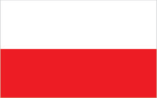
- two equal horizontal bands of white (top) and red — a crowned eagle is to be added; similar to the flags of Indonesia and Monaco which are red (top) and white
- two vertical bands of green (hoist side, two-fifths) and red (three-fifths) with the Portuguese coat of arms centered on the dividing line
Independence
- none (dependent territory of the UK)
- 11 November 1918, independent republic proclaimed
- 1140; independent republic proclaimed 5 October 1910
Judicial branch
- Island Court
- Supreme Court
- Supreme Tribunal of Justice (Supremo Tribunal de Justica)
Leaders
- Chief of State— Queen ELIZABETH II (since 6 February 1952), represented by the Governor and UK High Commissioner to New Zealand Robin A. C. BY ATT (since NA 1988); Head of Government — Island Magistrate and Chairman of the Island Council Brian YOUNG (since N A 1985) Political parties and leaders: NA
- Chief of State — President Gen. Wojciech JARUZELSKI (since 19 July 1989, Chairman of Council of State since 6 November 1985); Head of Government — Premier Tadeusz MAZOWIECKI (since 24 August 1989) Political parties and leaders: Center-right agrarian parties — Polish Peasant Party (PSL, known unofficially as PSL-Wilanowska), Gen. Franciszek Kaminski, chairman; Polish Peasant PartySolidarity, Josef Slisz, chairman; Polish Peasant Party-Rebirth (formerly the United Peasant Party), Kazimirrz Olrsiak, chairman; Other center-right parties — National Party, Bronislaw Ekert, chairman; Christian National Union, Urrslaw Chnzanowski, chairman; Christian Democratic Labor Party, Wladyslaw Sila Nowicki, chairman; Democratic Party, Jerzy Jozwiak, chairman; Center-left parties — Polish Socialist Party, Jan Jozef Lipski, chairman; Left-wing parties — Polish Socialist PartyDemocratic Revolution; Other — Social Democracy of the Republic of Poland (formerly the Communist Party or Polish United Workers' Party/PZPR), Aleksander Kwasnuewski, chairman; Union of the Social Democracy of the Republic of Poland (breakaway faction of the PZPR), Tadrusz Fiszbach, chairman
- Chief of State — President Dr. Mario Alberto Nobre Lopes SOARES (since 9 March 1986); Head of Government — Prime Minister Anibal CAVACO SILVA (since 6 November 1985); Deputy Prime Minister (vacant) Political parties and leaders: Social Democratic Party (PSD), Anibal Cavaco Silva; Portuguese Socialist Party (PS), Jorge Sampaio; Party of Democratic Renewal (PRD), Herminio Martinho; Portuguese Communist Party (PCP), Alvaro Cunhal; Social Democratic Center (CDS), Diogo Freitas do Amaral
Legal system
- local island by-laws
- mixture of Continental (Napoleonic) civil law and Communist legal theory; no judicial review of legislative acts; has not accepted compulsory ICJ jurisdiction
- civil law system; the Constitutional Tribunal reviews the constitutionality of legislation; accepts compulsory ICJ jurisdiction, with reservations
Legislative branch
- unicameral Island Council
- bicameral Parliament (Parlament) consists of an upper house or Senate (Senat) and a lower house or National Assembly (Sejm)
- unicameral Assembly of the Republic (Assembleia da Republica)
Long-form name
- Pitcairn, Henderson, Ducie, and Oeno Islands
- Republic of Poland
- Portuguese Republic
Member of
- CCC, CEMA, Council of Europe, FAO, GATT, IAEA, ICAO, ICES, IHO, ILO, ILZSG, IMO, IPU, ISO, ITC, ITU, UN, UNESCO, UPU, WFTU, WHO, Warsaw Pact, WIPO, WMO
- CCC, Council of Europe, EC, EFTA, FAO, GATT, IAEA, IATP, IBRD, ICAC, ICAO, ICES, ICO, IDB— Inter-American Development Bank, IEA, IFAD, IFC, IHO, ILO, IMF, IMO, INTELSAT, INTERPOL, IOOC, IRC, ISO, ITU, IWC— International Wheat Council, NATO, OECD, UN, UNESCO, UPU, WEU, WHO, WIPO, WMO, WSG
National holiday
- Celebration of the Birthday of the Queen (second Saturday in June), 10 June 1989
- National Liberation Day, 22 July (1952) will probably be replaced by Constitution Day, 3 May (1794)
- Day of Portugal, 10 June
Other political or pressure groups
- NA
- powerful Roman Catholic Church; Confederation for an Independent Poland (KPN), a nationalist group; Solidarity (trade union); All Poland Trade Union Alliance (OPZZ), populist program; Clubs of Catholic Intellectuals (KIKs); Freedom and Peace (WiP), a pacifist group; Independent Student Union (NZS)
Suffrage
- universal at age 18 with three years residency
- universal at age 18
- universal at age 18
Type
- dependent territory of the UK
- democratic state
- republic
Economy
Agriculture
- based on subsistence fishing and farming; wide variety of fruits and vegetables grown; must import grain products
- accounts for 15% of GNP and 28% of labor force; 75% of output from private farms, 25% from state farms; productivity remains low by European standards; leading European producer of rye, rapeseed, and potatoes; wide variety of other crops and livestock; major exporter of pork products; normally selfsufficient in food
- accounts for 9% of GDP and 20% of labor force; small inefficient farms; imports more than half of food needs; major crops — grain, potatoes, olives, grapes; livestock sector — sheep, cattle, goats, poultry, meat, dairy products
Aid
- none
- donor — bilateral aid to non-Communist less developed countries, $2.1 billion (1954-88)
- US commitments, including Ex-Im (FY70-88), $1.8 billion; Western (non-US) countries, ODA and OOF bilateral commitments (1970-87), $998 million
Budget
- revenues $430,440; expenditures $429,983. including capital expenditures of SNA (FY87 est.)
- revenues $23 billion; expenditures $24 billion, including capital expenditures of $3.5 billion (1988)
- revenues $19.0 billion; expenditures $22.2 billion, including capital expenditures of $3.1 billion (1989 est.)
Currency
- New Zealand dollar (plural — dollars); 1 New Zealand dollar (NZS) = 100 cents
- zfoty (plural — zfotych); 1 zfoty (Zt) = 100 groszy
- Portuguese escudo (plural — escudos); 1 Portuguese escudo (Esc) = 100 centavos
Electricity
- 1 10 kW capacity; 0.30 million kWh produced, 4,410 kWh per capita (1989)
- 31,390,000 kW capacity; 125,000 million kWh produced, 3,260 kWh per capita (1989)
- 6,729,000 kW capacity; 16,000 million kWh produced, 1,530 kWh per capita (1989)
Exchange rates
- New Zealand dollars (NZS) per US$1— 1.6581 (January 1990), 1.6708(1989), 1.5244(1988), 1.6866 (1987), 1.9088 (1986), 2.0064(1985)
- zfotych (Zf) per US$1 — 9,500.00 (January 1990), 1,439.18(1989), 430.55 (1988), 265.08 (1987), 175.29 (1986), 147.14(1985)
- Portuguese escudos (Esc) per US$1 — 149. 15 (January 1990), 157.46 (1989), 143.95(1988), 140.88(1987), 149.59(1986), 170.39(1985)
Exports
- SNA; commodities — fruits, vegetables, curios; partners — NA
- $24.7 billion (f.o.b., 1987 est.); commodities — machinery and equipment 63%; fuels, minerals, and metals 14%; manufactured consumer goods 14%; agricultural and forestry products 5% (1987 Portugal est.); partners— USSR 25%, FRG 12%, Czechoslovakia 6% (1988)
- $1 1.0 billion (f.o.b., 1988); commodities— cotton textiles, cork and cork products, canned fish, wine, timber and timber products, resin, machinery, appliances; partners — EC 72%, other developed countries 1 3%, US 6%
External debt
- SNA
- $40 billion (1989 est.)
- $17.2 billion (1988)
Fiscal year
- 1 April-3 1 March
- calendar year
- calendar year
GDP
$72.1 billion, per capita $6,900; real growth rate 3.5% (1989 est.)
GNP
- NA
- $172.4 billion, per capita $4,565; real growth rate -1.6% (1989 est.)
Imports
- SNA; commodities — fuel oil, machinery, building materials, flour, sugar, other foodstuffs; partners — NA
- $22.8 billion (f.o.b., 1987 est.); commodities — machinery and equipment 36%; fuels, minerals, and metals 35%; manufactured consumer goods 9%; agricultural and forestry products 1 2%; partners—USSR 23%, FRG 1 3%, Czechoslovakia 6% (1988)
- $17.7 billion (c.i.f., 1988); commodities— petroleum, cotton, foodgrains, industrial machinery, iron and steel, chemicals; partners — EC 67%, other developed countries 1 3%, less developed countries 15%, US 4%
Industrial production
- growth rate NA%
- growth rate —2.0% (1988)
- growth rate 5.5% (1988)
Industries
- postage stamp sales, handicrafts
- machine building, iron and steel, extractive industries, chemicals, shipbuilding, food processing, glass, beverages, textiles
- textiles and footwear; wood pulp, paper, and cork; metalworking; oil refining; chemicals; fish canning; wine; tourism
Inflation rate (consumer prices)
- NA%
- 640% (1 989 est.)
- 1 1 .8% (1989 est.)
Overview
- The inhabitants exist on fishing and subsistence farming. The fertile soil of the valleys produces a wide variety of fruits and vegetables, including citrus, sugarcane, watermelons, bananas, yams, and beans. Bartering is an important part of the economy. The major sources of revenue are the sale of postage stamps to collectors and the sale of handicrafts to passing ships.
- The economy, except for the agricultural sector, had followed the Soviet model of state ownership and control of the country's productive assets. About 75% of agricultural production had come from the private sector and the rest from state farms. The economy has presented a picture of moderate but slowing growth against a background of underlying weaknesses in technology and worker motivation. GNP increased between 3% and 6% annually during the period 1983-1986, but grew only 2.5% and 2.1% in 1987 and 1 988, respectively. Output dropped by 1.5% in 1989. The inflation rate, after falling sharply from the 1982 peak of 100% to 22% in 1986, rose to a galloping rate of 640% in 1989. Shortages of consumer goods and some food items worsened in 1988-89. Agricultural products and coal have remained the biggest hard currency earners, but manufactures are increasing in importance. Poland, with its hard currency debt of approximately $40 billion, is severely limited in its ability to import much-needed hard currency goods. The sweeping political changes of 1989 disrupted normal economic channels and exacerbated shortages. In January 1990, the new Solidarity-led government adopted a cold turkey program for transforming Poland to a market economy. The government moved to eliminate subsidies, end artificially low prices, make the ztoty convertible, and, in general, halt the hyperinflation. These financial measures are accompanied by plans to privatize the economy in stages. Substantial outside aid will be needed if Poland is to make a successful transition in the 1990s.
- During the past four years, the economy has made a sustained recovery from the severe recession of 1983-85. The economy grew by 4.7% in 1987, 4.1% in 1988, and 3.5% in 1989, largely because of strong domestic consumption and investment spending. Unemployment has declined for the third consecutive year, but inflation continues to be about three times the European Community average. The government is pushing economic restructuring and privatization measures in anticipation of the 1992 European Community timetable to form a single large market in Europe.
Unemployment rate
- NA%
- NA%; 215,000 (official number, mid-March 1990)
- 5.9% (1989 est.)
Communications
Airports
- none
- 160 total, 160 usable; 85 with permanent-surface runways; 1 with runway over 3,659 m; 35 with runways 2,4403,659 m; 65 with runways 1,220-2,439 m
Branches
Ground Forces, National Air Defense Forces, Air Force Command, Navy Military manpower males 15-49, 9,501,088; 7,503,477 fit for military service; 292,769 reach military age (19) annually
Civil air
42 major transport aircraft
Defense expenditures
954 billion zfotych, NA% of total budget (1989); note— conversion of the military budget into US dollars using the official administratively set exchange rate would produce misleading results 125 km Azores and Madeira Islands are not shown Set r«gionit map Vind VII
Highways
- 6.4 km dirt roads
- 299,887 km total; 130,000 km improved hard surface (concrete, asphalt, stone block); 24,000 km unimproved hard surface (crushed stone, gravel); 100,000 km earth; 45,887 km other urban roads (1985)
Inland waterways
3,997 km navigable rivers and canals (1988)
Merchant marine
234 ships (1,000 GRT or over) totaling 2,957,534 GRT/ 4,164,665 DWT; includes 5 short-sea passenger, 93 cargo, 3 refrigerated cargo, 1 2 roll-on/roll-off cargo, 9 container, 3 petroleum, oils, and lubricants (POL) tanker, 4 chemical tanker, 105 bulk
Note
defense is the responsibility of the UK Baltic Sea 150>m Set regional mip V oundary representation is not necessarily authoritative
Pipelines
4,500 km for natural gas; 1,986 km for crude oil; 360 km for refined products (1987)
Ports
- Bounty Bay
- Gdansk, Gdynia, Szczecin, Swinoujscie; principal inland ports are Gliwice on Kanaf Gliwice, Wroclaw on the Oder, and Warsaw on the Vistula
Railroads
- none
- 27,245 km total; 24,333 km 1.435-meter standard gauge, 397 km 1.524-meter broad gauge, 2,515 km narrow gauge; 8,986 km double track; 10,000 km electrified; government owned (1986)
- 3,613 km total; state-owned Portuguese Railroad Co. (CP) operates 2,858 km 1.665-meter gauge (434 km electrified and 426 km double track), 755 km 1.000-meter gauge; 12 km
Telecommunications
- 24 telephones; party line telephone service on the island; stations— 1 AM, no FM, no TV; diesel generator provides electricity Defense Forces
- stations — 30 AM, 28 FM, 41 TV; 4 Soviet TV relays; 9,691,075 TV sets; 9,290,000 radio receivers; at least 1 Atlantic Ocean INTELSAT earth station Defense Forces