1989 Edition
CIA World Factbook 1989 (Internet Archive)
Geography
Climate
mostly arid or semiarid, subtropical along Caspian coast
Coastline
3,180 km
Comparative area
slightly larger than Alaska
Continental shelf
not specific
Disputes
Iran began formal UN peace negotiations with Iraq in August 1988 to end the war that began on 22 September 1980 — troop withdrawal, freedom of navigation, sovereignty over the Shatt al Arab waterway and prisoner-of-war exchange are the major issues for negotiation; Kurdish question among Iran, Iraq, Syria, Turkey, and the USSR; occupies three islands in the Persian Gulf claimed by UAE (JazTreh-ye Abu Musa or Abu Musi, Jazlreh-ye Tonb-e Bozorg or Greater Tunb, and Jazlreh-ye Tonb-e Kuchek or Lesser Tunb); periodic disputes with Afghanistan over Helmand water rights; Boluch question with Afghanistan and Pakistan
Environment
deforestation; overgrazing; desertification
Exclusive fishing zone
50 nm in the Sea of Oman; median-line boundaries in the Persian Gulf
Land boundaries
5,492 km total; Afghanistan 936 km, Iraq 1,458 km, Pakistan 909 km, Turkey 499 km, USSR 1,690 km
Land use
8% arable land; NEGL% permanent crops; 27% meadows and pastures; 1 1% forest and woodland; 54% other; includes 2% irrigated
Natural resources
petroleum, natural gas, coal, chromium, copper, iron ore, lead, manganese, zinc, sulfur
Terrain
rugged, mountainous rim; high, central basin with deserts, mountains; small, discontinuous plains along both coasts
Territorial sea
1 2 nm
Total area
1,648,000 km2; land area: 1,636,000km2
People and Society
Birth rate
45 births/ 1,000 population (1990)
Death rate
10 deaths/ 1,000 population (1990)
Ethnic divisions
51% Persian, 25% Azerbaijani, 9% Kurd, 8% Gilaki and Mazandarani, 2% Lur, 1% Baloch, 1% Arab, 3% other
Infant mortality rate
91 deaths/ 1,000 live births (1990)
Labor force
15,400,000; 33% agriculture, 21% manufacturing; shortage of skilled labor (1988 est.)
Language
58% Persian and Persian dialects, 26% Turkic and Turkic dialects, 9% Kurdish, 2% Luri, 1% Baloch, 1% Arabic, 1% Turkish, 2% other
Life expectancy at birth
62 years male, 63 years female (1990)
Literacy
48% (est.)
Nationality
noun — Iranian(s); adjective — Iranian
Net migration rate
— 5 migrants/ 1 ,000 population (1990)
Organized labor
none
Population
55,647,001 (July 1990), growth rate 3.1% (1990)
Religion
95% Shi'a Muslim, 4% Sunni Muslim, 2% Zoroastrian, Jewish, Christian, and Baha'i
Total fertility rate
6.3 children born/ woman (1990)
Government
Administrative divisions
24 provinces (ostanha, singular — ostan); Azarb5yjSn-e Bakhtarl, AzarbayjSn-e Khavart, Bakhtaran, Bushehr, Chahar Mahall va Bakhtiarl, Esfahan, Pars, Gilan, Hamadan, Hormozgan, 113m, Kerman, Khorasan, Khuzestan, Kohklluyeh va Bflyer AhmadI, Kordestan, Lorest5n, MarkazI, Mazandaran, Semnan, Sistan va BalQchestan, Tehran, Yazd, Zanjan
Capital
Tehran
Communists
1,000 to 2,000 est. hardcore; 1 5,000 to 20,000 est. sympathizers; crackdown in 1983 crippled the party; trials of captured leaders began in late 1983 and remain incomplete
Constitution
2-3 December 1979; revised 1989 to expand powers of the presidency
Diplomatic representation
none; protecting power in the US is Algeria — Iranian Interests Section, 2209 Wisconsin Avenue NW, Washington DC 20007; telephone (202) 965-4990; US — protecting power in Iran is Switzerland
Elections
President — last held NA July 1989 (next to be held April 1993); results — Ali Akbar Rafsanjani was elected with only token opposition; Islamic Consultative Assembly — last held 8 April and 13 May 1988 (next to be held April 1992); results — percent of vote by party NA; seats — (270 seats total) number of seats by party NA
Executive branch
cleric (faqih), president, Council of Cabinet Ministers
Flag
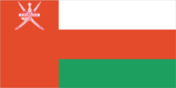
three equal horizontal bands of green (top), white, and red; the national emblem (a stylized representation of the word Allah) in red is centered in the white band; Allah Akbar (God is Great) in white Arabic script is repeated 1 1 times along the bottom edge of the green band and 1 1 times along the top edge of the red band
Independence
1 April 1979, Islamic Republic of Iran proclaimed
Judicial branch
Supreme Court
Leaders
Cleric and functional Chief of State — Leader of the Islamic Revolution Ayatollah Ali Hoseini-KHAMENEI (since 3 June 1989); Head of Government — President Ali Akbar RAFSANJANI (since 3 August 1989); Political parties and leaders: there are at least seven licensed parties; the two most important are — Militant Clerics Association, Mehdi Mahdavi-Karubi and Mohammad Asqar Musavi-Khoinima; Fedaiyin Islam Organization, Sadeq Khalkhali
Legal system
the new Constitution codifies Islamic principles of government
Legislative branch
unicameral Islamic Consultative Assembly (Majlis-e-Shura-eIslami)
Long-form name
Islamic Republic of Iran
Member of
CCC, ESCAP, FAO, G-77, IAEA, IBRD, IDA, IDB, IFC, ILO, IMF, IMO, INTELSAT, IPU, QIC, OPEC, UN, UNESCO, UNICEF, UNIDO, WHO
National holiday
Islamic Republic Day, 1 April (1979)
Other political or pressure groups
groups that generally support the Islamic Republic include Hizballah, Hojjatiyeh Society, Mojahedin of the Islamic Revolution, Muslim Students Following the Line of the Imam, and Tehran Militant Clergy Association; Mojahedin Khalq Organization (MKO), People's Fedayeen, and Kurdish Democratic Party are armed political groups that have been almost completely repressed by the government
Suffrage
universal at age 15
Type
theocratic republic