1987 Edition
CIA World Factbook 1987 (Internet Archive)
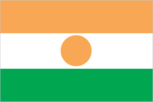
Geography
Climate
desert; mostly hot, dry, dusty; tropical in south
Comparative area
almost three times the size of California
Environment
recent drought and desertification severely affecting marginal agricultural activities; overgrazing; soil erosion
Land boundaries
5,745 km total
Land use
3% arable land; 0% permanent crops; 7% meadows and pastures; 2% forest and woodland; 88% other; includes NEGL% irrigated
Special notes
landlocked
Terrain
predominately desert plains and sand dunes; flat to rolling plains in south
Total area
1,267,000 km?; land area: 1,266,700 km?
People and Society
Ethnic divisions
56% Hausa; 22% Dierma; 8.5% Fula; 8% Tuareg; 4.3% Beri Beri (Kanouri); 1.2% Arab, Toubou, and Gourmantche; about 4,000 French expatriates
Infant mortality rate
186/1,000 (1984)
Labor force
2.5 million (1982) wage earners; 90% agriculture, 6% industry and commerce, 4% government
Language
French (official); Hausa, Djerma
Life expectancy
45
Literacy
10%
Nationality
noun—Nigerien(s) adjective— Nigerien
Organized labor
negligible
Population
6,988,540 (July 1987), average annual growth rate 3.16%
Religion
80% Muslim, remainder indigenous beliefs and Christians
Government
Administrative divisions
7 departments, 88 arrondissements
Branches
executive authority exercised by President Seyni Kountché in the name of the Supreme Military Council (SMC), which is composed of army officers; office of prime minister created January 1983; since November 1983, civilians have held all cabinet portfolios except Defense and Interior, which are held by President Kountché
Capital
Niamey
Communists
no Communist party; some sympathizers in outlawed Sawaba party
Elections
popular elections currently allowed only for choosing representatives for village Development Councils, which advise on local economic development Political parties and leaders: political parties banned
Government leaders
Brig. Gen. Seyni KOUNTCHE, President of Supreme Military Council, Chief of State (since 1974); Hamid ALGABID, Prime Minister (since November 1983)
Legal system
based on French civil law system and customary law; constitution adopted 1960, suspended 1974; committee appointed January 1984 to reflect on a new national charter; has not accepted compulsory ICJ jurisdiction
Member of
AfDB, APC, CEAO, EAMA, ECA, ECOWAS, Entente, FAO, G-77, GATT, IAEA, IBRD, ICAO, IDA, IDB— Islamic Development Bank, IFAD, IFC, ILO, IMF, INTELSAT, INTERPOL, IPU, ITU, Lake Chad Basin Commission, Niger River Commission, NAM, OAU, OCAM, OIC, UN, UNESCO, UPU, WHO, WIPO, WMO
National holidays
Independence Day, 3 August; Republic Day, 18 December
Official name
Republic of Niger
Suffrage
universal adult
Type
republic; military regime in power since April 1974
Economy
Agriculture
commercial—cowpeas, groundnuts, cotton; main food crops— millet, sorghum, rice
Budget
(1986 est.) revenue $173 million, (1986 est.) $364.6 million expenditures
Electric power
101,000 kW capacity; 265 million kWh produced, 39 kWh per capita (1986)
Exports
$250.6 million (f.0.b., 1985); uranium, livestock, cowpeas, onions, hides, skins; exports understated because much regional trade not recorded
Fiscal year
] October-30 September
GDP
$1.2 billion, $180 per capita; annual real growth rate - 3.1% (1985 est.)
Imports
$309.4 million (f.0.b., 19825); petroleum products, primary materials, machinery, vehicles and parts, electronic equipment, pharmaceuticals, chemical products, cereals, foodstuffs
Major industries
cement plant, brick factory, rice mill, small cotton gins, oil presses, slaughterhouse, and a few other small light industries; uranium production began in 1971
Major trade partners
France (about half), other EC countries, Nigeria, UDEAC countries; US (8.8%, 1981); preferential tariff to EC and franc zone countries
Monetary conversion rate
33] Communauté Financiére Africaine (CFA) francs=US$1 (November 1986)
Natural resources
uranium, coal, iron, tin, phosphates
Communications
Airfields
33 total, 32 usable; 7 with permanent-surface runways; 2 with runways 2,440-3,659 m, 13 with runways 1,220-2,439 m
Civil air
2 major transport aircraft
Highways
39,970 km total; 3,170 km bituminous, 10,330 km gravel and laterite, 8,470 km earthen, 23,000 km tracks
Inland waterways
Niger River navigable 800 km from Niamey to Gaya on the Benin frontier from mid-December through March
Railroads
none
Telecommunications
small system of wire and radio-relay links concentrated in southwestern area; 9,800 telephones (0.2 per 100 popl.); 9 AM, 2 FM, 12 TV stations; 2 Atlantic Ocean satellite stations, 4 domestic satellite stations
Military and Security
Branches
Army, Air Force, paramilitary Gendarmerie, paramilitary Republican Guard, paramilitary Presidential Guard, paramilitary National Police
Military manpower
males 15-49, 1,468,000; 787,000 fit for military service; 81,000 reach military age (18) annually