1986 Edition
CIA World Factbook 1986 (Internet Archive)
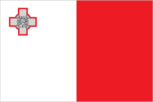
Geography
Agriculture
- main crops — millet, sorghum, rice, corn, peanuts; cash crops — peanuts, cotton, livestock
- overall, 20% self-sufficient; generally adequate supplies of vegetables, poultry, milk, and pork products; seasonal or periodic shortages in grain, animal fodder, fruits, other basic foodstuffs; main products— potatoes, cauliflower, grapes, wheat, barley, tomatoes, citrus, cut flowers, green peppers, hogs, poultry, eggs
Airfields
- 38 total, 31 usable; 8 with permanent-surface runways; 6 with runways 2,440-3,659 m, 9 with runways 1, 220-2,439 m
- 1 usable with permanent-surface runways 2,440-3,659 m
Branches
- Army, Air Force; paramilitary, Gendarmerie, Republican Guard, National Guard
- executive, consisting of Prime Minister and Cabinet; unicameral legislature (65-member House of Representatives); independent judiciary
- Armed Forces, Police, Task Force, Paramilitary Dejima Force
Budget
- (1982) revenues, $154 million; expenditures and net lending, $169 million
- (1984) projects $486 million in expenditures, $475 million in revenues
Capital
Valletta
Civil air
- 5 major transport aircraft
- 8 major transport aircraft
Coastline
140 km People
Elections
at the discretion of the Prime Minister, but must be held before the expiration of a five-year electoral mandate; last election December 1981 Political parties and leaders: Nationalist Party, Edward Fenech Adami; Malta Labor Party, Karmenu Mifsud Bonniei
Electric power
- 92,000 kW capacity (1985); 161 million kWh produced (1985), 20 kWh per capita
- 157,000 kW capacity (1985); 766 million kWh produced (1985), 2,158 kWh per capita
Ethnic divisions
mixture of Arab, Sicilian, Norman, Spanish, Italian, English
Exports
- $145.8 million (f.o.b., 1982); livestock, peanuts, dried fish, cotton, skins
- $393.7 million (f.o.b., 1984); clothing, textiles, ships, printed matter
Fiscal year
- calendar year Communications
- 1 January-31 December Communications
Fishing
catch 33,000 tons (1983 est.)
GDP
- $1.0 billion (1982), $140 per capita; annual real growth rate 4.4% (1982)
- $1.0 billion (1984), $3,010 per capita (1984); 68.9% private consumption, 27.4% gross investment; 17.4% government consumption, — 15.2% net foreign sector; change in stocks 1.0%; in 1984 real GDP growth was 1.2%
Government leaders
Agatha BARBARA, President (since February 1982); Karmenu MIFSUD BONNICI, Prime Minister (since December 1984)
Highways
- approximately 15,700 km total; 1,670 km bituminous, 3,670 km gravel and improved earth, 10,360 km unimproved earth
- 1,292 km total; 1,179 km paved (asphalt), 77 km crushed stone or gravel, 35 km improved and unimproved earth
Imports
- $232.6 million (f.o.b., 1982); textiles, vehicles, petroleum products, machinery, sugar, cereals
- $717.8 million (c.i.f., 1984)
Infant mortality rate
11.2/1,000(1984)
Inland waterways
1,815 km navigable
Labor force
121,686(1984); 30% services (except government), 24% manufacturing, 21% government (except job corps), 8% construction, 5% utilities and drydocks, 4% agriculture; 8.3% registered unemployed
Language
Maltese and English (official)
Legal system
based on English common law; constitution adopted 1961, came into force 1964; has accepted compulsory ICJ jurisdiction, with reservations
Life expectancy
73
Limits of territorial waters (claimed)
12 nm (fishing 25 nm)
Literacy
83%
Major industries
- small local consumer goods and processing
- tourism, ship repair yard, clothing, building industry, food manufacturing, textiles
Major trade partners
- mostly franc zone and Western Europe; also with USSR, China
- 74% EC (24% Italy, 22% FRG, 17% UK); 6% US
Member of
Commonwealth, Council of Europe, FAO, G-77, GATT, IBRD, ICAO, IFAD, ILO, IMF, IMO, INTERPOL, ITU, IWC— International Wheat Council, NAM, UN, UNDP, UNESCO, UNICEF, UPU, WHO, WIPO, WMO Economy
Military budget
- for fiscal year ending 31 December 1984, $24.8 million; about 22.2% of central government budget Mediterranean Sea Land 313 km2; twice the size of Washington, D. C.; 45% agricultural; negligible forest; remainder urban, waste, or other Water
- for fiscal year ending 31 December 1984, $12.2 million; about 2.5% of central government budget
Military manpower
- males 15-49, 1,727,000; 872,000 fit for military service; no conscription
- males 15-49, 89,000; 73,000 fit for military service
Monetary conversion rate
- 475 Communaute Financiere Af ricaine (CFA) francs= US$1 (1985)
- 0.43 Maltese lira=US$l (October 1985)
National holiday
Freedom Day, 31 March
Nationality
noun — Maltese (sing, and pi.); adjective — Maltese
Natural resources
- gold, phosphates, kaolin, salt, limestone; bauxite, iron ore, manganese, lithium, and uranium deposits are known or suspected but not exploited
- limestone, salt
Official name
Republic of Malta
Organized labor
approximately 40% of labor force Government
Political subdivisions
2 main populated islands, Malta and Gozo, divided into 13 electoral districts (divisions)
Population
354,000 (July 1986), average annual growth rate —0.2%
Ports
2 major (Valletta, Marsaxlokk [under development] ), 1 secondary, 1 minor
Railroads
642 km 1.000-meter gauge
Religion
98% Roman Catholic
Shortages
most consumer and industrial needs (fuels and raw materials) must be imported
Suffrage
universal over age 18; registration required
Supply
various facilities and equipment turned over by the UK in 1965; has received 2 patrol boats, helicopters, small arms, and mortars from Libya; vehicles and engineer equipment from Italy; patrol boats and helicopters from FRG
Telecommunications
- domestic system poor and provides only minimal service; radiorelay, wire, and radio communications stations in use; expansion of radio relay in progress; 8,000 telephones (0. 1 per 100 popl.); 2 AM, 2 FM, no TV stations; 1 Atlantic and 1 Indian Ocean satellite ground station Defense Forces
- modern automatic telecom system centered in Valletta; 113,000 telephones (34.6 per 100 popl.); 6 AM, 5 FM, 2 TV stations; 1 coaxial submarine cable Defense Forces
Type
parliamentary democracy, independent republic within the Commonwealth since December 1974
Voting strength
(1981 election) House of Representatives— Labor, 34 seats (49% of the vote); Nationalist, 31 seats (51% of the vote) Communist*: less than 100 (est.)