1988 Edition
CIA World Factbook 1988 (Internet Archive)
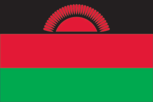
Geography
Boundary disputes
- none; maritime dispute with Tanzania
- none; involved in complex dispute over Spratly Islands with China, Philippines, Taiwan, Vietnam, and possibly Brunei
Climate
- tropical; rainy season (November to May); dry season (May to November)
- tropical; annual southwest (April to October) and northest (October to February) monsoons
Coastline
4,675 km total (2,068 km Peninsular Malaysia, 2,607 km East Malaysia)
Comparative area
- about the size of Pennsylvania
- slightly larger than New Mexico
Continental shelf
200 meters or to depth of exploitation
Environment
- deforestation
- subject to flooding; air and water pollution
Ethnic divisions
- Chewa, Nyanja, Tumbuko, Yao, Lomwe, Sena, Tonga, Ngoni, Asian, European
- 59% Malay and other indigenous, 32% Chinese, 9% Indian
Exclusive fishing zone
200 nm
Extended economic zone
200 nm
Infant mortality rate
- 14/1,000 (1983)
- 25/1,000 (1985)
Labor force
- 344,052 wage earners employed in Malawi (1982); 52% agriculture, 16% personal services, 9% manufacturing, 7% construction, 6% commerce, 4% miscellaneous services, 6% other permanently employed
- 5.95 million (1985); 34.5% agriculture; trade, hotels, and restaurants; 15.6% manufacturing, 14.9% government; 6.6% construction, 5% finance; 4.9% transport and communications; 1.6% mining; 1.2% utilities
Land boundaries
- 2,881 km total
- 2,295 km total
Land use
- 25% arable land; NEGL% permanent crops; 20% meadows and pastures; 50% forest and woodland; 5% other; includes NEGL% irrigated
- 3% arable land; 10% permanent crops; NEGL% meadows and pastures; 63% forest and woodland; 24% other; includes 1% irrigated
Language
- English and Chichewa (official); Tombuka is second African language
- Peninsular Malaysia — Malay (official); English, Chinese dialects, Tamil; Sabah— English, Malay, numerous tribal dialects, Mandarin and Hakka dialects predominate among Chinese; Sarawak — English, Malay, Mandarin, numerous tribal languages
Life expectancy
- 47
- 67.7 male, 72.7 female
Literacy
- 25%
- 65.0% overall, age 20 and up; Peninsular Malaysia— 80%; Sabah— 60%; Sarawak— 60%
Nationality
- noun — Malawian(s); adjective— Malawian
- noun — Malaysian(s); adjective— Malaysian
Organized labor
- small minority of wage earners are unionized
- 620,000, about 10% of total labor force; unemployment about 7.6% of total labor force, but higher in urban areas (1985)
Population
- 7,437,911 (July 1987), average annual growth rate 3. 15%
- 16,068,516 (July 1987), average annual growth rate 2.08%, includes Peninsular Malaysia— 13,280,754, average annual growth rate 1.98%; Sabah— 1,281,994, average annual growth rate 3.28%; and Sarawak— 1,505,768, average annual growth rate 1.88%
Religion
- 55% Protestant, 20% Roman Catholic, 20% Muslim; traditional indigenous beliefs are also practiced by some members of these groups
- Peninsular Malaysia — Malays nearly all Muslim, Chinese predominantly Buddhists, Indians predominantly Hindu; Sabah— 38% Muslim, 17% Christian, 45% other; Sarawak — 35% tribal religion, 24% Buddhist and Confucianist, 20% Muslim, 16% Christian, 5% other
Special notes
- landlocked
- strategic location along Strait of Malacca; occupies southern half of Malay Peninsula and northern quarter of island of Borneo
Terrain
- narrow elongated plateau with rolling plains, rounded hills, some mountains
- coastal plains rising to hills and mountains
Territorial sea
12 nm
Total area
- 118,480 km2; land area: 94,080 km2
- 329,750 km2; land area: 328,550 km2
Government
Administrative divisions
3 administrative regions and 24 districts
Branches
strong presidential system with Cabinet appointed by President; unicameral National Assembly of 87 elected and up to 15 nominated members; High Court with Chief Justice and at least two justices
Capital
Lilongwe
Communists
no Communist party
Elections
President Banda designated President for Life in 1970; parliamentary elections last held June 1983, next scheduled for 1988 Political parties and leaders: Malawi Congress Party (MCP), Robson Chirwa, administrative secretary
Government leader
Dr. Hastings Kamuzu BANDA, President (since 1966)
Legal system
based on English common law and customary law; constitution adopted 1964; judicial review of legislative acts in the Supreme Court of Appeals; has not accepted compulsory ICJ jurisdiction
Member of
AfDB, Commonwealth, EC (associated member), FAO, G-77, GATT, IBRD, ICAO, IDA, IFAD, IFC, ILO, IMF, INTELSAT, INTERPOL, IPU, ISO, ITU, NAM, OAU, SADCC, UN, UNESCO, UPU, WHO, WIPO, WMO, WTO
National holiday
Republic Day, 6 July
Official name
- Republic of Malawi
- Malaysia
Suffrage
universal over age 18
Type
- one-party state
- Federation of Malaysia formed 9 July 1963, constitutional monarchy nominally headed by Paramount Ruler (King), a bicameral Parliament consisting of a 58-member Senate and a 154-member House of Representatives; Peninsular Malaysian states— hereditary rulers in all
Economy
Agriculture
cash crops — tobacco, tea, sugar, peanuts, cotton, tung oil, maize; subsistence crops — corn, sorghum, millet, pulses, root crops, fruit, vegetables, rice; self-sufficient in food production
Aid
Western (non-US) countries, ODA and OOF (1970-84), $1.3 billion; US authorized (FY70-85), $82 million
Budget
revenues, $211.9 million; expenditures, $231.9 million (1983)
Electric power
152,000 kW capacity; 466 million kWh produced, 63 kWh per capita (1986)
Exports
$271.8 million (c.i.f., 1985); tobacco, tea, sugar, peanuts, cotton, corn
Fiscal year
1 April-31 March
GDP
$1.11 billion, $160 per capita (1985); real growth rate 3.0% (1982)
Imports
$291.3 billion (c.i.f., 1985); manufactured goods, machinery and transport equipment, building and construction materials, fuel, fertilizer
Major industries
agricultural processing (tea, tobacco, sugar), sawmilling, cement, consumer goods
Major trade partners
exports — UK, FRG, US, Netherlands, South Africa; imports — South Africa, UK, Japan, US, FRG
Monetary conversion rate
2.00 Malawi kwacha=US$l (November 1986)
Natural resources
limestone, uranium potential
Communications
Airfields
50 total, 49 usable; 6 with permanent-surface runways; 1 with runways 2,440-3,659 m; 9 with runways 1,220-2,439 m Malaysia
Branches
Army, Army Air Wing, Army Naval Detachment, paramilitary Police Mobile Unit
Civil air
6 major transport aircraft
Highways
13,135 km total; 2,364 km paved; 251 km crushed stone, gravel, or stabilized soil; 10,520 km earth and improved earth
Inland waterways
Lake Nyasa, 23,300 km2; Shire River, 144 km, 4 lake ports
Military manpower
males 15-49, 1,511,000; 767,000 fit for military service SOOkm
Railroads
789 km 1.067meter gauge
Telecommunications
fair system of open-wire lines, radio-relay links, and radio communication stations; 36,800 telephones (0.5 per 100 popl.); 7 AM, 2 FM, and 15 repeaters; no TV stations; 1 Indian Ocean and 1 Atlantic Ocean satellite station Defense Forces