1981 Edition
CIA World Factbook 1981 (Internet Archive)
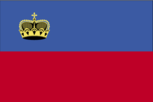
Geography
Area
- 168 km8
- 2,590 km2; 25% arable, 27% meadows and pasture, 15% waste or urban, 33% forested, negligible amount of inland water
Budget
(1979) revenues $113 million, expenditures $112 million, surplus $15 million
Electric power
23,000 kW capacity (1980); 57 million kWh produced (1980), 2,110 kWh per capita; power is exchanged with Switzerland, but net exports average 35 million kWh yearly
Land boundaries
- 76 km
- 356 km
Major trade partners
exports (1979)— $466 million; 42% EC, 32% EFTA (24% Switzerland), 26% other
People and Society
Ethnic divisions
- 95% Germanic, 5% Italian and other
- 83% Luxembourger, including an estimated 5% of Italian descent; remainder French, German, Belgian, and other
Labor force
- 11,368, 5,078 foreign workers (mostly from Switzerland and Austria); 54.5% industry, trade, building trade; 41.6% services; 4.0% agriculture, forestry, and hunting
- (1977) 147,300; one-third of labor force is foreign, comprised mostly of workers from Portugal, Italy, France, Belgium, and West Germany (1977); unemployment 0.9% (1981)
Language
- German, Alemannic dialect
- Luxembourgish, German, French; most educated Luxembourgers also speak English
Literacy
- 100%
- 98%
Nationality
- noun — Liechtensteiner(s); adjective — Liechtenstein
- noun — Luxembourger(s); adjective — Luxembourg
Population
- 26,000 (July 1982), average annual growth rate 1.7%
- 366,000 (July 1982), average annual growth rate 0.3%
Religion
- 82.7% Roman Catholic, 7.1% Protestant, 10.2% other
- 97% Roman Catholic, remaining 3% Protestant and Jewish
Government
Branches
- unicameral Parliament, hereditary Prince, independent judiciary
- parliamentary democracy; seven ministers comprise Council of Government headed by President, LUXEMBOURG (Continued) which constitutes the executive; it is responsible to the unicatneral legislature, the Chamber of Deputies; the Council of State, appointed for indefinite term, exercises some powers of an upper house; judicial power exercised by independent courts
Capital
- Vaduz
- Luxembourg
Communists
- none
- 500 party members (1981)
Elections
- every 4 years; last election 1982 Political parties and leaders: Fatherland Union (VU), Dr. Otto Hasler; Progressive Citizens' Party (FBP), Dr. Peter Marxer; Christian Social Party, Fritz Kaiser Voting strength (1978): FBP 51%, VU 49%; in 1982 elections Brunhart received 53.6% of the vote
- every five years for entire Chamber of Deputies; latest elections June 1979 Political parties and leaders: Christian Social Party, Pierre Werner (parliamentary president) and Jacques Santer (party president); Socialist, Robert Krieps (party president); Social Democrat, Henry Cravatte (party president); Liberal, Colette Flesch; Communist, Dominique Urbany; Independent Socialists, Jean Gremling (party president); Enroles de Forces Voting strength in Chamber of Deputies (1979): Christian Socialist, 24; Socialist Workers, 14; Liberals, 15; Social Democrats, 1; Communists, 2; Independent Socialists, 1; Enroles de Force, 1
Government leaders
- Head of State, H. S. H. Prince FRANZ Josef II; Head of Government (Prime Minister), Hans BRUNHART
- Grand Duke JEAN, Head of State; Pierre WERNER, Prime Minister
Legal system
- principality has its own civil and penal codes; lowest court is county court (Landgericht), presided over by one judge, which decides minor civil cases and summary criminal offenses; criminal court (Kriminalgericht), with a bench of five judges, is for major crimes; another court of mixed jurisdiction is the court of assizes (three judges) for misdemeanors; Superior Court (Obergericht) and Supreme Court (Oberster Gerichtshof) are courts of appeal for civil and criminal cases (five judges each); an administrative court of appeal from government actions and the State Court determine the constitutionality of laws; accepts compulsory ICJ jurisdiction, with reservations
- based on civil law system; constitution adopted 1868; judicial review of legislative acts in the Cassation Court only; accepts compulsory ICJ jurisdiction
Member of
- Council of Europe, EFTA, IAEA, INTELSAT, ITU, UNCTAD, UNIDO, UPU, WIPO; considering UN membership; under several post-World War I treaties Switzerland handles Liechtenstein's customs and postal telephone and telegraph systems and represents the principality abroad on a diplomatic and consular level whenever requested to do so by the Liechtenstein Government
- Benelux, BLEU, Council of Europe, EC, ECSC, EEC, EIB, EURATOM, FAO, GATT, IAEA, IBRD, ICAO, IDA, IEA, IFAD, IFC, ILO, IMF, IOOC, IPU, ITU, NATO, OECD, UN, UNESCO, UPU, WEU, WHO, WIPO, WMO
National holiday
23 June
Official name
- Principality of Liechtenstein
- Grand Duchy of Luxembourg
Other political or pressure groups
group of steel industries representing iron and steel industry, Centrale Paysanne representing agricultural producers; Christian and Socialist labor unions, Federation of Industrialists; Artisans and Shopkeepers Federation
Political subdivisions
- 1 1 communes
- unitary state, but for administrative purposes has 3 districts (Luxembourg, Diekirch, Greventnacher) and 12 cantons
Suffrage
- males age 20 and over
- universal and compulsory over age 18
Type
- hereditary constitutional monarchy
- constitutional monarchy
Economy
Agriculture
mixed farming; main crops — dairy products and wine
Budget
(1980) revenues $1,545 million, expenditures $1,566 million, deficit $20.5 million
Crude steel
4.6 million metric tons produced (1980), 14 metric tons per capita
Electric power
1,500,000 kW capacity (1980); 1.115 billion kWh produced (1980), 3,050 kWh per capita
Exports, Imports, Major trade partners
Luxembourg has a customs union with Belgium under which foreign trade is recorded jointly for the two countries; Luxembourg's principal exports are iron and steel products, principal imports are coal and consumer goods; most of its foreign trade is with Germany, Belgium, France, and other EC countries (for totals, see Belgium)
GNP
- approximately $14,000 per capita (1978)
- $5.8 billion, $15,950 per capita (1980); 46.6% private consumption, 13.0% government consumption, 20.0% investment, 1.6% stockbuilding, 17.5% foreign balance
Major industries
iron and steel (25% of GNP), food processing, chemicals, metal products and engineering, tires, and banking
Monetary conversion rate
LF29.24=US$1, 1980 average; under the BLEU agreement, the Luxembourg franc is equal in value to the Belgian franc which circulates freely in
Communications
Airfields
none
Civil air
no transport aircraft
Highways
130.66 km main roads, 192.27 km byroads
Railroads
18.5 km, standard gauge (1.435 m), electrified; owned, operated, and included in statistics of Austrian Federal Railways
Telecommunications
automatic telephone system serving about 18,000 telephones (72.0 per 100 popl.); no broadcast facilities DEFENSE FORCES Defense is responsibility of Switzerland i /-4^-~x —^i I f I \- U FEDERAL REPUBLIC ' f X5LG1B*' \ OF6ERMANY *%. ^ M FBAUGE