2021 Edition
CIA World Factbook 2021 (factbook.json @ e0d5604b9e27)
Introduction
Background
Italy became a nation-state in 1861 when the regional states of the peninsula, along with Sardinia and Sicily, were united under King Victor EMMANUEL II. An era of parliamentary government came to a close in the early 1920s when Benito MUSSOLINI established a Fascist dictatorship. His alliance with Nazi Germany led to Italy's defeat in World War II. A democratic republic replaced the monarchy in 1946 and economic revival followed. Italy is a charter member of NATO and the European Economic Community (EEC) and its subsequent successors the EC and the EU. It has been at the forefront of European economic and political unification, joining the Economic and Monetary Union in 1999. Persistent problems include sluggish economic growth, high youth and female unemployment, organized crime, corruption, and economic disparities between southern Italy and the more prosperous north.
Geography
Area
- land
- 294,140 sq km
- note
- note: includes Sardinia and Sicily
- total
- 301,340 sq km
- water
- 7,200 sq km
Area - comparative
almost twice the size of Georgia; slightly larger than Arizona
Climate
predominantly Mediterranean; alpine in far north; hot, dry in south
Coastline
7,600 km
Elevation
- highest point
- Mont Blanc (Monte Bianco) de Courmayeur (a secondary peak of Mont Blanc) 4,748 m
- lowest point
- Mediterranean Sea 0 m
- mean elevation
- 538 m
Geographic coordinates
42 50 N, 12 50 E
Geography - note
strategic location dominating central Mediterranean as well as southern sea and air approaches to Western Europe
Irrigated land
39,500 sq km (2012)
Land boundaries
- border countries
- Austria 404 km, France 476 km, Holy See (Vatican City) 3.4 km, San Marino 37 km, Slovenia 218 km, Switzerland 698 km
- total
- 1,836.4 km
Land use
- agricultural land
- 47.1% (2018 est.)
- agricultural land: arable land
- arable land: 22.8% (2018 est.)
- agricultural land: permanent crops
- permanent crops: 8.6% (2018 est.)
- agricultural land: permanent pasture
- permanent pasture: 15.7% (2018 est.)
- forest
- 31.4% (2018 est.)
- other
- 21.5% (2018 est.)
Location
Southern Europe, a peninsula extending into the central Mediterranean Sea, northeast of Tunisia
Major watersheds (area sq km)
Atlantic Ocean drainage: Rhine-Maas (198,735 sq km), (Black Sea) Danube (795,656 sq km), (Adriatic Sea) Po (76,997 sq km), (Mediterranean Sea) Rhone (100,543 sq km)
Map references
Europe
Maritime claims
- continental shelf
- 200-m depth or to the depth of exploitation
- territorial sea
- 12 nm
Natural hazards
regional risks include landslides, mudflows, avalanches, earthquakes, volcanic eruptions, flooding; land subsidence in Venicevolcanism: significant volcanic activity; Etna (3,330 m), which is in eruption as of 2010, is Europe's most active volcano; flank eruptions pose a threat to nearby Sicilian villages; Etna, along with the famous Vesuvius, which remains a threat to the millions of nearby residents in the Bay of Naples area, have both been deemed Decade Volcanoes by the International Association of Volcanology and Chemistry of the Earth's Interior, worthy of study due to their explosive history and close proximity to human populations; Stromboli, on its namesake island, has also been continuously active with moderate volcanic activity; other historically active volcanoes include Campi Flegrei, Ischia, Larderello, Pantelleria, Vulcano, and Vulsini
Natural resources
coal, antimony, mercury, zinc, potash, marble, barite, asbestos, pumice, fluorspar, feldspar, pyrite (sulfur), natural gas and crude oil reserves, fish, arable land
Population distribution
despite a distinctive pattern with an industrial north and an agrarian south, a fairly even population distribution exists throughout most of the country, with coastal areas, the Po River Valley, and urban centers (particularly Milan, Rome, and Naples), attracting larger and denser populations
Terrain
mostly rugged and mountainous; some plains, coastal lowlands
People and Society
Age structure
- 0-14 years
- 13.45% (male 4,292,431/female 4,097,732)
- 15-24 years
- 9.61% (male 3,005,402/female 2,989,764)
- 25-54 years
- 40.86% (male 12,577,764/female 12,921,614)
- 55-64 years
- 14% (male 4,243,735/female 4,493,581)
- 65 years and over
- 22.08% (male 5,949,560/female 7,831,076) (2020 est.)
Birth rate
8.37 births/1,000 population (2021 est.)
Children under the age of 5 years underweight
NA
Contraceptive prevalence rate
- 65.1% (2013)
- note
- note: percent of women aged 18-49
Current Health Expenditure
8.7% (2018)
Death rate
10.7 deaths/1,000 population (2021 est.)
Dependency ratios
- elderly dependency ratio
- 36.6
- potential support ratio
- 2.7 (2020 est.)
- total dependency ratio
- 57
- youth dependency ratio
- 20.4
Drinking water source
- improved: rural
- rural: 100% of population
- improved: total
- total: 100% of population
- improved: urban
- urban: 100% of population
- unimproved: rural
- rural: 0% of population
- unimproved: total
- total: 0% of population (2017 est.)
- unimproved: urban
- urban: 0% of population
Education expenditures
4.3% of GDP (2018)
Ethnic groups
Italian (includes small clusters of German-, French-, and Slovene-Italians in the north and Albanian-Italians and Greek-Italians in the south)
HIV/AIDS - adult prevalence rate
0.2% (2020 est.)
HIV/AIDS - people living with HIV/AIDS
- 140,000 (2020 est.)
- note
- note: estimate does not include children
Hospital bed density
3.1 beds/1,000 population (2018)
Infant mortality rate
- female
- 2.87 deaths/1,000 live births (2021 est.)
- male
- 3.4 deaths/1,000 live births
- total
- 3.14 deaths/1,000 live births
Languages
- Languages
- Italian (official), German (parts of Trentino-Alto Adige region are predominantly German speaking), French (small French-speaking minority in Valle d'Aosta region), Slovene (Slovene-speaking minority in the Trieste-Gorizia area)
- major-language sample(s)
- L'Almanacco dei fatti del mondo, l'indispensabile fonte per le informazioni di base. (Italian)The World Factbook, the indispensable source for basic information.
Life expectancy at birth
- female
- 85.49 years (2021 est.)
- male
- 80.01 years
- total population
- 82.67 years
Literacy
- definition
- age 15 and over can read and write
- female
- 99% (2018)
- male
- 99.4%
- total population
- 99.2%
Major infectious diseases
- note
- note: a new coronavirus is causing respiratory illness (COVID-19) in Italy; illness with this virus has ranged from mild to severe with fatalities reported; as of 6 October 2021, Italy has reported a total of 4,686,109 cases of COVID-19 or 7,857.13 cumulative cases of COVID-19 per 100,000 population with 219.84 cumulative deaths per 100,000 population; as of 5 October 2021, 75.36% of the population has received at least one dose of COVID-19 vaccine; the US Department of Homeland Security has issued instructions requiring US passengers who have been in Italy to travel through select airports where the US Government has implemented enhanced screening procedures
- respiratory diseases
- Covid-19 (see note) (2020)
Major urban areas - population
4.278 million ROME (capital), 3.144 million Milan, 2.183 million Naples, 1.795 million Turin, 900,000 Bergamo, 850,000 Palermo (2021)
Maternal mortality ratio
2 deaths/100,000 live births (2017 est.)
Median age
- female
- 47.5 years (2020 est.)
- male
- 45.4 years
- total
- 46.5 years
Mother's mean age at first birth
31.3 years (2019 est.)
Nationality
- adjective
- Italian
- noun
- Italian(s)
Net migration rate
3.21 migrant(s)/1,000 population (2021 est.)
Obesity - adult prevalence rate
19.9% (2016)
Physicians density
3.98 physicians/1,000 population (2018)
Population
62,390,364 (July 2021 est.)
Population distribution
despite a distinctive pattern with an industrial north and an agrarian south, a fairly even population distribution exists throughout most of the country, with coastal areas, the Po River Valley, and urban centers (particularly Milan, Rome, and Naples), attracting larger and denser populations
Population growth rate
0.09% (2021 est.)
Religions
Christian 80.8% (overwhelmingly Roman Catholic with very small groups of Jehovah's Witnesses and Protestants), Muslim 4.9%, unaffiliated 13.4%, other 0.9% (2020 est.)
Sanitation facility access
- improved: rural
- rural: 98.6% of population
- improved: total
- total: 98.8% of population
- improved: urban
- urban: 98.8% of population
- unimproved: rural
- rural: 1.4% of population
- unimproved: total
- total: 1.2% of population (2017 est.)
- unimproved: urban
- urban: 1.2% of population
School life expectancy (primary to tertiary education)
- female
- 17 years (2019)
- male
- 16 years
- total
- 16 years
Sex ratio
- 0-14 years
- 1.05 male(s)/female
- 15-24 years
- 1.01 male(s)/female
- 25-54 years
- 0.97 male(s)/female
- 55-64 years
- 0.94 male(s)/female
- 65 years and over
- 0.76 male(s)/female
- at birth
- 1.06 male(s)/female
- total population
- 0.93 male(s)/female (2020 est.)
Total fertility rate
1.47 children born/woman (2021 est.)
Unemployment, youth ages 15-24
- female
- 31.8% (2020 est.)
- male
- 27.9%
- total
- 29.4%
Urbanization
- rate of urbanization
- 0.27% annual rate of change (2020-25 est.)
- urban population
- 71.3% of total population (2021)
Government
Administrative divisions
15 regions (regioni, singular - regione) and 5 autonomous regions (regioni autonome, singular - regione autonoma) regions: Abruzzo, Basilicata, Calabria, Campania, Emilia-Romagna, Lazio (Latium), Liguria, Lombardia, Marche, Molise, Piemonte (Piedmont), Puglia (Apulia), Toscana (Tuscany), Umbria, Veneto; autonomous regions: Friuli Venezia Giulia, Sardegna (Sardinia), Sicilia (Sicily), Trentino-Alto Adige (Trentino-South Tyrol) or Trentino-Suedtirol (German), Valle d'Aosta (Aosta Valley) or Vallee d'Aoste (French)
Capital
- daylight saving time
- +1hr, begins last Sunday in March; ends last Sunday in October
- etymology
- by tradition, named after Romulus, one of the legendary founders of the city and its first king
- geographic coordinates
- 41 54 N, 12 29 E
- name
- Rome
- time difference
- UTC+1 (6 hours ahead of Washington, DC, during Standard Time)
Citizenship
- citizenship by birth
- no
- citizenship by descent only
- at least one parent must be a citizen of Italy
- dual citizenship recognized
- yes
- residency requirement for naturalization
- 4 years for EU nationals, 5 years for refugees and specified exceptions, 10 years for all others
Constitution
- amendments
- proposed by both houses of Parliament; passage requires two successive debates and approval by absolute majority of each house on the second vote; a referendum is only required when requested by one fifth of the members of either house, by voter petition, or by five Regional Councils (elected legislative assemblies of the 15 first-level administrative regions and 5 autonomous regions of Italy); referendum not required if an amendment has been approved by a two-thirds majority in each house in the second vote; amended many times, last in 2020
- history
- previous 1848 (originally for the Kingdom of Sardinia and adopted by the Kingdom of Italy in 1861); latest enacted 22 December 1947, adopted 27 December 1947, entered into force 1 January 1948
Country name
- conventional long form
- Italian Republic
- conventional short form
- Italy
- etymology
- derivation is unclear, but the Latin "Italia" may come from the Oscan "Viteliu" meaning "[Land] of Young Cattle" (the bull was a symbol of southern Italic tribes)
- former
- Kingdom of Italy
- local long form
- Repubblica Italiana
- local short form
- Italia
Diplomatic representation from the US
- chief of mission
- Ambassador (vacant); Charge d'Affaires Thomas D. SMITHAM (since 4 January 2021); note - also accredited to San Marino
- consulate(s) general
- Florence, Milan, Naples
- email address and website
- uscitizenrome@state.govhttps://it.usembassy.gov/
- embassy
- via Vittorio Veneto 121, 00187 Roma
- FAX
- [39] 06-4674-2244
- mailing address
- 9500 Rome Place, Washington DC 20521-9500
- telephone
- [39] 06-46741
Diplomatic representation in the US
- chancery
- 3000 Whitehaven Street NW, Washington, DC 20008
- chief of mission
- Ambassador Mariangela ZAPPIA (since 15 September 2021)
- consulate(s)
- Charlotte (NC), Cleveland (OH), Detroit (MI), Hattiesburg (MS), Honolulu (HI), New Orleans, Newark (NJ), Norfolk (VA), Pittsburgh (PA), Portland (OR), Seattle
- consulate(s) general
- Boston, Chicago, Detroit, Houston, Miami, New York, Los Angeles, Philadelphia, San Francisco
- email address and website
- amb.washington@cert.esteri.ithttps://ambwashingtondc.esteri.it/ambasciata_washington/en/
- FAX
- [1] (202) 518-2154
- telephone
- [1] (202) 612-4400
Executive branch
- cabinet
- Council of Ministers proposed by the prime minister, known officially as the President of the Council of Ministers and locally as the Premier; nominated by the president; the current deputy prime ministers, known officially as vice-presidents of the Council of Ministers, are Matteo Salvini (L) and Luigi Di Maio (M5S) (since 1 June 2018)
- chief of state
- President Sergio MATTARELLA (since 3 February 2015)
- election results
- Sergio MATTARELLA (independent) elected president; electoral college vote count in fourth round - 665 out of 1,009 (505-vote threshold)
- elections/appointments
- president indirectly elected by an electoral college consisting of both houses of Parliament and 58 regional representatives for a 7-year term (no term limits); election last held on 31 January 2015 (next to be held in 2022); prime minister appointed by the president, confirmed by parliament
- head of government
- Prime Minister Mario DRAGHI (since 13 February 2021); the prime minister's official title is President of the Council of Ministers; note - Prime Minister Giuseppe CONTE resigned on 26 January 2021
Flag description
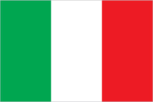
- three equal vertical bands of green (hoist side), white, and red; design inspired by the French flag brought to Italy by Napoleon in 1797; colors are those of Milan (red and white) combined with the green uniform color of the Milanese civic guard
- note
- note: similar to the flag of Mexico, which is longer, uses darker shades of green and red, and has its coat of arms centered on the white band; Ireland, which is longer and is green (hoist side), white, and orange; also similar to the flag of the Cote d'Ivoire, which has the colors reversed - orange (hoist side), white, and green
Government type
parliamentary republic
Independence
17 March 1861 (Kingdom of Italy proclaimed; Italy was not finally unified until 1871)
International law organization participation
accepts compulsory ICJ jurisdiction with reservations; accepts ICCt jurisdiction
International organization participation
ADB (nonregional member), AfDB (nonregional member), Arctic Council (observer), Australia Group, BIS, BSEC (observer), CBSS (observer), CD, CDB, CE, CEI, CERN, EAPC, EBRD, ECB, EIB, EITI (implementing country), EMU, ESA, EU, FAO, FATF, G-7, G-8, G-10, G-20, IADB, IAEA, IBRD, ICAO, ICC (national committees), ICCt, ICRM, IDA, IEA, IFAD, IFC, IFRCS, IGAD (partners), IHO, ILO, IMF, IMO, IMSO, Interpol, IOC, IOM, IPU, ISO, ITSO, ITU, ITUC (NGOs), LAIA (observer), MIGA, MINURSO, MINUSMA, NATO, NEA, NSG, OAS (observer), OECD, OPCW, OSCE, Pacific Alliance (observer), Paris Club, PCA, PIF (partner), Schengen Convention, SELEC (observer), SICA (observer), UN, UNCTAD, UNESCO, UNHCR, UNIDO, UNIFIL, Union Latina, UNMOGIP, UNRWA, UNTSO, UNWTO, UPU, WCO, WHO, WIPO, WMO, WTO, ZC
Judicial branch
- highest courts
- Supreme Court of Cassation or Corte Suprema di Cassazione (consists of the first president (chief justice), deputy president, 54 justices presiding over 6 civil and 7 criminal divisions, and 288 judges; an additional 30 judges of lower courts serve as supporting judges; cases normally heard by 5-judge panels; more complex cases heard by 9-judge panels); Constitutional Court or Corte Costituzionale (consists of the court president and 14 judges)
- judge selection and term of office
- Supreme Court judges appointed by the High Council of the Judiciary, headed by the president of the republic; judges may serve for life; Constitutional Court judges - 5 appointed by the president, 5 elected by Parliament, 5 elected by select higher courts; judges serve up to 9 years
- subordinate courts
- various lower civil and criminal courts (primary and secondary tribunals and courts of appeal)
Legal system
civil law system; judicial review of legislation under certain conditions in Constitutional Court
Legislative branch
- description
- bicameral Parliament or Parlamento consists of:Senate or Senato della Repubblica (320 seats; 116 members directly elected in single-seat constituencies by simple majority vote, 193 members in multi-seat constituencies and 6 members in multi-seat constituencies abroad directly elected by party-list proportional representation vote to serve 5-year terms and 5 ex-officio members appointed by the president of the Republic to serve for life)Chamber of Deputies or Camera dei Deputati (630 seats; 629 members directly elected in single- and multi-seat constituencies by proportional representation vote and 1 member from Valle d'Aosta elected by simple majority vote; members serve 5-year terms)
- election results
- Senate - percent of vote by party - NA; seats by party - center-right coalition 137 (Lega 58, FI 57, FdI 18, NCI-UDC 4), M5S 112, center-left coalition 60 (PD 53, SVP-PATT 3, CP 1, +EU 1, Together 1, VdAI 1), LeU 4, MAIE 1, USEI 1; composition (as of September 2021) - men 210, women 110, percent of women 34.4%Chamber of Deputies - percent of vote by party - NA; seats by party - center-right coalition 265 (Lega 125, FI 104, FdI 32, NeI-UDC 4), M5S 227, center-left coalition 122 (PD 112, SVP-PATT 4, +EU 3, CP 2, Together 1), LeU 14, MAIE 1,USEI 1; composition (as of September 2021) - men 405, women 225, percent of women 35.7%; note - total Parliament percent of women 35.2%
- elections
- Senate - last held on 4 March 2018 (next to be held in March 2023)Chamber of Deputies - last held on 4 March 2018 (next to be held in March 2023)
- note
- Note: in October 2019, Italy's Parliament voted to reduce the number of Senate seats from 315 to 200 and the number of Chamber of Deputies seats from 630 to 400; a referendum to reduce the membership of Parliament held on 20-21 September 2020 was approved, effective for the 2023 election
National anthem
- lyrics/music
- Goffredo MAMELI/Michele NOVARO
- name
- "Il Canto degli Italiani" (The Song of the Italians)
- note
- note: adopted 1946; the anthem, originally written in 1847, is also known as "L'Inno di Mameli" (Mameli's Hymn), and "Fratelli D'Italia" (Brothers of Italy)
National holiday
Republic Day, 2 June (1946)
National symbol(s)
white, five-pointed star (Stella d'Italia); national colors: red, white, green
Political parties and leaders
Article One or Art.1-MDP [Roberto SPERANZA]Associative Movement of Italians Abroad or MAIE [Ricardo Antonio MERIO]Brothers of Italy or FdI [Giorgi MELONI]Democratic Party or PD [Enrico LETTA]Five Star Movement or M5S [Giuseppe CONTE]Forza Italia or FI [Silvio BERLUSCONI]Free and Equal (Liberi e Uguali) or LeU [Pietro GRASSO]League or Lega [Matteo SALVINI]More Europe or +EU [Emma BONINO]Popular Civic List or CP [Beatrice LORENZIN]Possible [Beatrice BRIGNONE]South American Union Italian Emigrants or USEI [Eugenion SANGREGORIO]South Tyrolean People's Party or SVP [Philipp ACHAMMER]Trentino Tyrolean Autonomist Party (Partito Autonomista Trentino Tirolese) or PATT [Franco PANIZZA, secretary] Us with Italy [Raffaele FITTO]
Suffrage
18 years of age; universal except in senatorial elections, where minimum age is 25
Economy
Agricultural products
milk, grapes, wheat, maize, tomatoes, apples, olives, sugar beet, oranges, rice
Budget
- expenditures
- 948.1 billion (2017 est.)
- revenues
- 903.3 billion (2017 est.)
Budget surplus (+) or deficit (-)
-2.3% (of GDP) (2017 est.)
Credit ratings
- Fitch rating
- BBB- (2020)
- Moody's rating
- Baa3 (2018)
- Standard & Poors rating
- BBB (2017)
Current account balance
- Current account balance 2018
- $51.735 billion (2018 est.)
- Current account balance 2019
- $59.517 billion (2019 est.)
Debt - external
- Debt - external 2018
- $2,533,153,000,000 (2018 est.)
- Debt - external 2019
- $2,463,208,000,000 (2019 est.)
Economic overview
Italy’s economy comprises a developed industrial north, dominated by private companies, and a less-developed, highly subsidized, agricultural south, with a legacy of unemployment and underdevelopment. The Italian economy is driven in large part by the manufacture of high-quality consumer goods produced by small and medium-sized enterprises, many of them family-owned. Italy also has a sizable underground economy, which by some estimates accounts for as much as 17% of GDP. These activities are most common within the agriculture, construction, and service sectors.Italy is the third-largest economy in the euro zone, but its exceptionally high public debt and structural impediments to growth have rendered it vulnerable to scrutiny by financial markets. Public debt has increased steadily since 2007, reaching 131% of GDP in 2017. Investor concerns about Italy and the broader euro-zone crisis eased in 2013, bringing down Italy's borrowing costs on sovereign government debt from euro-era records. The government still faces pressure from investors and European partners to sustain its efforts to address Italy's longstanding structural economic problems, including labor market inefficiencies, a sluggish judicial system, and a weak banking sector. Italy’s economy returned to modest growth in late 2014 for the first time since 2011. In 2015-16, Italy’s economy grew at about 1% each year, and in 2017 growth accelerated to 1.5% of GDP. In 2017, overall unemployment was 11.4%, but youth unemployment remained high at 37.1%. GDP growth is projected to slow slightly in 2018.
Exchange rates
- currency
- euros (EUR) per US dollar -
- Exchange rates 2013
- 0.7634 (2013 est.)
- Exchange rates 2014
- 0.885 (2014 est.)
- Exchange rates 2018
- 0.87789 (2018 est.)
- Exchange rates 2019
- 0.90338 (2019 est.)
- Exchange rates 2020
- 0.82771 (2020 est.)
Exports
- Exports 2018
- $656.06 billion note: data are in current year dollars (2018 est.)
- Exports 2019
- $636.01 billion note: data are in current year dollars (2019 est.)
- Exports 2020
- $558.26 billion note: data are in current year dollars (2020 est.)
Exports - commodities
packaged medicines, cars and vehicle parts, refined petroleum, valves, trunks/cases, wine (2019)
Exports - partners
Germany 12%, France 11%, United States 10%, United Kingdom 5%, Spain 5%, Switzerland 5% (2019)
Fiscal year
calendar year
GDP - composition, by end use
- exports of goods and services
- 31.4% (2017 est.)
- government consumption
- 18.6% (2017 est.)
- household consumption
- 61% (2017 est.)
- imports of goods and services
- -28.3% (2017 est.)
- investment in fixed capital
- 17.5% (2017 est.)
- investment in inventories
- -0.2% (2017 est.)
GDP - composition, by sector of origin
- agriculture
- 2.1% (2017 est.)
- industry
- 23.9% (2017 est.)
- services
- 73.9% (2017 est.)
GDP (official exchange rate)
$2,002,763,000,000 (2019 est.)
Gini Index coefficient - distribution of family income
- Gini Index coefficient - distribution of family income 1995
- 27.3 (1995)
- Gini Index coefficient - distribution of family income 2017
- 35.9 (2017 est.)
Household income or consumption by percentage share
- highest 10%
- 26.8% (2000)
- lowest 10%
- 2.3%
Imports
- Imports 2018
- $605.44 billion note: data are in current year dollars (2018 est.)
- Imports 2019
- $569.7 billion note: data are in current year dollars (2019 est.)
- Imports 2020
- $486.35 billion note: data are in current year dollars (2020 est.)
Imports - commodities
crude petroleum, cars, packaged medicines, natural gas, refined petroleum (2019)
Imports - partners
Germany 16%, France 9%, China 7%, Spain 5%, Netherlands 5%, Belgium 5% (2019)
Industrial production growth rate
2.1% (2017 est.)
Industries
tourism, machinery, iron and steel, chemicals, food processing, textiles, motor vehicles, clothing, footwear, ceramics
Inflation rate (consumer prices)
- Inflation rate (consumer prices) 2017
- 1.2% (2017 est.)
- Inflation rate (consumer prices) 2018
- 1.1% (2018 est.)
- Inflation rate (consumer prices) 2019
- 0.6% (2019 est.)
Labor force
22.92 million (2020 est.)
Labor force - by occupation
- agriculture
- 3.9%
- industry
- 28.3%
- services
- 67.8% (2011)
Population below poverty line
20.1% (2018 est.)
Public debt
- note
- note: Italy reports its data on public debt according to guidelines set out in the Maastricht Treaty; general government gross debt is defined in the Maastricht Treaty as consolidated general government gross debt at nominal value, outstanding at the end of the year, in the following categories of government liabilities (as defined in ESA95): currency and deposits (AF.2), securities other than shares excluding financial derivatives (AF.3, excluding AF.34), and loans (AF.4); the general government sector comprises central, state, and local government and social security funds
- Public debt 2016
- 132% of GDP (2016 est.)
- Public debt 2017
- 131.8% of GDP (2017 est.)
Real GDP (purchasing power parity)
- note
- note: data are in 2010 dollars
- Real GDP (purchasing power parity) 2018
- $2,540,890,000,000 note: data are in 2017 dollars (2018 est.)
- Real GDP (purchasing power parity) 2019
- $2,548,190,000,000 note: data are in 2017 dollars (2019 est.)
- Real GDP (purchasing power parity) 2020
- $2,322,140,000,000 note: data are in 2017 dollars (2020 est.)
Real GDP growth rate
- Real GDP growth rate 2017
- 1.73% (2017 est.)
- Real GDP growth rate 2018
- 0.83% (2018 est.)
- Real GDP growth rate 2019
- 0.34% (2019 est.)
Real GDP per capita
- note
- note: data are in 2010 dollars
- Real GDP per capita 2018
- $42,100 note: data are in 2017 dollars (2018 est.)
- Real GDP per capita 2019
- $42,700 note: data are in 2017 dollars (2019 est.)
- Real GDP per capita 2020
- $39,000 note: data are in 2017 dollars (2020 est.)
Reserves of foreign exchange and gold
- Reserves of foreign exchange and gold 31 December 2015
- $130.6 billion (31 December 2015 est.)
- Reserves of foreign exchange and gold 31 December 2017
- $151.2 billion (31 December 2017 est.)
Taxes and other revenues
46.6% (of GDP) (2017 est.)
Unemployment rate
- Unemployment rate 2018
- 10.63% (2018 est.)
- Unemployment rate 2019
- 9.88% (2019 est.)
Unemployment, youth ages 15-24
- female
- 31.8% (2020 est.)
- male
- 27.9%
- total
- 29.4%
Energy
Crude oil - exports
13,790 bbl/day (2017 est.)
Crude oil - imports
1.341 million bbl/day (2017 est.)
Crude oil - production
90,000 bbl/day (2018 est.)
Crude oil - proved reserves
487.8 million bbl (1 January 2018 est.)
Electricity - consumption
293.5 billion kWh (2016 est.)
Electricity - exports
6.155 billion kWh (2016 est.)
Electricity - from fossil fuels
54% of total installed capacity (2016 est.)
Electricity - from hydroelectric plants
14% of total installed capacity (2017 est.)
Electricity - from nuclear fuels
0% of total installed capacity (2017 est.)
Electricity - from other renewable sources
32% of total installed capacity (2017 est.)
Electricity - imports
43.18 billion kWh (2016 est.)
Electricity - installed generating capacity
114.2 million kW (2016 est.)
Electricity - production
275.3 billion kWh (2016 est.)
Electricity access
- electrification - total population
- 100% (2020)
Natural gas - consumption
75.15 billion cu m (2017 est.)
Natural gas - exports
271.8 million cu m (2017 est.)
Natural gas - imports
69.66 billion cu m (2017 est.)
Natural gas - production
5.55 billion cu m (2017 est.)
Natural gas - proved reserves
38.11 billion cu m (1 January 2018 est.)
Refined petroleum products - consumption
1.236 million bbl/day (2017 est.)
Refined petroleum products - exports
615,900 bbl/day (2017 est.)
Refined petroleum products - imports
422,500 bbl/day (2017 est.)
Refined petroleum products - production
1.607 million bbl/day (2017 est.)
Communications
Broadband - fixed subscriptions
- subscriptions per 100 inhabitants
- 29.53 (2020 est.)
- total
- 17,855,620 (2020)
Broadcast media
two Italian media giants dominate - the publicly owned Radiotelevisione Italiana (RAI) with 3 national terrestrial stations and privately owned Mediaset with 3 national terrestrial stations; a large number of private stations and Sky Italia - a satellite TV network; RAI operates 3 AM/FM nationwide radio stations; about 1,300 commercial radio stations
Internet country code
.it
Internet users
- percent of population
- 63.08% (2019 est.)
- total
- 50.54 million (2021 est.)
Telecommunication systems
- domestic
- high-capacity cable and microwave radio relay trunks; 32 per 100 for fixed-line and 133 per 100 for mobile-cellular subscriptions (2019)
- general assessment
- well-developed, fully automated telephone, and data services; among highest mobile penetration rates in Europe; benefitted from progressive government programs aimed at developing fiber in broadband sector; leading edge of development with 5G in six cities; fiber network reaches more than half of population; Milan developing smart city technology; importer of broadcasting equipment and computers from China (2020)
- international
- country code - 39; landing points for Italy-Monaco, Italy-Libya, Italy-Malta, Italy-Greece-1, Italy-Croatia, BlueMed, Janna, FEA, SeaMeWe-3 & 4 & 5, Trapani-Kelibia, Columbus-III, Didon, GO-1, HANNIBAL System, MENA, Bridge International, Malta-Italy Interconnector, Melita1, IMEWE, VMSCS, AAE-1, and OTEGLOBE, submarine cables that provide links to Asia, the Middle East, Europe, North Africa, Southeast Asia, Australia and US; satellite earth stations - 3 Intelsat (with a total of 5 antennas - 3 for Atlantic Ocean and 2 for Indian Ocean) (2019)
- note
- note: the COVID-19 pandemic continues to have a significant impact on production and supply chains globally; since 2020, some aspects of the telecom sector have experienced downturn, particularly in mobile device production; many network operators delayed upgrades to infrastructure; progress towards 5G implementation was postponed or slowed in some countries; consumer spending on telecom services and devices was affected by large-scale job losses and the consequent restriction on disposable incomes; the crucial nature of telecom services as a tool for work and school from home became evident, and received some support from governments
Telephones - fixed lines
- subscriptions per 100 inhabitants
- 32.14 (2020 est.)
- total subscriptions
- 19,430,559 (2020)
Telephones - mobile cellular
- subscriptions per 100 inhabitants
- 128.7 (2020 est.)
- total subscriptions
- 77,796,840 (2020)
Transportation
Airports
- total
- 129 (2013)
Airports - with paved runways
- 1,524 to 2,437 m
- 18
- 2,438 to 3,047 m
- 31
- 914 to 1,523 m
- 29
- over 3,047 m
- 9
- total
- 98
- under 914 m
- 11 (2017)
Airports - with unpaved runways
- 1,524 to 2,437 m
- 1
- 914 to 1,523 m
- 10
- total
- 31
- under 914 m
- 20 (2013)
Civil aircraft registration country code prefix
I
Heliports
5 (2013)
Merchant marine
- by type
- bulk carrier 36, container ship 7, general cargo 111, oil tanker 103, other 1,039 (2021)
- total
- 1,296
National air transport system
- annual freight traffic on registered air carriers
- 1.418 billion mt-km (2018)
- annual passenger traffic on registered air carriers
- 27,630,435 (2018)
- inventory of registered aircraft operated by air carriers
- 180
- number of registered air carriers
- 9 (2020)
Pipelines
20223 km gas, 1393 km oil, 1574 km refined products (2013)
Ports and terminals
- container port(s) (TEUs)
- Genoa (2,621,472), Gioia Tauro (2,523,000) (2019)
- LNG terminal(s) (import)
- La Spezia, Panigaglia, Porto Levante
- major seaport(s)
- Augusta, Cagliari, Genoa, Livorno, Taranto, Trieste, Venice
- oil terminal(s)
- Melilli (Santa Panagia) oil terminal, Sarroch oil terminal
Railways
- narrow gauge
- 122.3 km 1.000-m gauge (122.3 km electrified) (2014)
- note
- 1289.3 0.950-m gauge (151.3 km electrified)
- standard gauge
- 18,770.1 km 1.435-m gauge (12,893.6 km electrified) (2014)
- total
- 20,182 km (2014)
Roadways
- paved
- 487,700 km (includes 6,700 km of expressways) (2007)
- total
- 487,700 km (2007)
Waterways
2,400 km (used for commercial traffic; of limited overall value compared to road and rail) (2012)
Military and Security
Military - note
Italy is a member of NATO and was one of the original 12 countries to sign the North Atlantic Treaty (also known as the Washington Treaty) in 1949 Italy is an active participant in EU, NATO, UN, and other multinational military, security, and humanitarian operations abroad; as of 2021, it hosted the headquarters for the EU’s Mediterranean naval operations force (EUNAVFOR-MED) in Rome and the US Navy’s 6th Fleet in Naples; Italy was admitted to the UN in 1955 and in 1960 participated in its first UN peacekeeping mission, the UN Operation in Congo (ONUC); since 1960, it has committed more than 60,000 troops to UN missions, and as of 2021, was the top supplier of military and police forces among Western and EU nations to UN peacekeeping operations; since 2006, Italy has hosted a training center in Vicenza for police personnel destined for peacekeeping missions
Military and security forces
- Italian Armed Forces: Army (Esercito Italiano, EI), Navy (Marina Militare Italiana, MMI; includes aviation, marines), Italian Air Force (Aeronautica Militare Italiana, AMI); Carabinieri Corps (Arma dei Carabinieri, CC) (2021)
- note
- note(s) - the Carabinieri is the national gendarmerie; for its civil police functions, the Carabinieri falls under the control of the Ministry of the Interior; the Financial Guard (Guardia di Finanza) under the Ministry of Economy and Finance is a force with military status and nationwide remit for financial crime investigations, including narcotics trafficking, smuggling, and illegal immigration
Military and security service personnel strengths
the Italian Armed Forces have approximately 170,000 active personnel (100,000 Army; 30,000 Navy; 40,000 Air Force); approximately 107,000 Carabinieri (2021)
Military deployments
120 Djibouti; 1,100 Middle East/Iraq/Kuwait (NATO, counter-ISIS campaign, European Assistance Mission Iraq); 630 Kosovo (NATO/KFOR); 200 Latvia (NATO); 900 Lebanon (UNIFIL); 400 Libya; 290 Niger; 150 Somalia (EUTM) (2021)
Military equipment inventories and acquisitions
the Italian Armed Forces' inventory includes a mix of domestically-produced, jointly-produced, and imported European and US weapons systems; the US is the leading supplier of weapons to Italy since 2010, followed by Germany; the Italian defense industry is capable of producing equipment across all the military domains with particular strengths in naval vessels and aircraft; it also participates in joint development and production of advanced weapons systems with other European countries and the US (2021)
Military expenditures
- Military Expenditures 2016
- 1.18% of GDP (2016)
- Military Expenditures 2017
- 1.2% of GDP (2017)
- Military Expenditures 2018
- 1.23% of GDP (2018)
- Military Expenditures 2019
- 1.18% of GDP (2019)
- Military Expenditures 2020
- 1.39% of GDP (2020 est.)
Military service age and obligation
18-25 years of age for voluntary military service; women may serve in any military branch; Italian citizenship required; 1-year service obligation; conscription abolished 2004 (2021)
Transnational Issues
Disputes - international
Italy's long coastline and developed economy entices tens of thousands of illegal immigrants from southeastern Europe and northern Africa
Illicit drugs
important gateway for drug trafficking; organized crime groups allied with Colombian and Spanish groups trafficking cocaine to Europe
Refugees and internally displaced persons
- note
- note: 590,074 estimated refugee and migrant arrivals (January 2015-December 2021)
- refugees (country of origin)
- 18,473 (Nigeria), 14,484 (Pakistan), 12,096 (Afghanistan), 10,063 (Mali), 7,704 (Somalia), 5,740 (Gambia) (2020)
- stateless persons
- 3,000 (2020)
Terrorism
Terrorist group(s)
Islamic State of Iraq and ash-Sham (ISIS)
Environment
Air pollutants
- methane emissions
- 41.3 megatons (2020 est.)
- particulate matter emissions
- 15.28 micrograms per cubic meter (2016 est.)
Climate
predominantly Mediterranean; alpine in far north; hot, dry in south
Environment - current issues
air pollution from industrial emissions such as sulfur dioxide; coastal and inland rivers polluted from industrial and agricultural effluents; acid rain damaging lakes; inadequate industrial waste treatment and disposal facilities
Environment - international agreements
- party to
- Air Pollution, Air Pollution-Nitrogen Oxides, Air Pollution-Persistent Organic Pollutants, Air Pollution-Sulphur 85, Air Pollution-Sulphur 94, Air Pollution-Volatile Organic Compounds, Antarctic-Environmental Protection, Antarctic-Marine Living Resources, Antarctic Seals, Antarctic Treaty, Biodiversity, Climate Change, Climate Change-Kyoto Protocol, Climate Change-Paris Agreement, Comprehensive Nuclear Test Ban, Desertification, Endangered Species, Environmental Modification, Hazardous Wastes, Law of the Sea, Marine Dumping-London Convention, Marine Dumping-London Protocol, Nuclear Test Ban, Ozone Layer Protection, Ship Pollution, Tropical Timber 2006, Wetlands, Whaling
- signed, but not ratified
- Air Pollution-Heavy Metals, Air Pollution-Multi-effect Protocol
Land use
- agricultural land
- 47.1% (2018 est.)
- agricultural land: arable land
- arable land: 22.8% (2018 est.)
- agricultural land: permanent crops
- permanent crops: 8.6% (2018 est.)
- agricultural land: permanent pasture
- permanent pasture: 15.7% (2018 est.)
- forest
- 31.4% (2018 est.)
- other
- 21.5% (2018 est.)
Major infectious diseases
- note
- note: a new coronavirus is causing respiratory illness (COVID-19) in Italy; illness with this virus has ranged from mild to severe with fatalities reported; as of 6 October 2021, Italy has reported a total of 4,686,109 cases of COVID-19 or 7,857.13 cumulative cases of COVID-19 per 100,000 population with 219.84 cumulative deaths per 100,000 population; as of 5 October 2021, 75.36% of the population has received at least one dose of COVID-19 vaccine; the US Department of Homeland Security has issued instructions requiring US passengers who have been in Italy to travel through select airports where the US Government has implemented enhanced screening procedures
- respiratory diseases
- Covid-19 (see note) (2020)
Major watersheds (area sq km)
Atlantic Ocean drainage: Rhine-Maas (198,735 sq km), (Black Sea) Danube (795,656 sq km), (Adriatic Sea) Po (76,997 sq km), (Mediterranean Sea) Rhone (100,543 sq km)
Revenue from coal
- coal revenues
- 0% of GDP (2018 est.)
Revenue from forest resources
- forest revenues
- 0.01% of GDP (2018 est.)
Total renewable water resources
191.3 billion cubic meters (2017 est.)
Total water withdrawal
- agricultural
- 17 billion cubic meters (2017 est.)
- industrial
- 7.7 billion cubic meters (2017 est.)
- municipal
- 9.488 billion cubic meters (2017 est.)
Urbanization
- rate of urbanization
- 0.27% annual rate of change (2020-25 est.)
- urban population
- 71.3% of total population (2021)
Waste and recycling
- municipal solid waste generated annually
- 29.524 million tons (2015 est.)
- municipal solid waste recycled annually
- 7,646,716 tons (2015 est.)
- percent of municipal solid waste recycled
- 25.9% (2015 est.)