1989 Edition
CIA World Factbook 1989 (Internet Archive)
Countries
182
Data Records
15,825
Categories
5
Source
CIA World Factbook 1989 (Internet Archive)
Geography
Climate
- Mediterranean with mild winters and warm summers
- tropical
- temperate; clear, hot summers in interior, more moderate and cloudy along coast; cloudy, cold winters in interior, partly cloudy and cool along coast
Coastline
- 12 km
- 35.2 km
- 4,964 km
Comparative area
- about 1 1 times the size of The Mall in Washington, DC
- about 8.5 times the size of The Mall in Washington, DC
- slightly more than twice the size of Oregon
Contiguous zone
1 2 nm Continental shelf :2QQ meters or to depth of exploitation
Continental shelf
200 meters or to depth of exploitation
Disputes
- source of occasional friction between Spain and the UK
- claimed by Madagascar
- Gibraltar question with UK; controls two presidios or places of sovereignty (Ceuta and Melilla) on the north coast of Morocco
Environment
- natural freshwater sources are meager so large water catchments (concrete or natural rock) collect rain water
- subject to periodic cyclones
- deforestation; air pollution
Exclusive fishing zone
3 nm
Extended economic zone
- 200 nm
- 200 nm
Land boundaries
- 1.2 km with Spain
- none
- 1,903.2 km total; Andorra 65 km, France 623 km, Gibraltar 1.2 km, Portugal 1,214 km
Land use
- 0% arable land; 0% permanent crops; 0% meadows and pastures; 0% forest and woodland; 100% other
- 0% arable land; 0% permanent crops; 0% meadows and pastures; 0% forest and woodland; 100% other — lush vegetation and coconut palms
- 31% arable land; 10% permanent crops; 21% meadows and pastures; 31% forest and woodland; 7% other; includes 6% irrigated
Natural resources
- negligible
- guano, coconuts
- coal, lignite, iron ore, uranium, mercury, pyrites, fluorspar, gypsum, zinc, lead, tungsten, copper, kaolin, potash, hydropower
Note
- strategic location on Strait of Gibraltar that links the North Atlantic Ocean and Mediterranean Sea
- located in the Indian Ocean just north of the Mozambique Channel between Africa and Madagascar
- strategic location along approaches to Strait of Gibraltar
Terrain
- a narrow coastal lowland borders The Rock
- undetermined
- large, flat to dissected plateau surrounded by rugged hills; Pyrenees in north
Territorial sea
- 3 nm
- 12 nm
- 1 2 nm
Total area
- 6.5 km2; land area: 6.5 km2
- 5 km2; land area: 5 km2; includes lie Glorieuse, lie du Lys, Verte Rocks, Wreck Rock, and South Rock
- 504,750 km2; land area: 499,400 km2; includes Balaeric Islands, Canary Islands, Ceuta, Mellila, bias Chafarinas, Penon de Alhucemas, and Penon de Velez de la Gomera
People and Society
Birth rate
- 18 births/ 1,000 population (1990)
- 31 births/ 1,000 population (1990)
Birthrate
II births/ 1,000 population (1990)
Death rate
- 8 deaths/ 1,000 population (1990)
- 8 deaths/ 1,000 population (1990)
- 8 deaths/ 1,000 population (1990)
Ethnic divisions
- mostly Italian, English, Maltese, Portuguese, and Spanish descent
- 99.1% Arab-Berber, 0.7% non-Moroccan, 0.2% Jewish
- composite of Mediterranean and Nordic types
Infant mortality rate
- 6 deaths/ 1,000 live births (1990)
- 78 deaths/ 1,000 live births (1990)
- 6 deaths/ 1,000 live births (1990)
Labor force
- about 14,800 (including nonGibraltar laborers); UK military establishments and civil government employ nearly 50% of the labor force
- 7,400,000; 50% agriculture, 26% services, 1 5% industry, 9% other (1985)
- 14,621,000; 53% services, 24% industry, 14% agriculture, 9% construction (1988)
Language
- English and Spanish are primary languages; Italian, Portuguese, and Russian also spoken; English used in the schools and for official purposes
- Arabic (official); several Berber dialects; French is language of business, government, diplomacy, and postprimary education
- Castilian Spanish; second languages include 17% Catalan, 7% Galician, and 2% Basque
Life expectancy at birth
- 72 years male, 78 years female (1990)
- 63 years male, 66 years female (1990)
- 75 years male, 82 years female (1990)
Literacy
- 99% (est.)
- 28%
- 97%
Nationality
- noun — Gibraltarian; adjective— Gibraltar
- noun — Moroccan(s); adjective— Moroccan
- noun — Spaniard(s); adjective— Spanish
Net migration rate
- -8 migrants/ 1 ,000 population (1990)
- — 1 migrants/ 1 ,000 population (1990)
- 0 migrants/ 1 ,000 population (1990)
Organized labor
- over 6,000
- about 5% of the labor force, mainly in the Union of Moroccan Workers (UMT) and the Democratic Confederation of Labor (CDT)
- less 10% of labor force (1988)
Population
- 29,572 (July 1990), growth rate 0.1% (1990)
- uninhabited
- 25,648,241 (July 1990). growth rate 2.2% (1990)
- 39,268,715 (July 1990), growth rate 0.3% (1990)
Religion
- 75% Roman Catholic, 8% Church of England, 2.25% Jewish
- 98.7% Muslim, 1.1% Christian, 0.2% Jewish
- 99% Roman Catholic, 1% other sects
Total fertility rate
- 2.4 children born/ woman (1990)
- 4.0 children born/ woman (1990)
- 1.4 children born/ woman (1990)
Government
Administrative divisions
- none (colony of the UK)
- 36 provinces (provinces, singular — province) and 2 municipalities* (wilayas, singular — wilaya); Agadir, Al Hocei'ma, Azilal, Beni Mellal, Ben Slimane, Boulemane, Casablanca*, Chaouen, El Jadida, El Kelaa des Srarhna, Er Rachidia, Essaouira, Fes, Figuig, Guelmim, Ifrane, Kenitra, Khemisset, Khenifra, Khouribga, Laayoune, Marrakech, Meknes, Nador, Ouarzazate, Oujda, Rabat-Sale*, San, Settat, Sidi Kacem, Tanger, Tan-Tan, Taounate, Taroudannt, Tata, Taza, Tetouan, Tiznit
- 1 7 autonomous communities (comunidades autonomas, singular — comunidad autonoma); Andalucia, Aragon, Asturias, Canarias, Cantabria, Castilla-La Mancha, Castilla y Leon, Cataluna, Extremadura, Galicia, Islas Baleares, La Rioja, Madrid, Murcia, Navarra, Pais Vasco, Valenciana
Capital
- Gibraltar
- Rabat
- Madrid
Communists
- negligible
- about 2,000
- PCE membership declined from a possible high of 160,000 in 1977 to roughly 60,000 in 1987; the party gained almost 1 million voters and 10 deputies in the 1989 election; voters came mostly from the disgruntled socialist left; remaining strength is in labor, where it dominates the Workers Commissions trade union (one of the country's two major labor centrals), which claims a membership of about 1 million; experienced a modest recovery in 1986 national election, nearly doubling the share of the vote it received in 1982
Constitution
- 30 May 1969
- 10 March 1972
- 6 December 1978, effective 29 December 1978
Diplomatic representation
- none (colony of the UK)
- Ambassador Ali BENGELLOUN; Chancery at 1601 21st Street NW, Washington DC 20009; telephone (202) 462-7979; there is a Moroccan Consulate General in New York; US— Ambassador Michael USSERY; Embassy at 2 Avenue de Marrakech, Rabat (mailing address is P. O. Box 120, Rabat, or APO New York 09284); telephone [212] (7) 622-65; there are US Consulates General in Casablanca and Tangier
- Ambassador Julian SANTAMARIA; Chancery at 2700 15th Street NW, Washington DC 20009; telephone (202) 265-0190 or 0191; there are Spanish Consulates General in Boston, Chicago, Houston, Los Angeles, Miami, New Orleans, New York, San Francisco, and San Juan (Puerto Rico); US— Ambassador Joseph ZAPPALA; Embassy at Serrano 75, Madrid 6 (mailing address is APO New York 09285); telephone [34] (1) 276-3400 or 3600; there is a US Consulate General in Barcelona and a Consulate in Bilbao
Elections
- House of Assembly: last held on 24 March 1988 (next to be held March 1992); results — percent of vote by party NA; seats— (18 total, 15 elected) SL 8, GCL/AACR 7
- Chamber of Representatives — last held on 14 September 1984 (were scheduled for September 1990, but postponed until NA 1992); results — percent of vote by party NA; seats — (306 total, 206 elected) CU 83, RNI 61, MP 47, Istiqlal 41, USFP 36, PND 24, others 14
- The Courts General — last held 29 October 1989 (next to be held October 1993); results— PSOE 39.6%, PP 25.8%, CDS 9%, Communist-led coalition (IU) 9%, CiU 5%, Basque Nationalist Party 1.2%, HB 1%, Andalusian Party 1%, others 8.4%; seats — (350 total, 18 vacant pending new elections caused by voting irregularities) PSOE 176, PP 106, CiU 18, IU 17, CDS 14, PNV 5, HB 4, others 10
Executive branch
- British monarch, governor, chief minister, Gibraltar Council, Council of Ministers (cabinet)
- monarch, prime minister, Council of Ministers (cabinet)
- monarch, president of the government (prime minister), deputy prime minister, Council of Ministers (cabinet), Council of State
Flag
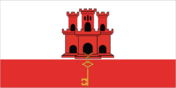
- two horizontal bands of white (top, double-width) and red with a Glorioso Islands (French possession) three-towered red castle in the center of the white band; hanging from the castle gate is a gold key centered in the red band
- red with a green pentacle (five-pointed, linear star) known as Solomon's seal in the center of the flag; green is the traditional color of Islam
- three horizontal bands of red (top), yellow (double width), and red with the national coat of arms on the hoist side of the yellow band; the coat of arms includes the royal seal framed by the Pillars of Hercules which are the two promontories (Gibraltar and Ceuta) on either side of the eastern end of the Strait of Gibraltar
Independence
- none (colony of the UK)
- 2 March 1956 (from France)
- 1 492 (expulsion of the Moors and unification)
Judicial branch
- Supreme Court, Court of Appeal
- Supreme Court
- Supreme Court (Tribunal Supremo)
Leaders
- Chief of St ate— Queen ELIZABETH II (since 6 February 1952), represented by Governor and Commander in Chief Air Chief Marshal Sir Peter TERRY (since NA 1985); Head of Government — Chief Minister Joe BOSSANO (since NA March 1988) Political parties and leaders: Socialist Labor Party (SL), Joe Bossano; Gibraltar Labor Party/ Association for the Advancement of Civil Rights (GCL/AACR), Adolfo Canepa; Independent Democratic Party, Joe Pitaluga
- Chief of State— King HASSAN II (since 3 March 1961); Head of Government — Prime Minister Dr. Azzedine LARAKI (since 30 September 1986) Political parties and leaders: Morocco has 15 political parties; the major ones are Istiqlal Party, M'Hamed Boucetta; Socialist Union of Popular Forces (USFP), Abderrahim Bouabid; Popular Movement (MP), Secretariat General; National Assembly of Independents (RNI), Ahmed Osman; National Democratic Party (PND), Mohamed Arsalane El-Jadidi; Party for Progress and Socialism (PPS), Ali Yata; Constitutional Union (UC), Maati Bouabid
- Chief of State— King JUAN CARLOS I (since 22 November 1975); Head of Government — Prime Minister Felipe GONZALEZ Marquez (since 2 December 1982); Deputy Prime Minister Alfonso GUERRA Gonzalez (since 2 December 1982) Political parties and leaders: principal national parties, from right to left — Popular Party (PP), Jose Maria Aznar; Popular Democratic Party (PDP), Luis de Grandes; Social Democratic Center (CDS), Adolfo Suarez Gonzalez; Spanish Socialist Workers Party (PSOE), Felipe Gonzalez Marquez; Spanish Communist Party (PCE), Julio Anguita; chief regional parties — Convergence and Unity (CiU), Jordi Pujol Saley, in Catalonia; Basque Nationalist Party (PNV), Xabier Arzallus; Basque Solidarity (EA), Carlos Garaicoetxea Urizza; Basque Popular Unity (HB), Jon Idigoras; Basque Left (EE), Juan Maria Bandries Molet; Andalusian Party (PA); Independent Canary Group (AIC); Aragon Regional Party (PAR); Valencian Union (UV)
Legal system
- English law
- based on Islamic law and French and Spanish civil law system; judicial review of legislative acts in Constitutional Chamber of Supreme Court
- civil law system, with regional applications; does not accept compulsory ICJ jurisdiction
Legislative branch
- unicameral House of Assembly
- unicameral Chamber of Representatives (Majlis al Nuwab)
- bicameral The General Courts or National Assembly (Las Cortes Generales) consists of an upper house or Senate (Senado) and a lower house or Congress of Deputies (Congreso de los Diputados)
Long-form name
- none
- none
- Kingdom of Morocco
- Kingdom of Spain
Member of
- AfDB, Arab League, CCC, EC (associate), FAO, G-77, GATT, IAEA, IBRD, ICAO, IDA, IDB— Islamic Development Bank, I FAD, IFC, ILO, ILZSG, IMF, IMO, INTELSAT, INTERPOL, IOOC, IPU, ITU, NAM, QIC, UN, UNESCO, UPU, WHO, WIPO, WMO, WTO
- Andean Pact (observer), ASSIMER, CCC, Council of Europe, EC, ESA, FAO, GATT, IAEA, IBRD, ICAC, ICAO, ICES, ICO, IDA, IDB— InterAmerican Development Bank, 1EA, IFAD, IFC, IHO, ILO, ILZSG, IMF, I MO, INTELSAT, INTERPOL, IOOC, IPU, ITC, ITU, IWC— International Spain (continued) Wheat Council, NATO, OAS (observer), OECD, UN, UNESCO, UPU, WEU, WHO, WIPO, WMO, WSG, WTO
National holiday
- Commonwealth Day (second Monday of March), 12 March
- National Day (anniversary of King Hassan IPs accession to the throne), 3 March (1961)
- National Day, 12 October
Other political or pressure groups
- Housewives Association, Chamber of Commerce, Gibraltar Representatives Organization
- on the extreme left, the Basque Fatherland and Liberty (ETA) and the First of October Antifascist Resistance Group (GRAPO) use terrorism to oppose the government; free labor unions (authorized in April 1977) include the Communist-dominated Workers Commissions (CCOO); the Socialist General Union of Workers (UGT), and the smaller independent Workers Syndical Union (USO); the Catholic Church; business and landowning interests; Opus Dei; university students
Suffrage
- universal at age 1 8, plus other UK subjects resident six months or more
- universal at age 21
- universal at age 18
Type
- dependent territory of the UK
- French possession administered by Commissioner of the Republic Daniel CONSTANTIN, resident in Reunion GlorioSO Islands (continued)
- constitutional monarchy
- parliamentary monarchy
Economy
Agriculture
- NA
- 50% of employment and 30% of export value; not self-sufficient in food; cereal farming and livestock raising predominate; barley, wheat, citrus fruit, wine, vegetables, olives; fishing catch of 491,000 metric tons in 1987
- accounts for 5% of GNP and 14% of labor force; major products — grain, vegetables, olives, wine grapes, sugar beets, citrus fruit, beef, pork, poultry, dairy; largely self-sufficient in food; fish catch of 1 .4 million metric tons among top 20 nations
Aid
- US commitments, including Ex-Im (FY70-87), $0.8 million; Western (non-US) countries, ODA and OOF bilateral commitments (1970-87), $162.5 million
- US commitments, including Ex-Im (FY70-88), $1.2 billion; Western (non-US) countries, ODA and OOF bilateral commitments (1970-87), $6.3 billion; OPEC bilateral aid (1979-89), $4.8 billion; Communist countries (1970-88), $2.3 billion
- US commitments, including Ex-lm (FY70-87), $1.9 billion; Western (non-US) countries, ODA and OOF bilateral commitments (1970-79), $545.0 million
Budget
- revenues $105 million; expenditures $104 million, including capital expenditures of NA (FY87)
- revenues $5.1 billion; expenditures $6.0 billion, including capital expenditures of $1.4 billion (1988)
- revenues $57.8 billion; expenditures $66.7 billion, including capital expenditures of $10.4 billion (1987)
Currency
- Gibraltar pound (plural — pounds); 1 Gibraltar pound (£G) = 100 pence
- Moroccan dirham (plural — dirhams); 1 Moroccan dirham (DH) = 100 centimes
- peseta (plural — pesetas); 1 peseta (Pta) = 100 centimos
Electricity
- 46,000 kW capacity; 200 million kWh produced, 6,770 kWh per capita (1989)
- 2,140,000 kW capacity; 7,760 million kWh produced, 300 kWh per capita (1 989)
- 46,589,000 kW capacity; 157,040 million kWh produced, 3,980 kWh per capita (1989)
Exchange rates
- Gibraltar pounds (£G) per US$1— 0.6055 (January 1990), 0.6099 (1989), 0.5614 (1988), 0.6102 (1987), 0.6817 (1986), 0.7714 (1985); note— the Gibraltar pound is at par with the British pound
- Moroccan dirhams (DH) per US$1— 8.093 (January 1990), 8.488 (1989), 8.209 (1988), 8.359 (1987), 9.104 (1986), 10.062(1985)
- pesetas (Ptas) per US$1 — 109.69 (January 1990), 118.38(1989), 116.49(1988), 123.48(1987), 140.05 (1986), 170.04(1985)
Exports
- $62.2 million (1985); commodities— (principally reexports) petroleum 75%, beverages and tobacco 12%, manufactured goods 8%; partners — UK, Morocco, Portugal, Netherlands, Spain, US, FRG
- $3.1 billion (f.o.b., 1989); commodities— food and beverages 30%, semiprocessed goods 23%, consumer goods 21%, phosphates 1 7%; partners — EC India 7%, Japan 5%, USSR 3%, US 2%
- $40.2 billion (f.o.b., 1988); commodities— foodstuffs, live animals, wood, footwear, machinery, chemicals; partners— EC 66%, US 8%, other developed countries 9%
External debt
- SNA
- $22.2 billion (1989)
- $32.7 billion (1988)
Fiscal year
- 1 July-30 June
- calendar year
- calendar year
GDP
$21.9 billion, per capita $880 (1988); real growth rate 4.5% (1989 est.)
GNP
- $129 million, per capita $4,450; real growth rate NA% (FY85)
- $398.7 billion, per capita $10,100; real growth rate 4.8% (1989 est.)
Illicit drugs
illicit producer of cannabis; trafficking on the increase for both domestic and international drug markets; shipments of cannabis mostly directed to Western Europe; occasional transit point for cocaine from South America destined for Western Europe.
Imports
- $147 million (1985); commodities— manufactured goods, fuels, and foodstuffs; partners — UK, Morocco, Portugal, Netherlands, Spain, US, FRG
- $5.1 billion (f.o.b., 1989); commodities— capital goods 24%, semiprocessed goods 22%, raw materials 16%, fuel and lubricants 16%, food and beverages 13%, consumer goods 10%; partners — EC 53%, US 1 1%, Canada 4%, Iraq 3%, USSR 3%, Japan 2%
- $60.4 billion (c.i.f., 1988); commodities— petroleum, footwear, machinery, chemicals, grain, soybeans, coffee, tobacco, iron and steel, timber, cotton, transport equipment; partners — EC 57%, US 9%, other developed countries 1 3%, Middle East 3%
Industrial production
- growth rate NA%
- growth rate 4% (1989 est.)
- growth rate 3.0% (1988)
Industries
- tourism, banking and finance, construction, commerce; support to large UK naval and air bases; transit trade and supply depot in the port; light manufacturing of tobacco, roasted coffee, ice, mineral waters, candy, beer, and canned fish
- phosphate rock mining and processing, food processing, leather goods, textiles, construction, tourism
- textiles and apparel (including footwear), food and beverages, metals and metal manufactures, chemicals, shipbuilding, automobiles, machine tools
Inflation rate (consumer prices)
- 4.4% (1986)
- 6% (1989)
- 7.0% (1989 est.)
Overview
- The economy depends heavily on British defense expenditures, revenue from tourists, fees for services to shipping, and revenues from banking and finance activities. Because more than 70% of the economy is in the public sector, changes in government spending have a major impact on the level of employment. Construction workers are particularly affected when government expenditures are cut.
- After registering a robust 10% growth in 1988, the economy slowed in 1989 because of higher prices for food and oil imports, lower worker remittances, and a trade dispute with India over phosphoric acid prices that cost Rabat $500 million. To meet the foreign payments shortfall, Rabat has been drawing down foreign exchange reserves. Servicing the $22 billion foreign debt, high unemployment, and Morocco's vulnerability to external forces remain severe problems for the 1 990s.
- This Western capitalistic economy has done well since Spain joined the European Economic Community in 1986. With increases in real GNP of 5.5% in 1987 and about 5% in 1988 and 1989, Spain has been the fastest growing member of the EC. Increased investment — both domestic and foreign — has been the most important factor pushing the economic expansion. Inflation moderated to 4.8% in 1988, but an overheated economy caused inflation to reach an estimated 7% in 1989. Another economic problem facing Spain is an unemployment rate of 16.5%, the highest in Europe.
Unemployment rate
- NA%
- 15% (1988)
- 16.5% (1989 est.)
Communications
Airports
- 1 with permanent-surface runway 1,220-2,439 m
- 75 total, 68 usable; 26 with permanent-surface runways; 2 with runways over 3,659 m; 14 with runways 2,440-3,659 m; 27 with runways 1,2202,439 m
- 1 10 total, 103 usable; 62 with permanent-surface runways; 4 with runways over 3,659 m; 20 with runways 2,440-3,659 m; 29 with runways 1,2202,439 m
Branches
- Royal Moroccan Army, Royal Moroccan Navy, Royal Moroccan Air Force, Royal Gendarmerie
- Army, Navy, Air Force
Civil air
- 1 major transport aircraft
- 23 major transport aircraft
- 142 major transport aircraft
Defense expenditures
- 7.1% of GDP (1987) Nacula iielimann
- 2.1% of GDP, or $8.4 billion (1989 est.)
Highways
- 50 km, mostly good bitumen and concrete
- 59,198 km total; 27,740 km bituminous treated, 31,458 km gravel, crushed stone, improved earth, and unimproved earth
- 150,839 km total; 82,513 km national (includes 2,433 km limited-access divided highway, 63,042 km bituminous treated, 17,038 km intermediate bituminous, concrete, or stone block) and 68,326 km provincial or local roads (bituminous treated, intermediate bituminous, or stone block)
Inland waterways
1 ,045 km, but of minor economic importance
Merchant marine
- 45 ships (1,000 CRT or over) totaling 2,126,060 GRT/4, 189,948 DWT; includes 1 0 cargo, 2 refrigerated cargo, 1 container, 16 petroleum, oils, and lubricants (POL) tanker, 1 chemical tanker 1 combination oil/ore, 1 liquefied gas, 1 3 bulk; note — a flag of convenience registry
- 54 ships (1,000 CRT or over) totaling 334,931 GRT/5 13,762 DWT; includes I 1 cargo, 2 container, 14 refrigerated cargo, 5 roll-on/roll-ofT cargo, MorOCCO (continued) Mozambique 3 petroleum, oils, and lubricants (POL) tanker, 1 2 chemical tanker, 4 bulk, 3 short-sea passenger
- 324 ships (1,000 GRT or over) totaling 3,492,563 GRT/ 6,128,190 DWT; includes 2 passenger, 9 short-sea passenger, 121 cargo, 19 refrigerated cargo, 17 container, 23 roll-on/rolloff cargo, 51 petroleum, oils, and lubricants (POL) tanker, 16 chemical tanker, 10 liquefied gas, I specialized tanker, 1 combination ore/oil, 49 bulk, 5 vehicle carrier
Military manpower
- males 15-49, 6,203,759; 3,946,408 fit for military service; 293,893 reach military age (18) annually; limited conscription
- males 1 5-49, 10,032,649; 8,141,384 fit for military service; 338,582 reach military age (20) annually
Note
defense is the responsibility of the UK 3km Indian Ocean
Pipelines
- 362 km crude oil; 491 km (abandoned) refined products; 241 km natural gas
- 265 km crude oil; 1 ,794 km refined products; 1,666 km natural gas
Ports
- Gibraltar
- Agadir, Casablanca, El Jorf Lasfar, Kenitra, Mohammedia, Nador, Safi, Tangier; also Spanish-controlled Ceuta and Melilla
- Algeciras, Alicante, Almeria, Barcelona, Bilbao, Cadiz, Cartagena, Castellon de la Plana, Ceuta, El Ferrol del Caudillo, Puerto de Gijon, Huelva, La Corufta, Las Palmas (Canary Islands), Mahon, Malaga, Melilla, Rota, Santa Cruz de Tenerife, Sagunto, Tarragona, Valencia, Vigo, and 175 minor ports
Railroads
- 1 .000-meter-gauge system in dockyard area only
- 1,893 km 1.435-meter standard gauge (246 km double track, 974 km electrified)
- 15,430 km total; Spanish National Railways (RENFE) operates 12,691 km 1.668-meter gauge, 6,184 km electrified, and 2,295 km double track; FEVE (government-owned narrow-gauge railways) operates 1,821 km of predominantly 1.000-meter gauge and 441 km electrified; privately owned railways operate 918 km of predominantly 1.000-meter gauge, 512 km electrified, and 56 km double track
Telecommunications
- adequate international radiocommunication facilities; automatic telephone system with 10,500 telephones; stations— 1 AM, 6 FM, 4 TV; 1 Atlantic Ocean INTELSAT earth station Defense Forces
- good system composed of wire lines, cables, and radio relay links; principal centers are Casablanca and Rabat, secondary centers are Fes, Marrakech, Oujda, Tangier, and Tetouan; 280,000 telephones; stations— 14 AM, 6 FM, 47 TV; 5 submarine cables; satellite earth stations — 2 Atlantic Ocean INTELSAT and 1 ARABSAT; radio relay to Gibraltar, Spain, and Western Sahara; coaxial cable to Algeria; microwave network linking Syria, Jordan, Egypt, Libya, Tunisia, Algeria and Morocco Defense Forces
- generally adequate, modern facilities; 15,310,000 telephones; stations— 196 AM, 404 (134 relays) FM, 143 (1,297 relays) TV; 17 coaxial submarine cables; communications satellite earth stations operating in INTELSAT (5 Atlantic Ocean, 1 Indian Ocean), MARISAT, and ENTELSAT systems Defense Forces