1985 Edition
CIA World Factbook 1985 (Internet Archive)
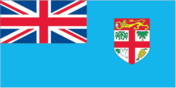
Geography
Agriculture
- main crops — sugar, copra, ginger, rice; major deficiency, grains
- animal husbandry, especially dairying, predominates; forestry important secondary occupation for rural population; main crops — cereals, sugar beets, potatoes; 85% self-sufficient; shortages — food and fodder grains
Aid
- economic commitments — Western (non-US) countries (1980-82), $438 million
- donor — bilateral economic aid commitments (ODA), $652 million (1970-82)
Airfields
- 28 total, 27 usable; 3 with permanent-surface runways, 1 with runways 2,4403,659 m, 2 with runways 1,220-2,439 m
- 163 total, 160 usable; 47 with permanent-surface runways; 20 with runways 2,440-3,659 m, 22 with runways 1,2202,439 m
Area
225km Ceva /-fla Srf regional map X Land 1 8,376 km2; the size of Massachusetts; consists of more than 300 islands and many more coral atolls and cays; the larger islands — Viti Levu, Taveuni, and Kandavu — are mountainous and volcanic in origin, with peaks rising over 1,210 meters; land ownership — 83.6% Fijians, 7.2% European, 6.4% government, 1.7% Indians, 1.1% other; about 30% of land area is suitable for farming Water
Branches
- executive — Prime Minister and Cabinet; legislative — 52-member House of Representatives; 22-member appointed Senate; judicial — Supreme Court, Court of Appeal, Magistrate's Courts
- integrated ground and naval forces
- legislative authority rests jointly with President and unicameral legislature (Eduskunta); executive power vested in President and exercised through coalition Cabinet responsible to parliament; Supreme court, four superior courts, 193 lower courts
- Army, Navy, Air Force
Budget
- (1981 est.) revenues, $259 million; expenditures, $239 million
- (1983) expenditures, $13.5 billion, revenues, $11.9 billion
Capital
- Suva, located on the south coast of the island of Viti Levu
- Helsinki
Civil air
- 1 DC-3 and 1 light aircraft
- 39 major transport
Coastline
- 1,129 km People
- 1,126 km (approx.) excludes islands and coastal indentations People
Communists
- few, no figures available (January 1985)
- 28,000 registered members; an additional 45,000 persons belong to People's Democratic League
Crudesteel
2.4 million metric tons produced (1983), 496 kg per capita
Elections
- every five years unless House dissolves earlier; last held July 1982
- parliamentary, every four years (last in 1983); presidential, every six years Political parties and leaders: Social Democratic Party, Kalevi Sorsa; Center Party, Paavo Va'yrynen; People's Democratic League (Communist front), Kalevi Kivisto; Conservative Party, Illka Suominen; Liberal Party, Kyosti Lallukka; Swedish Peoples Party, Par Stenback; Rural Party, Pekka Vennamo; Finnish Communist Party, Arvo Finland (continued) Aalto; Finnish Christian League, Esko Almgren; Constitutional People's Party, Georg Ehrnrooth; League for Citizen Power, Kaarlo Pitsinki
Electric power
- 210,000 kW capacity (1984); 223 million kWh produced (1984), 325 kWh per capita
- 11,859,000 kW capacity (1984); 43.390 billion kWh produced (1984), 8,905 kWh per capita
Ethnic divisions
- 50% Indian, 45% Fijian; 5% European, other Pacific Islanders, overseas Chinese, and others
- Finn, Swede, Lapp, Gypsy, Tatar
Exports
- $280 million (f.o.b., 1981); 70% sugar; also copra
- $12.5 billion (f.o.b., 1983); timber, paper and pulp, ships, machinery, iron and steel, clothing and footwear
Fiscal year
- calendar year Communications
- calendar year Communications
Fishing
catch 145,600 metric tons (1982)
GDP
$1.85 billion (1982), $1,852 per capita; annual growth rate, 0.5% (1979-82)
GNP
$49.4 billion (1983), $10,186 per capita; 54.2% consumption, 21.2% investment, 22.8% government; 0.4% net exports of goods and services; 1982 growth rate 2.9% (1980 prices)
Government leader
Ratu Sir Kamisese MARA, Prime Minister (since 1966 [as Chief Minister during preindependence days])
Government leaders
Dr. Mauno KOIVISTO, President (since January 1982); Kalevi SORSA, Prime Minister (since February 1982)
Highways
- 2,960 km total (1981); 390 km paved, 2,150 km gravel, crushed stone, or stabilized soil surface; 420 km unimproved earth
- about 74,960 km total in national classified network, including 31,000 km paved (bituminous, concrete, bituminoustreated surface) and 42,552 km unpaved (stabilized gravel, gravel, earth); additional 29,440 km of private (state subsidized) roads
Imports
- $562 million (c.i.f., 1981); 24% manufactured goods, 20.0% machinery, 16.3% foodstuffs, 16% fuels
- $12.8 billion (c.i.f., 1983); foodstuffs, petroleum and petroleum products, chemicals, transport equipment, iron and steel, machinery, textile yarn and fabrics
Inland waterways
- 203 km; 122 km navigable by motorized craft and 200metric-ton barges Finland
- 6,675 km total (including Saimaa Canal); 3,700 km suitable for steam-
Labor force
2.546 million; 23.8% mining and manufacturing; 25.4% services; 18.5% commerce; 11.9% agriculture, forestry, and fishing; 7.2% construction; 7.0% transportation and communications; 6.1% unemployed (1983 average)
Land boundaries
2,534 km Water
Language
- English (official), Fijian, Hindustani spoken among Indians
- 93.5% Finnish, 6.3% Swedish (both official); small Lappand Russianspeaking minorities
Legal system
- based on British system
- civil law system based on Swedish law; constitution adopted 1919; Supreme Court may request legislation interpreting or modifying laws; legal education at Universities of Helsinki and Turku; accepts compulsory ICJ jurisdiction, with reservations
Limits of territorial waters (claimed)
- 12 nm (economic, including fishing, 200 nm)
- 4 nm; fishing 12 nm; Aland Islands, 3 nm
Literacy
- 80% Labor force. 176,000(1979); 43.8% agriculture, 15.6% industry
- almost 100%
Major industries
- sugar refining, tourism, gold, lumber, small industries
- include metal manufacturing and shipbuilding, forestry and wood processing (pulp, paper), copper refining, foodstuffs, textiles and clothing
Major trade partners
- Australia, New Zealand, Japan, UK, Singapore, US
- (1983) exports— 35.4% EC (9.5% FRG; 10.2% UK), 26.1% USSR, 12.4% Sweden, 4.1% US
Member of
- ADB, Colombo Plan, Commonwealth, EC (associate), FAO, G-77, GATT (de facto), IBRD, ICAO, IDA, IFAD, IFC, ILO, IMF, INTELSAT, INTERPOL, ISO, ITU, UN, UPU, WFTU, WHO, WIPO, WMO Economy
- ADB, CEMA (special cooperation agreement), DAC, EC (free trade agreement), EFTA (associate), FAO, GATT, IAEA, IBRD, ICAC, ICAO, ICES, ICO, IDA, IDE — Inter-American Development Bank, IFAD, IFC, IHO, ILO, International Lead and Zinc Study Group, IMF, IMO, INTERPOL, IPU, ITU, IWC— International Wheat Council, Nordic Council, OECD, UN, UNESCO, UPU, WHO, WIPO, WMO, WSG Economy
Military budget
- military budget for 1982, $17.0 million; 5% of central government budget Gulf of Bothnia Aland Islands FLSINKI Land 337,113 km2; slightly smaller than Montana; 58% forest, 34% other, 8% arable
- proposed for fiscal year ending 31 December 1985, $810 million; about 5.1% of proposed central government budget
Military manpower
- males 15-49, 183,000; 101,000 fit for military service; 7,000 reach military age (18) annually
- males 15-49, 1,319,000; 1,014,000 fit for military service; 35,000 reach military age (17) annually
Monetary conversion rate
- .9612 Fiji dollar=US$l (30 November 1983)
- 6.6140Finnmark (Fim)=US$l (2 January 1985)
National holiday
- Fiji Day, 10 October
- Independence Day, 6 December
Nationality
- noun — Fijian(s); adjective — Fijian
- noun — Finn(s); adjective — Finnish
Official name
- Fiji
- Republic of Finland
Organized labor
- about 50% of labor force organized into about 60 unions; unions organized along lines of work and ethnic origin Government
- 80% of labor force Government
Pipelines
natural gas, 161 km
Political parties
Alliance, primarily Fijian, headed by Ratu Mara; National Federation, primarily Indian, headed by Siddiq Koya; Western United Front, Fijian, Ratu Osea Gauidi
Political subdivisions
- 14 provinces
- 12 provinces, 443 communes, 78 towns
Population
- 700,000 (July 1985), average annual growth rate 2. 1 %
- 4,894,000 (July 1985), average annual growth rate 0.4%
Ports
- I major, 6 minor
- 1 1 major, 34 minor
Railroads
- 644 km 0.610-meter narrow gauge; owned by Fiji Sugar Corp., Ltd.
- 6,071 km total; Finnish State Railways (VR) operate a total of 6,043 km 1.524meter gauge, 477 km multiple track, and 608 km electrified; 22 km 0.750-meter gauge and 6 km 1.524-meter gauge are privately owned
Religion
- Fijians are mainly Christian, Indians are Hindu with a Muslim minority
- 97% Evangelical Lutheran, 1.2% Greek Orthodox, 1.8% other
Shortages
fossil fuels; industrial raw materials, except wood, and iron ore
Suffrage
- universal adult
- universal, 18 years and over; not compulsory
Telecommunications
- modern local, interisland, and international (wire/radio integrated) public and special-purpose telephone, telegraph, and teleprinter facilities; regional radio center; important COMPAC cable link between US/Canada and New Zealand/Australia; 37,515 telephones (6.0 per 100 popl.); 7 AM, 2 FM , no TV stations; 1 ground satellite station Defense Forces
- good telecom service from cable and radio-relay network; 2.7 million telephones (53 per 100 popl.); 6 AM, 90 FM, 200 TV stations; 3 submarine cables Pefense Forces
Type
- independent parliamentary state within Commonwealth; Elizabeth II recognized as chief of state
- republic
Voting strength
- (July 1982) House of Representatives— (Alliance Party 28 seats; National Federation Party/Western United Front coalition 24 seats
- (1983 parliamentary election) 26% Social Democratic, 22.1% Conservative, 17.6% Center-Liberal, 14.0% People's Democratic League, 9.7% Rural, 4.9% Swedish Peoples, 3.0% Christian League, 1.5% Greens, 0.4% Constitutional People's, 0. 1 % League for Citizen Power