1989 Edition
CIA World Factbook 1989 (Internet Archive)
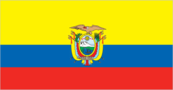
Geography
Climate
tropical along coast becoming cooler inland
Coastline
2,237 km
Comparative area
slightly smaller than Nevada
Continental shelf
200 m
Disputes
two sections of the boundary with Peru are in dispute
Environment
subject to frequent earthquakes, landslides, volcanic activity; deforestation; desertification; soil erosion; periodic droughts
Land boundaries
2,010 km total; Colombia 590 km, Peru 1,420 km
Land use
6% arable land; 3% permanent crops; 17% meadows and pastures; 51% forest and woodland; 23% other; includes 2% irrigated
Natural resources
petroleum, fish, timber
Note
Cotopaxi in Andes is highest active volcano in world
Terrain
coastal plain (Costa), inter-Andean central highlands (Sierra), and flat to rolling eastern jungle (Oriente)
Territorial sea
200 nm
Total area
283,560 km2; land area: 276,840 km2; includes Galapagos Islands
People and Society
Birth rate
- 26 births/ 1,000 population (1990)
- 30 births/ 1,000 population (1990)
Death rate
- 7 deaths/ 1,000 population (1990)
- 7 deaths/ 1 ,000 population (1990)
Ethnic divisions
- Portuguese, Italian, German, Japanese, black, Amerindian; 55% white, 38% mixed, 6% black, 1% other
- 55% mestizo (mixed Indian and Spanish), 25% Indian, 10% Spanish, 10% black
Infant mortality rate
- 69 deaths/ 1,000 live births (1990)
- 61 deaths/ 1,000 live births (1990)
Labor force
- 57,000,000 (1989 est.); 42% services, 31% agriculture, 27% industry Organized labor 13,000,000 dues paying members (1989 est.)
- 2,800,000; 35% agriculture, 21% manufacturing, 16% commerce, 28% services and other activities (1982)
Language
- Portuguese (official), Spanish, English, French
- Spanish (official); Indian languages, especially Quechua
Life expectancy at birth
- 62 years male, 68 years female (1990)
- 64 years male, 68 years female (1990)
Literacy
- 76%
- 85% (1981)
Nationality
- noun — Brazilian(s); adjective— Brazilian
- noun — Ecuadorian(s); adjective— Ecuadorian
Net migration rate
- 0 migrants/ 1 ,000 population (1990)
- 0 migrants/ 1 ,000 population (1990)
Organized labor
less than 1 5% of labor force
Population
- 152,505,077 (July 1990), growth rate 1.9% (1990)
- 10,506,668 (July 1990), growth rate 2.3% (1990)
Religion
- 90% Roman Catholic (nominal)
- 95% Roman Catholic
Total fertility rate
- 3.1 children born/ woman (1990)
- 3.8 children born/ woman (1990)
Government
Administrative divisions
21 provinces (provincias, singular — provincia); Azuay, Bolivar, Cafiar, Carchi, Chimborazo, Cotopaxi, El Oro, Esmeraldas, Galapagos, Guayas, Imbabura, Loja, Los Rios, Manabi, Morona-Santiago, Napo, Pastaza, Pichincha, Sucumbios, Tungurahua, Zamora-Chinchipe
Capital
Quito
Communists
Communist Party of Ecuador (PCE, pro-Moscow), Rene Mauge Mosquera, secretary general, 5,000 members; Communist Party of Ecuador/ Marxist Leninist (PCMLE, Maoist), 3,000 members; Socialist Party of Ecuador (PSE, pro-Cuba), 5,000 members (est.); National Liberation Party (PLN, Communist), 5,000 members (est.)
Constitution
10 August 1979
Diplomatic representation
Ambassador Jaime MONCAYO; Chancery at 2535 15th Street NW, Washington DC 20009; telephone (202) 234-7200; there are Ecuadorian Consulates General in Chicago, Houston, Los Angeles, Miami, New Orleans, New York, and San Francisco, and a Consulate in San Diego; US — Ambassador-designate Paul C. LAMBERT; Embassy at Avenida Patria 1 20, on the corner of Avenida 1 2 de Octubre, Quito (mailing address is P. O. Box 538, Quito, or APO Miami 34039); telephone [593] (2) 562-890; there is a US Consulate General in Guayaquil
Elections
President — first round held 31 January 1988 and second round on 8 May 1988 (next first round to be held January 1992 and second round May 1992); results—Rodrigo Borja Cevallos (ID) 54%, Abdala Bucaram Ortiz (PRE) 46%; Chamber of Representatives — last held 3 1 January 1988 (next to be held June 1990); results— ID 42%, PSC 1 1%, PRE 1 1%, DP 9%, others 27%; seats— <71 total) ID 30, PRE 8, PSC 8, DP 7, CFP 6, PSE 4, FADI 2, MPD 2, FRA 2, PCE 1, PLR 1; note — with the addition of the new province of Sucumbios there will be 72 seats in the August 1990 election
Executive branch
president, vice president, Cabinet
Independence
24 May 1822 (from Spain; Battle of Pichincha)
Judicial branch
Supreme Court (Corte Suprema)
Leaders
Chief of State and Head of Government— President Rodrigo BORJA Cevallos (since 10 August 1988); Vice President Luis PARODI Valverde (since 10 August 1988) Political parties and leaders: Right to center parties — Social Christian Party (PSC), Camilio Ponce, president; Conservative Party (PC), Jose Teran Varea, director; Radical Liberal Party (PLR), Blasco Penaherrera, director; Centrist parties — Concentration of Popular Forces (CFP), Averroes Bucaram Saxida, director; Radical Alfarist Front (FRA), Cecilia Calderon de Castro, leader; People, Change, and Democracy (PCD), Aquiles Rigail Santistevan, director; Revolutionary Nationalist Party (PNR), Carlos Julio Arosemena Monroy, leader; Center-left parties — Democratic Left (ID), President Rodrigo Borja, leader; Roldosist Party of Ecuador (PRE), Abdala Bucaram, director; Popular Democracy (DP), Vladimiro Alvarez, leader; Christian Democratic (CD), Julio Cesar Trujillo; Democratic Party (PD), Francisco Huerta Montalvo, leader; Far-left parties — Broad Leftist Front (FADI), Rene Mauge Mosquera, director; Socialist Party (PSE), Victor Granda Aguilar, secretary general; Democratic Popular Movement (MPD), Jaime Hurtado Gonzalez, leader; Ecuadorian National Liberation (LN), Alfredo Castillo; Popular Revolutionary Action Party (APRE), Lt. Gen. Frank Vargas Pazzos, leader
Legal system
based on civil law system; has not accepted compulsory ICJ jurisdiction
Legislative branch
unicameral Chamber of Representatives (Camara de Representantes)
Long-form name
- Federative Republic of
- Republic of Ecuador
Member of
Andean Pact, ECOSOC, FAO, G-77, IADB, IAEA, IBRD, ICAO, ICO, IDA, I DB— InterAmerican Development Bank, I FAD, IFC, I HO, ILO, IMF, IMO, INTELSAT, INTERPOL, IRC, ITU, LAIA, NAM, OAS, OPEC, PAHO, SELA, UN, UNESCO, UPEB, UPU, WFTU, WHO, WMO, WTO
National holiday
Independence Day, 10 August (1809, independence of Quito)
Suffrage
universal at age 18; compulsory for literate persons ages 18-65, optional for other eligible voters
Type
republic