1987 Edition
CIA World Factbook 1987 (Internet Archive)
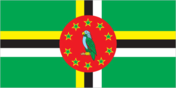
Geography
Climate
tropical; moderated by northeast trade winds; heavy rainfall
Coastline
148 km
Comparative area
about one-fourth the size of Rhode Island
Contiguous zone
24 nm
Environment
flash floods a constant hazard; occasional hurricanes
Extended economic zone
200 nm
Land use
9% arable land; 13% permanent crops; 8% meadows and pastures; 41% forest and woodland; 34% other
Special notes
northernmost and largest of Windward Islands
Terrain
rugged mountains of volcanic origin
Territorial sea
12 nm
Total area
- 10 km Caribbean Caribbean See See
- 750 km?; land area: 750 km?
People and Society
Ethnic divisions
mostly black; some Carib-Indians
Infant mortality rate
24.1/1,000 (1981)
Labor force
25,000; 40% agriculture, 32% industry and commerce, 28% services; 15-20% unemployment (1984)
Language
English (official); French patois widely spoken
Life expectancy
men 57, women 59.
Literacy
about 80%
Nationality
noun—Dominican(s); adjective—Dominican
Organized labor
25% of labor force
Population
94,191 (July 1987), average annual growth rate 3.80%
Religion
80% Roman Catholic; Anglican, Methodist
Government
Administrative divisions
10 parishs
Branches
legislative, 51-member bicameral House of Assembly (1 ex-officio member, 9 appointed members, and 21 popularly elected members; executive, Cabinet headed by Prime Minister; judicial, magistrate’s courts and regional court of appeals
Capital
Roseau
Communists
negligible
Elections
every five years; last held 2 July Political parties and leaders: Labor Party of Dominica (DLP, a leftist-dominated coalition), Michael Douglas; Dominica Freedom Party (DFP), (Mary) Eugenia Charles
Government leaders
(Mary) Eugenia CHARLES, Prime Minister (since July 1980); Sir Clarence SEIGNORET, President (since December 1983)
Legal system
based on English common law; three local magistrate courts and the British Caribbean Court of Appeals
Member of
CARICOM, Commonwealth, FAO, GATT (de facto), G-77, IBRD, IDA, IFAD, IFC, ILO, IMF, IMO, INTERPOL, OAS, UN, UNESCO, UPU, WHO, WMO
Official name
Commonwealth of Dominica
Other political or pressure groups
Dominica Liberation Movement (DLM), a small leftist group
Suffrage
universal adult suffrage at age 18
Type
independent state within Commonwealth
Voting strength
(1985 election) House of Assembly seats—DFP 15, LPD 5, independent 1
Economy
Agriculture
bananas, citrus, coconuts, cocoa, essential oils
Aid
bilateral ODA and OOF (1970-80), from Western (non-US) countries, $22.6 million
Budget
revenues, $33.4 million; expenditures, $38.5 million (FY84)
Electric power
7,000 kW capacity; 16 million kWh produced, 220 kWh per capita (1986)
Exports
$28.7 million (f.o.b., 1985); bananas, coconuts, lime juice and oil, cocoa, reexports
Fiscal year
1 July-30 June
GDP
$85.4 million (1984 est.), $1,034 per capita; real growth rate 1.2% (1986 est.)
Imports
$57.0 million (f.0.b., 1985); machinery and equipment, foodstuffs, manufactured articles, cement
Major industries
agricultural processing, tourism, soap and other coconut-based products, cigars
Major trade partners
(1984) exports— 46% UK, 16% Jamaica, 15% Trinidad and Tobago, 2% US, 0.8% other EC; imports— 27% US, 13% UK, 8% Trinidad and Tobago, 6% other EC
Monetary conversion rate
2.70 East Caribbean dollars=US$1 (November 1986)
Natural resources
timber
Communications
Civil air
unknown number of major transport aircraft Airfields; 2 total, 2 usable; 2 with permanent-surface runways; 1 with runways 1,220-2,439 m
Highways
750 km total; 370 km paved, 880 km gravel and earth
Ports
1 major (Roseau), 1 minor (Portsmouth)
Railroads
none
Telecommunications
4,600 telephones in fully automatic network (5.6 per 100 popl.); VHF and UHF link to St. Lucia; new SHF links to Martinique and Guadeloupe; 3 AM, 1 FM, 1 cable TV stations
Military and Security
Branches
Commonwealth of Dominica Police Force
Military budget
for fiscal year 1986, $2.9 million; 4.6% of the central government budget