1987 Edition
CIA World Factbook 1987 (Internet Archive)
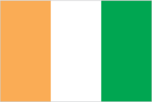
Geography
Climate
tropical along coast, semiarid in far north; three seasons—warm and dry (November to March), hot and dry (March to May), hot and wet (June to October)
Coastline
515 km
Comparative area
slightly larger than New Mexico
Continental shelf
200 m
Environment
coast has heavy surf and no natural harbors; deforestation
Extended economic zone
200 nm
Land boundaries
3,227 km total
Land use
9% arable land; 4% permanent crops; 9% meadows and pastures; 26% forest and woodland; 52% other; includes NEGL% irrigated
Special notes
none
Terrain
mostly flat to undulating plains; mountains in northwest
Territorial sea
12 nm
Total area
322,460 km?; land area: 318,000 km?
People and Society
Ethnic divisions
over 60 ethnic groups; most important are the Baoule 23%, Bete 18%, Senoufou 15%, Malinke 11%, and Agni; about 2 million foreign Africans, mostly Burkinabe; about 130,000 to 330,000 non-Africans (30,000 French and 100,000 to 300,000 Lebanese)
Infant mortality rate
127/1,000 (1980)
Labor force
over 85% of population engaged in agriculture, forestry, livestock raising; about 11% of labor force are wage earners, nearly half in agriculture and the remainder in government, industry, commerce, and professions
Language
French (official), over 60 native dialects; Dioula most widely spoken
Literacy
24%
Nationality
noun—Ivorian(s); adjective— Ivorian
Organized labor
20% of wage labor force
Population
10,766,632 (July 1987), average annual growth rate 3.82%
Religion
63% indigenous, 25% Muslim, 12% Christian
Government
Administrative divisions
34 prefectures subdivided into 161 subprefectures
Branches
President has sweeping powers, unicameral legislature (175-member National Assembly), separate judiciary
Capital
Abidjan (capital city changed to Yamoussoukro in March 1983 but not recognized by US)
Communists
no Communist party; possibly some sympathizers
Elections
legislative and municipal elections were held in October 1985; Houphouét-Boigny reelected in October 1985 to his fifth consecutive five-year term; next round of national elections scheduled for October 1990 Political parties and leaders: Democratic Party of the Ivory Coast (PDCI), only party; Houphouét-Boigny firmly controls party
Government leader
Félix HOUPHOUETBOIGNY, President (since 1960)
Legal system
based on French civil law system and customary law; constitution adopted 1960; judicial review in the Constitutional Chamber of the Supreme Court; has not accepted compulsory IC) jurisdiction
Member of
AfDB, CEAO, EAMA, ECA, ECOWAS, EIB (associate), Entente, FAO, G-77, GATT, IAEA, IBRD, ICAO, ICO, IDA, IFAD, IFC, ILO, IMF, IMO, INTELSAT, INTERPOL, IPU, ITU, Niger River Commission, NAM, OAU, OCAM, UN, UNESCO, UPU, WHO, WIPO, WMO, WTO
National holiday
7 December
Official name
Céte d'Ivoire
Suffrage
universal over age 21
Type
republic; one-party presidential regime established 1960
Economy
Agriculture
commercial—coffee, cocoa, wood, bananas, pineapples, palm oil; food crops—corn, millet, yams, rice; other commodities—cotton, rubber, tobacco, fish
Aid
Western (non-US) ODA and OOF (1970-84), $3.4 billion; US authorizations, including Ex-lm (FY70-85), $341 million
Budget
revenues, $1.4 billion; current expenditures, $1.4 billion (1984 est.)
Electric power
480,000 kW capacity; 2,150 million kWh produced, 200 kWh per capita (1986)
Exports
$3.5 billion (1985 est.); cocoa (30%), coffee (20%), tropical woods (11%), cotton, bananas, pineapples, palm oil, cotton
Fiscal year
calendar year
Fishing
catch 92,469 metric tons (1982); exports $44.7 million, imports $71.9 million (1979)
GDP
$8 billion, $772 per capita (1986); real average annual growth rate, 4.9% (1985 est.)
Imports
$1.6 billion (1985 est.); manufactured goods and semifinished products (50%), consumer goods (40%), raw materials and fuels (10%)
Major industries
food and lumber processing, oil refinery, automobile assembly plant, textiles, soap, flour mill, matches, three small shipyards, fertilizer plant, and battery factory
Major trade partners
(1984) exports— France, Nigeria, FRG, Netherlands, US
Monetary conversion rate
475 Communauté Financiére Africaine (CFA) francs=US$1 (1985)
Natural resources
petroleum, diamonds, manganese
Communications
Airfields
50 total, 45 usable; 3 with permanent-surface runways; 3 with runways 2,440-3,659 m; 15 with runways 1,220-2,489 m
Civil air
19 major transport aircraft, including multinationally owned Air Afrique fleet
Highways
46,600 km total; 3,600 km bituminous and bituminous-treated surface; 32,000 km gravel, crushed stone, laterite, and improved earth; 11,000 km unimproved
Inland waterways
740 km navigable rivers and numerous coastal lagoons
Ports
2 major (Abidjan, San-Pédro), 2 minor
Railroads
657 km of the 1,175 km Abidjan to Ouagadougou, Burkina Faso, line, al] single track 1.000-meter gauge; only diesel locomotives in use
Telecommunications
system above African average; consists of open-wire lines and radio-relay links; 87,700 telephones (1.0 per 100 popl.); 8 AM, 17 FM, 11 TV stations; 2 Atlantic Ocean satellite stations; 2 coaxial submarine cables
Military and Security
Branches
Army, Navy, Air Force, paramilitary Gendarmerie
Military manpower
males 15-49, 2,528,000; 1,305,000 fit for military service; 98,000 males reach military age (18) annually