2008 Edition
CIA World Factbook 2008 (Project Gutenberg)
Countries
256
Data Records
33,041
Categories
9
Source
CIA World Factbook 2008 (Project Gutenberg)
Introduction
Background
- First inhabited by Arawak and later by Carib Indians, the Virgin Islands were settled by the Dutch in 1648 and then annexed by the English in 1672. The islands were part of the British colony of the Leeward Islands from 1872-1960; they were granted autonomy in 1967. The economy is closely tied to the larger and more populous US Virgin Islands to the west; the US dollar is the legal currency.
- During the 17th century, the archipelago was divided into two territorial units, one English and the other Danish. Sugarcane, produced by slave labor, drove the islands' economy during the 18th and early 19th centuries. In 1917, the US purchased the Danish portion, which had been in economic decline since the abolition of slavery in 1848.
Geography
Area
- total: 153 sq km land: 153 sq km water: 0 sq km note: comprised of 16 inhabited and more than 20 uninhabited islands; includes the islands of Tortola, Anegada, Virgin Gorda, Jost van Dyke
- total: 1,910 sq km land: 346 sq km water: 1,564 sq km
Area - comparative
- about 0.9 times the size of Washington, DC
- twice the size of Washington, DC
Climate
- subtropical; humid; temperatures moderated by trade winds
- subtropical, tempered by easterly trade winds, relatively low humidity, little seasonal temperature variation; rainy season September to November
Coastline
- 80 km
- 188 km
Elevation extremes
- lowest point: Caribbean Sea 0 m highest point: Mount Sage 521 m
- lowest point: Caribbean Sea 0 m highest point: Crown Mountain 475 m
Environment - current issues
- limited natural fresh water resources (except for a few seasonal streams and springs on Tortola, most of the islands' water supply comes from wells and rainwater catchments)
- lack of natural freshwater resources
Geographic coordinates
- 18 30 N, 64 30 W
- 18 20 N, 64 50 W
Geography - note
- strong ties to nearby US Virgin Islands and Puerto Rico
- important location along the Anegada Passage - a key shipping lane for the Panama Canal; Saint Thomas has one of the best natural deepwater harbors in the Caribbean
Irrigated land
- NA
- NA
Land boundaries
- 0 km
- 0 km
Land use
- arable land: 20% permanent crops: 6.67% other: 73.33% (2005)
- arable land: 5.71% permanent crops: 2.86% other: 91.43% (2005)
Location
- Caribbean, between the Caribbean Sea and the North Atlantic Ocean, east of Puerto Rico
- Caribbean, islands between the Caribbean Sea and the North Atlantic Ocean, east of Puerto Rico
Map references
- Central America and the Caribbean
- Central America and the Caribbean
Maritime claims
- territorial sea: 3 nm exclusive fishing zone: 200 nm
- territorial sea: 12 nm exclusive economic zone: 200 nm
Natural hazards
- hurricanes and tropical storms (July to October)
- several hurricanes in recent years; frequent and severe droughts and floods; occasional earthquakes
Natural resources
- NEGL
- sun, sand, sea, surf
Terrain
- coral islands relatively flat; volcanic islands steep, hilly
- mostly hilly to rugged and mountainous with little level land
People and Society
Age structure
- 0-14 years: 20% (male 2,432/female 2,366) 15-64 years: 74.4% (male 9,178/female 8,715) 65 years and over: 5.6% (male 697/female 653) (2008 est.)
- 0-14 years: 21% (male 11,698/female 11,390) 15-64 years: 66.2% (male 34,035/female 38,670) 65 years and over: 12.8% (male 6,312/female 7,735) (2008 est.)
Birth rate
- 14.72 births/1,000 population (2008 est.)
- 12.29 births/1,000 population (2008 est.)
Death rate
- 4.37 deaths/1,000 population (2008 est.)
- 6.55 deaths/1,000 population (2008 est.)
Education expenditures
- 3.7% of GDP (2006)
- NA
Ethnic groups
- black 83.4%, white 7%, mixed 5.4%, Indian 3.4%, other 0.8% (1991 census)
- black 76.2%, white 13.1%, Asian 1.1%, other 6.1%, mixed 3.5% (2000 census)
HIV/AIDS - adult prevalence rate
- NA
- NA
HIV/AIDS - deaths
- NA
- NA
HIV/AIDS - people living with HIV/AIDS
- NA
- NA
Infant mortality rate
- total: 15.2 deaths/1,000 live births male: 17.23 deaths/1,000 live births female: 13.06 deaths/1,000 live births (2008 est.)
- total: 7.72 deaths/1,000 live births male: 8.43 deaths/1,000 live births female: 6.96 deaths/1,000 live births (2008 est.)
Languages
- English (official)
- English 74.7%, Spanish or Spanish Creole 16.8%, French or French Creole 6.6%, other 1.9% (2000 census)
Life expectancy at birth
- total population: 77.07 years male: 75.88 years female: 78.32 years (2008 est.)
- total population: 78.92 years male: 75.9 years female: 82.11 years (2008 est.)
Literacy
- definition: age 15 and over can read and write total population: 97.8% (1991 est.) male: NA% female: NA%
- definition: age 15 and over can read and write total population: 90-95% est. male: NA% female: NA% (2005 est.)
Median age
- total: 32 years male: 32.1 years female: 31.9 years (2008 est.)
- total: 38.5 years male: 38 years female: 39 years (2008 est.)
Nationality
- noun: British Virgin Islander(s) adjective: British Virgin Islander
- noun: Virgin Islander(s) (US citizens) adjective: Virgin Islander
Net migration rate
- 8.44 migrant(s)/1,000 population (2008 est.)
- -5.72 migrant(s)/1,000 population (2008 est.)
Population
- 24,041 (July 2008 est.)
- 109,840 (July 2008 est.)
Population growth rate
- 1.88% (2008 est.)
- 0.002% (2008 est.)
Religions
- Protestant 86% (Methodist 33%, Anglican 17%, Church of God 9%, Seventh-Day Adventist 6%, Baptist 4%, Jehovah's Witnesses 2%, other 15%), Roman Catholic 10%, other 2%, none 2% (1991)
- Baptist 42%, Roman Catholic 34%, Episcopalian 17%, other 7%
School life expectancy (primary to tertiary education)
total: 17 years male: 15 years female: 19 years (2005)
Sex ratio
- at birth: 1.05 male(s)/female under 15 years: 1.03 male(s)/female 15-64 years: 1.05 male(s)/female 65 years and over: 1.07 male(s)/female total population: 1.05 male(s)/female (2008 est.)
- at birth: 1.06 male(s)/female under 15 years: 1.03 male(s)/female 15-64 years: 0.88 male(s)/female 65 years and over: 0.82 male(s)/female total population: 0.9 male(s)/female (2008 est.)
Total fertility rate
- 1.71 children born/woman (2008 est.)
- 1.88 children born/woman (2008 est.)
Government
Administrative divisions
- none (overseas territory of the UK)
- none (territory of the US); there are no first-order administrative divisions as defined by the US Government, but there are three islands at the second order; Saint Croix, Saint John, Saint Thomas
Capital
- name: Road Town geographic coordinates: 18 27 N, 64 37 W time difference: UTC-4 (1 hour ahead of Washington, DC during Standard Time)
- name: Charlotte Amalie geographic coordinates: 18 21 N, 64 56 W time difference: UTC-4 (1 hour ahead of Washington, DC during Standard Time)
Constitution
- 13 June 2007
- Revised Organic Act of 22 July 1954
Country name
- conventional long form: none conventional short form: British Virgin Islands abbreviation: BVI
- conventional long form: United States Virgin Islands conventional short form: Virgin Islands former: Danish West Indies abbreviation: USVI
Dependency status
- overseas territory of the UK; internal self-governing
- organized, unincorporated territory of the US with policy relations between the Virgin Islands and the US under the jurisdiction of the Office of Insular Affairs, US Department of the Interior
Diplomatic representation from the US
- none (overseas territory of the UK)
- none (territory of the US)
Diplomatic representation in the US
- none (overseas territory of the UK)
- none (territory of the US)
Executive branch
- chief of state: Queen ELIZABETH II (since 6 February 1952); represented by Governor David PEAREY (since 18 April 2006) head of government: Premier Ralph T. O'NEAL (since 23 August 2007) cabinet: Executive Council appointed by the governor from members of the House of Assembly elections: the monarch is hereditary; governor appointed by the monarch; following legislative elections, the leader of the majority party or the leader of the majority coalition is usually appointed premier by the governor
- chief of state: President George W. BUSH of the US (since 20 January 2001); Vice President Richard B. CHENEY (since 20 January 2001) head of government: Governor John DeJONGH (since 1 January 2007) cabinet: NA elections: under the US Constitution, residents of unincorporated territories, such as the Virgin Islands, do not vote in elections for US president and vice president; however, they may vote in the Democratic and Republican presidential primary elections; governor and lieutenant governor elected on the same ticket by popular vote for four-year terms (eligible for a second term); election last held 7 and 21 November 2006 (next to be held November 2010) election results: John DeJONGH elected governor; percent of vote - John DeJONGH 57.3%, Kenneth MAPP 42.7%
Flag description
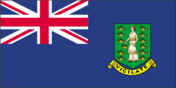
- blue, with the flag of the UK in the upper hoist-side quadrant and the Virgin Islander coat of arms centered in the outer half of the flag; the coat of arms depicts a woman flanked on either side by a vertical column of six oil lamps above a scroll bearing the Latin word VIGILATE (Be Watchful)
- white field with a modified US coat of arms in the center between the large blue initials V and I; the coat of arms shows a yellow eagle holding an olive branch in one talon and three arrows in the other with a superimposed shield of vertical red and white stripes below a blue panel
Government type
- NA
- NA
Independence
- none (overseas territory of the UK)
- none (territory of the US)
International organization participation
- Caricom (associate), CDB, Interpol (subbureau), IOC, OECS, UNESCO (associate), UPU, WFTU
- IOC, UPU, WFTU
Judicial branch
- Eastern Caribbean Supreme Court, consisting of the High Court of Justice and the Court of Appeal (one judge of the Supreme Court is a resident of the islands and presides over the High Court); Magistrate's Court; Juvenile Court; Court of Summary Jurisdiction
- US District Court of the Virgin Islands (under Third Circuit jurisdiction); Superior Court of the Virgin Islands (judges appointed by the governor for 10-year terms)
Legal system
- English law
- based on US laws
Legislative branch
- unicameral House of Assembly (13 elected seats and 1 non-voting ex officio member in the attorney general; members are elected by direct popular vote, 1 member from each of nine electoral districts, 4 at-large members; members serve four-year terms) elections: last held 20 August 2007 (next to be held in 2011) election results: percent of vote by party - VIP 45.2%, NDP 39.6%, independent 15.2%; seats by party - VIP 10, NDP 2, independent 1
- unicameral Senate (15 seats; members are elected by popular vote to serve two-year terms) elections: last held 7 November 2006 (next to be held November 2008) election results: percent of vote by party - NA; seats by party - Democratic Party 8, ICM 4, independent 3 note: the Virgin Islands elects one non-voting representative to the US House of Representatives; election last held 7 November 2006 (next to be held November 2008)
National holiday
- Territory Day, 1 July (1956)
- Transfer Day (from Denmark to the US), 31 March (1917)
Political parties and leaders
- Concerned Citizens Movement or CCM [Ethlyn SMITH]; National Democratic Party or NDP [Orlando SMITH]; United Party or UP [Gregory MADURO]; Virgin Islands Party or VIP [Ralph T. O'NEAL]
- Democratic Party [Arturo WATLINGTON]; Independent Citizens' Movement or ICM [Usie RICHARDS]; Republican Party [Gary SPRAUVE]
Political pressure groups and leaders
- The Family Support Network; The Women's Desk other: environmentalists
- NA
Suffrage
- 18 years of age; universal
- 18 years of age; universal; island residents are US citizens but do not vote in US presidential elections
Economy
Agriculture - products
- fruits, vegetables; livestock, poultry; fish
- fruit, vegetables, sorghum; Senepol cattle
Budget
- revenues: $204.7 million expenditures: $180.4 million (2004)
- revenues: $NA expenditures: $NA
Currency (code)
- US dollar (USD)
- US dollar (USD)
Currency code
- USD
- USD
Current account balance
$134.3 million (1999)
Debt - external
- $36.1 million (1997)
- $NA
Economic aid - recipient
- $NA
- $NA
Economy - overview
- The economy, one of the most stable and prosperous in the Caribbean, is highly dependent on tourism, generating an estimated 45% of the national income. An estimated 820,000 tourists, mainly from the US, visited the islands in 2005. In the mid-1980s, the government began offering offshore registration to companies wishing to incorporate in the islands, and incorporation fees now generate substantial revenues. Roughly 400,000 companies were on the offshore registry by yearend 2000. The adoption of a comprehensive insurance law in late 1994, which provides a blanket of confidentiality with regulated statutory gateways for investigation of criminal offenses, made the British Virgin Islands even more attractive to international business. Livestock raising is the most important agricultural activity; poor soils limit the islands' ability to meet domestic food requirements. Because of traditionally close links with the US Virgin Islands, the British Virgin Islands has used the US dollar as its currency since 1959.
- Tourism is the primary economic activity, accounting for 80% of GDP and employment. The islands hosted 2.6 million visitors in 2005. The manufacturing sector consists of petroleum refining, textiles, electronics, pharmaceuticals, and watch assembly. One of the world's largest petroleum refineries is at Saint Croix. The agricultural sector is small, with most food being imported. International business and financial services are small but growing components of the economy. The islands are vulnerable to substantial damage from storms. The government is working to improve fiscal discipline, to support construction projects in the private sector, to expand tourist facilities, to reduce crime, and to protect the environment.
Electricity - consumption
- 41.85 million kWh (2006 est.)
- 892.8 million kWh (2006 est.)
Electricity - exports
- 0 kWh (2007 est.)
- 0 kWh (2007 est.)
Electricity - imports
- 0 kWh (2007 est.)
- 0 kWh (2007 est.)
Electricity - production
- 45 million kWh (2006 est.)
- 960 million kWh (2006 est.)
Electricity - production by source
- fossil fuel: 100% hydro: 0% nuclear: 0% other: 0% (2001)
- fossil fuel: 100% hydro: 0% nuclear: 0% other: 0% (2001)
Exchange rates
- the US dollar is used
- the US dollar is used
Exports
- $25.3 million (2002)
- $4.234 billion (2001)
Exports - commodities
- rum, fresh fish, fruits, animals; gravel, sand
- refined petroleum products
Exports - partners
- Virgin Islands (US), Puerto Rico, US (2006)
- US, Puerto Rico (2006)
Fiscal year
- 1 April - 31 March
- 1 October - 30 September
GDP - composition by sector
- agriculture: 1.8% industry: 6.2% services: 92% (1996 est.)
- agriculture: 1% industry: 19% services: 80% (2003 est.)
GDP - per capita (PPP)
- $38,500 (2004 est.)
- $14,500 (2004 est.)
GDP - real growth rate
- 1% (2002 est.)
- 2% (2002 est.)
GDP (official exchange rate)
- $839.7 million (2003)
- $NA
GDP (purchasing power parity)
- $853.4 million (2004 est.)
- $1.577 billion (2004 est.)
Household income or consumption by percentage share
- lowest 10%: NA% highest 10%: NA%
- lowest 10%: NA% highest 10%: NA%
Imports
- $187 million (2002 est.)
- $4.609 billion (2001)
Imports - commodities
- building materials, automobiles, foodstuffs, machinery
- crude oil, foodstuffs, consumer goods, building materials
Imports - partners
- Virgin Islands (US), Puerto Rico, US (2006)
- US, Puerto Rico (2006)
Industrial production growth rate
- NA%
- NA%
Industries
- tourism, light industry, construction, rum, concrete block, offshore financial center
- tourism, petroleum refining, watch assembly, rum distilling, construction, pharmaceuticals, textiles, electronics
Inflation rate (consumer prices)
- 2% (2005)
- 2.2% (2003)
Labor force
- 12,770 (2004)
- 43,980 (2004 est.)
Labor force - by occupation
- agriculture: 0.6% industry: 40% services: 59.4% (2005)
- agriculture: 1% industry: 19% services: 80% (2003 est.)
Natural gas - consumption
- 0 cu m (2007 est.)
- 0 cu m (2007 est.)
Natural gas - exports
- 0 cu m (2007 est.)
- 0 cu m (2007 est.)
Natural gas - imports
- 0 cu m (2007 est.)
- 0 cu m (2007 est.)
Natural gas - production
- 0 cu m (2007 est.)
- 0 cu m (2007 est.)
Natural gas - proved reserves
- 0 cu m (1 January 2006 est.)
- 0 cu m (1 January 2006 est.)
Oil - consumption
- 650 bbl/day (2006 est.)
- 91,680 bbl/day (2007 est.)
Oil - exports
- 0 bbl/day (2005)
- 398,500 bbl/day (2005)
Oil - imports
- 649.8 bbl/day (2005)
- 492,300 bbl/day (2005)
Oil - production
- 0 bbl/day (2007 est.)
- 17,620 bbl/day (2007 est.)
Oil - proved reserves
- 0 bbl (1 January 2006 est.)
- NA
Population below poverty line
- NA%
- 28.9% (2002)
Unemployment rate
- 3.6% (1997)
- 6.2% (2004)
Communications
Internet country code
- .vg
- .vi
Internet hosts
- 465 (2008)
- 4,610 (2008)
Internet Service Providers (ISPs)
- 16 (2000)
- 50 (2000)
Internet users
- 4,000 (2002)
- 30,000 (2007)
Radio broadcast stations
- AM 1, FM 5, shortwave 0 (2004)
- AM 6, FM 16, shortwave 0 (2005)
Radios
- 9,000 (1997)
- 107,000 (1997)
Telephone system
- general assessment: worldwide telephone service domestic: NA international: country code - 1-284; connected via submarine cable to Bermuda; the East Caribbean Fiber System (ECFS) submarine cable provides connectivity to 13 other islands in the eastern Caribbean (2007)
- general assessment: modern system with total digital switching, uses fiber-optic cable and microwave radio relay domestic: full range of services available international: country code - 1-340; submarine cable connections to US, the Caribbean, Central and South America; satellite earth stations - NA
Telephones - main lines in use
- 11,700 (2002)
- 71,700 (2005)
Telephones - mobile cellular
- 8,000 (2002)
- 80,300 (2005)
Television broadcast stations
- 1 (plus 1 cable company) (1997)
- 5 (2006)
Televisions
- 4,000 (1997)
- 68,000 (1997)
Transportation
Airports
- 3 (2007)
- 2 (2007)
Airports - with paved runways
- total: 2 914 to 1,523 m: 1 under 914 m: 1 (2007)
- total: 2 over 3,047 m: 1 1,524 to 2,437 m: 1 (2007)
Airports - with unpaved runways
total: 1 914 to 1,523 m: 1 (2007)
Merchant marine
registered in other countries: 1 (Panama 1) (2008)
Ports and terminals
- Road Town
- Charlotte Amalie, Limetree Bay
Roadways
- total: 200 km paved: 200 km (2007)
- total: 1,257 km (2007)
Military and Security
Manpower available for military service
males age 16-49: 7,101 (2008 est.)
Manpower fit for military service
males age 16-49: 5,921 (2008 est.)
Manpower reaching militarily significant age annually
- male: 184 female: 179 (2008 est.)
- male: 861 female: 897 (2008 est.)
Military - note
- defense is the responsibility of the UK
- defense is the responsibility of the US
Transnational Issues
Disputes - international
- none
- none This page was last updated on 18 December, 2008
Illicit drugs
transshipment point for South American narcotics destined for the US and Europe; large offshore financial center makes it vulnerable to money laundering This page was last updated on 18 December, 2008