1985 Edition
CIA World Factbook 1985 (Internet Archive)
Geography
Agriculture
- main crop, cotton
- main products — cereals, oilseed, livestock products; major world exporter of temperate zone foodstuffs
- large areas devoted to grazing; 60% of area used for crops is planted in wheat; major products — wool, livestock, wheat, fruits, sugarcane; self-sufficient in fcxxl
Aid
- economic — bilateral commitments, ODA and OOF (1970-80) from Western (non-US) countries, $20 million; no military aid
- donor — ODA and OOF economic aid commitments (1970-82), $5.7 billion
Aircraft
none 900km Land 2,766,889 km2; four times the size of Texas; 57% agricultural (46% natural meadow, 11% crop, improved pasture, and fallow); 25% forest; 18% mountain, urban, or waste
Airfields
- 2lo(a\, 1 usable; 1 with permanentsurface runways; 1 with runways 2,4403,659 m
- 1,840 total, 1,694 usable; 125 with permanent-surface runways; 1 with runways over 3,695 m, 30 with runways 2,440-3,659 m, 324 with runways 1,220-2,439 m
- 1,067 total, 1,023 usable; 220 with permanent-surface runways, 2 with runways over 3,659 m; 18 with runways 2,440-3,659 m, 502 with runways 1,220-2,439 m
Branches
- Antigua and Barbuda Defense Force, Royal Antigua and Barbuda Police Force
- executive (President, Vice President, Cabinet); legislative (National Congress — Senate, Chamber of Deputies); national judiciary
- Argentine Army, Navy of the Argentine Republic, Argentine Air Force, National Gendarmerie, Argentine Naval Prefecture, National Aeronautical Police
- bicameral legislature (Federal Parliament — Senate and House of Representatives); Prime Minister and Cabinet responsible to House; independent judiciary
- Royal Australian Air Force, Royal Australian Navy, Australian Army
Budget
- (current) revenues, $107.5 million (1983); expenditures, $124.5 million (1983)
- (1983) general government revenues $15.8 billion; expenditures $22.2 billion at average annual exchange rate
- (FY83-84) expenditures, A$56.7 billion; receipts, A$48.3 billion; deficit, A$8.4 billion
Capital
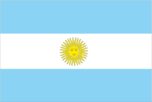
- Buenos Aires
- Canberra
Civil air
- 10 major transport aircraft
- 54 major transport aircraft
- around 150 major transport aircraft
Coastline
- 4,989 km People
- about 25,760 km People
Communists
- some 70,000. members in various party organizations, including a small nucleus of activists
- 4,000 members (est.) Australia (continued)
Crude steel
- 1.8 thousand metric tons produced (1984)
- 5.6 million metric tons produced (1983)
Elections
- general elections held 30 October 1983; next congressional elections scheduled for 1985
- held at three-year intervals or sooner if Parliament is dissolved by Prime Minister; last election 1 December 1984 Political parties and leaders: government — Australian Labor Party (Robert Hawke); opposition— Liberal Party (Andrew Peacock), National Party (Ian Sinclair), Australian Democratic Party (Donald L. Chipp), Nuclear Disarmament Party (Michael Denborough)
Electric power
- 43,000 kW capacity (1984); 61 million kWh produced (1984), 756 kWh per capita
- 13,661,000 kW capacity (1984); 39.5 billion kWh produced (1984), 1,312 kWh per capita
- 28,950,000 kW capacity (1984); 107.4 billion kWh produced (1984), 6,950 kWh per capita
Ethnic divisions
- approximately 85% white, 15% mestizo, Indian, or other non white groups
- 99% Caucasian, 1% Asian and aborigine
Exports
- $34.5 million (1985); clothing, rum, lobsters
- $7.8 billion (f.o.b., 1983); meat, corn, wheat, wool, hides, oilseed
- $20.7 billion (f.o.b., 1983); principal products — coal, wool, wheat, iron ore, beef
Fiscal year
- 1 April-30 March Communications
- calendar year Communications
- 1 July-30 June Communications
Fishing
catch 475,770 metric tons (1982); exports $177.3 million (1983 est.)
GDP
- $129.5 million (1982), $1,682 per capita
- $14-1.1 billion (1983), $9,440 per capita; 62% private consumption, 17.5% government expenditure, 21% investment; 2.2% real average annual growth (1976-82)
GNP
$58.2 billion (1982), $1,995 per capita; 80% consumption, 14% investment; 6% net exports; real GDP growth rate 1983, 3.1%
Government leaders
- Raul ALFONSIN, President (since December 1983); Victor MARTINEZ, Vice President (since December 1983)
- Sir Ninian STEPHEN, Governor General (since July 1982); Robert HAWKE, Prime Minister (since March 1983)
Highways
- 240 km main
- 208, 100 km total, of which 47,550 km paved, 39,500 km gravel, 101 ,000 km improved earth, 20,300 km unimproved earth
- 837,872 km total (1980); 243,750 km paved, 228,396 km gravel, crushed stone, or stabilized soil surface, 365,726 km unimproved earth
Imports
- $138.1 million (c.i.f., 1982); fuel, food, machinery
- $4.5 billion (c.i.f., 1983); machinery, lubricating oils, iron and steel, intermediate industrial products
- $19.4 billion (f.o.b., 1983); principal products — manufactured raw materials, capital equipment, consumer goods
Inland waterways
- 11,000km navigable
- 8,368 km; mainly by small, shallow-draft craft
Labor force
- 1 1.2 million (1982 est); 19% agriculture, 25% manufacturing, 20% services, 11% commerce, 6% transport and communications, 19% o'ther; 6% estimated unemployment (1982 est.)
- 7.2 million (November 1984); 8.7% unemployment (December 1984)
Land boundaries
9,414 km Water
Language
- Spanish (official), English, Italian, German, French
- English, native languages
Legal system
- mixture of US and West European legal systems; constitution adopted 1853 is in effect; legal education at University of Buenos Aires and other public and private universities; has not accepted compulsory IOJ jurisdiction
- based on English common law; constitution adopted 1900; High Court has jurisdiction over cases involving interpretation of the constitution; accepts compulsory ICJ jurisdiction, with reservations
Limits of territorial waters (claimed)
- 200 nm (continental shelf, including sovereignty over superjacent waters)
- 3 nm (fishing 200 nm; prawn and crayfish on continental shelf)
Literacy
- 94%
- 98.5%
Major ground units
Defense Force
Major industries
- tourism, cotton production
- food processing (especially meat packing), motor vehicles, consumer durables, textiles, chemicals, printing, and metallurgy
- mining, industrial and transportation equipment, food processing, chemicals
Major trade partners
- 30% UK, 25% US, 18% Commonwealth Caribbean countries (1975)
- (1983) exports — 20% USSR, 9% Brazil, 9% Netherlands, 9% US, 6% Italy, 6% FRG, 5% Japan, 2% Spain; imports—22% US, 10% Brazil, 10% FRG, 6% Japan, 6% Italy, 2% Chile
- (1982-83) exports — 26% Japan, 12% US, 6% New Zealand, 4% North Korea, 4% Singapore, 3% USSR; imports—21 % US, 21% Japan, 6% UK, 6% FRG, 4% New Zealand
Member of
- FAO, G-77, GATT, IADB, IAEA, IBRD, ICAC, ICAO, IDA, IDB— Inter-American Development Bank, IFAD, IFC, IHO, ILO, IMF, IMO, INTELSAT, INTERPOL, IOOC, ISO, ITU, IWC— International Whaling Commission, IWC — International Wheat Council, LAIA, NAM, OAS, PAHO, SELA, UN, UNESCO, UPU, WFTU, WHO, WMO, WTO, WSG Economy
- ADB, A1OEC, ANZUS, CIPEC (associate), Colombo Plan, Commonwealth, DAC, ELDO, ESCAP, FAO, GATT, IAEA, IATP, IBA, IBRD, ICAC, ICAO, ICO, IDA, IEA, IFAD, IFC, IHO, ILO, International Lead and Zinc Study Group, IMF, IMO, INTELSAT, INTERPOL, IOOC, IPU, IRC, ISO, ITC, ITU, IWC— International Whaling C Commission, IWC — International Wheat Council, OECD, UN, UNESCO, UPU, WHO, WIPO, WMO, WSG Economy
Military budget
- proposed defense budget for fiscal year ending 31 December 1985, $2.0 billion; 12.9% of central government budget Coral Sea ' Indian Ocean Bight*', "*^boume r\^Tasman Sea Land 7,686,848 km2; almost as large as the continential US; 58% pasture; 6% arable; 2% forest; 34% other Water
- for fiscal year ending 30 June 1985, $5.3 billion; about 9.1% of total central government budget
Military manpower
- males 15-49, 7,601,000; 6,168,000 fit for military service; 251,000 reach military age (20) annually
- males 15-49, 4,158,000; 3,542,000 fit for military service; 139,000 reach military age (17) annually
Monetary conversion rate
- 2.70 East Caribbean (EC) dollars=US$l (February 1984)
- 104.2 pesos argentinos=US$l (October 1984); Argentina redenominated its currency 1 June 1983; 10,000 pesos=l peso argentino
- 1.23 Australian dollar=US$l (1 January 1985)
National holiday
- Independence Day, 25 May
- Australia Day, 26 January
Nationality
- noun — Argentine(s); adjective— Argentine
- noun — Australian(s); adjective— Australian
Official name
- Argentine Republic
- Commonwealth of Australia
Organized labor
- 25% of labor force (est.) Government
- 57% of total employees (December 1982) Government
Other political or pressure groups
- Peronistdominated labor movement. General Economic Confederation (Peronist-leaning association of small businessmen), Argentine Industrial Union (manufacturers' association), Argentine Rural Society (large landowners' association), business organizations, students, the Catholic Church
- Australian Democratic Lalxir Party (antiCommunist Labor Party splinter group)
Pipelines
- 4,090 km crude oil; 2,200 km refined products; 9,918 km natural gas
- crude oil, 2,400 km; refined products, 500 km; natural gas, 5,600 km
Political parties
operate under statute passed in 1983 that sets out criteria for participation in national elections; Radical Civic Union (UCR) — moderately left of center; Justicialist Party (JP) — Peronist umbrella political organization; Movement for Industrial Development (MID); Intransigent Party (PI); several provincial parties
Political subdivisions
- 22 provinces, 1 district (Federal Capital), and 1 territory
- 6 states and 2 territories— Australian Capital Territory (Canberra) and Northern Territory
Population
- 30,708,000 (July 1985), average annual growth rate 1.6%
- 15,658,000 (July 1985), average annual growth rate 1.3%
Ports
- 1 major (St. Johns), 1 minor
- 7 major, 30 minor
- 12 major, numerous minor
Railroads
- 64 km 0.760-meter narrow gauge, 13 km 0.610-meter gauge, employed almost exclusively for handling cane
- 35,476 km total; 3,086 km 1.435meter standard gauge, 22,788 km 1.676meter broad gauge, 13,461 km 1.000-meter gauge, 403 km 0.750-meter gauge; of total in country, 116 km are electrified
- 42,855 km total (1980); 9,689 km 1.600-meter gauge, 15,783 km 1.435-meter* standard gauge, 17,383km 1.067-meter gauge; 900 km electrified (June 1979); government owned (except for a few hundred kilometers of privately owned track)
Religion
- 90% nominally Roman Catholic (less than 20% practicing), 2% Protestant, 2% Jewish, 6% other
- 27.7% Anglican, 25.7% Roman Catholic, 25.2% other Protestant
Suffrage
universal and compulsory over age
Telecommunications
- automatic telephone system; 6,700 telephones (9.2 per 100 popl.); tropospheric scatter links with Saba and Guadeloupe; 5 AM and 2 FM stations; 1 TV station; 1 coaxial submarine cable; about 19,000 radio and 16,000 television receivers (1982) Defense Forces
- extensive modern system; telephone network has 3.23 million sets (10.3 per 100 popl.), radio relay widely used; 2 satellite stations with 3 Atlantic Ocean antennas; 154 AM, 45 FM, and 191 TV stations; 30 station network domestic satellite Australia Defense Forces
- very good international and domestic service; 7.4 million telephones(52 per 100 popl.); 223 AM, 5 FM, and 111 TV stations; 3 earth satellite stations; submarine cables to New Zealand, Papua New Guinea, Singapore, Malaysia, Hong Kong, and Guam Defense Forces
Type
- republic; changed from military to civilian government in December 1983
- federal parliamentary state recognizing Elizabeth II as sovereign or head of state
Voting strength
(1984 parliamentary election) House of Representatives — Labor Party 82 seats, Liberal-National coalition 66 seats; Senate — Labor Party 34 seats, Liberal-Country coalition 33 seats, Australian Democratic Party 7 seats, Nuclear Disarmament Party 1 seat, independents 1 seat