2025 Edition Primary
Edition Builder
Introduction
Background
<p>Ahmad Shah DURRANI unified the Pashtun tribes and founded Afghanistan in 1747. The country served as a buffer between the British and Russian Empires until it won independence from notional British control in 1919. A brief experiment in increased democracy ended in a 1973 coup and a 1978 communist countercoup. The Soviet Union invaded in 1979 to support the tottering Afghan communist regime, touching off a long and destructive war. Internationally supported anti-communist mujahidin rebels forced the USSR to withdraw in 1989. A series of subsequent civil wars saw Kabul finally fall in 1996 to the Taliban, a hardline Pakistani-sponsored movement. Following the 11 September 2001 terrorist attacks, a US and Allied military action toppled the Taliban for sheltering Usama BIN LADIN.</p> <p>A UN-sponsored Bonn Conference in 2001 established a process for political reconstruction that included the adoption of a new constitution, a presidential election in 2004, and National Assembly elections in 2005. In 2004, Hamid KARZAI became the first democratically elected president of Afghanistan, and he was reelected in 2009. Ashraf Ghani AHMADZAI succeeded him as president in 2014 following a disputed election. The Taliban conducted an insurgency for two decades against the Afghan Government and forces from the United States and other countries. In February 2020, the US and the Taliban signed an agreement that led to the withdrawal of international forces in exchange for commitments on counterterrorism and other assurances. The Taliban took over Afghanistan on 15 August 2021.<br><br>The Taliban established an all-male interim leadership structure dominated by Pashtun clerics under the leadership of Haivatrullah AKHUNDZADA. The Taliban issued numerous edicts that constrained women's mobility, ability to study and work, and access to education beyond primary school. To date, no country has recognized the Taliban as the government of Afghanistan.</p>
Geography
Area
- Land
- 652,230 sq km
- Total
- 652,230 sq km
- Water
- 0 sq km
Area - comparative
almost six times the size of Virginia; slightly smaller than Texas
Climate
arid to semiarid; cold winters and hot summers
Coastline
0 km (landlocked)
Continent
Asia
Elevation
- Highest point
- Noshak 7,492 m
- Lowest point
- Amu Darya 258 m
- Mean elevation
- 1,884 m
Geographic coordinates
33 00 N, 65 00 E
Geography - note
landlocked; the Hindu Kush mountains that run northeast to southwest divide the northern provinces from the rest of the country; the highest peaks are in the northern Vakhan (Wakhan Corridor)
Irrigated land
24,930 sq km (2022)
Land boundaries
- Border countries
- China 91 km; Iran 921 km; Pakistan 2,670 km; Tajikistan 1,357 km; Turkmenistan 804 km; Uzbekistan 144 km
- number of neighbors
- 6
- Total
- 5,987 km
Land use
- Agricultural land
- 58.4% (2023 est.)
- Agricultural land: arable land
- arable land: 12% (2023 est.)
- Agricultural land: permanent crops
- permanent crops: 0.4% (2023 est.)
- Agricultural land: permanent pasture
- permanent pasture: 46% (2023 est.)
- arable land
- 12.03%
- Forest
- 1.9% (2023 est.)
- Other
- 39.7% (2023 est.)
- permanent crops
- 0.41%
Landlocked
Yes
Location
Southern Asia, north and west of Pakistan, east of Iran
Major lakes (area sq km)
- Salt water lake(s)
- Ab-e Istadah-ye Muqur (endorheic basin) - 520 sq km
Major rivers (by length in km)
Amu Darya (shared with Tajikistan [s], Turkmenistan, and Uzbekistan [m]) - 2,620 km; Helmand river source (shared with Iran) - 1,130 km<br><br><strong>note:</strong> [s] after country name indicates river source; [m] after country name indicates river mouth
Major watersheds (area sq km)
- Indian Ocean drainage
- Indus (1,081,718 sq km)
- Internal (endorheic basin) drainage
- Amu Darya (534,739 sq km); Tarim Basin (1,152,448 sq km)
Map links
- Google Maps
- https://goo.gl/maps/BXBGw7yUUFknCfva9
- OpenStreetMap
- https://www.openstreetmap.org/relation/303427
Map references
Asia
Maritime claims
none (landlocked)
Natural hazards
damaging earthquakes occur in Hindu Kush mountains; flooding; droughts
Natural resources
natural gas, petroleum, coal, copper, chromite, talc, barites, sulfur, lead, zinc, iron ore, salt, precious and semiprecious stones, arable land
Population distribution
populations tend to cluster in the foothills and periphery of the rugged Hindu Kush range; smaller groups are found in many of the country's interior valleys; in general, the east is more densely settled, while the south is sparsely populated
Subregion
Southern Asia
Terrain
mostly rugged mountains; plains in north and southwest
Time zone
- UTC+04:30
- number of time zones
- 1
People and Society
Age structure
- 0-14 years
- 39.6% (male 8,062,407/female 7,818,897)
- 15-64 years
- 57.5% (male 11,702,734/female 11,372,249)
- 65 years and over
- 2.9% (2024 est.) (male 535,925/female 629,340)
Alcohol consumption per capita
- Beer
- 0 liters of pure alcohol (2019 est.)
- Other alcohols
- 0 liters of pure alcohol (2019 est.)
- Spirits
- 0.01 liters of pure alcohol (2019 est.)
- Total
- 0.01 liters of pure alcohol (2019 est.)
- Wine
- 0 liters of pure alcohol (2019 est.)
Birth rate
35.99 births/1,000 population (2025 est.)
Child marriage
- Men married by age 18
- 7.3% (2015)
- Women married by age 15
- 9.6% (2023)
- Women married by age 18
- 28.7% (2023)
Children under 5 years underweight
44.6%
Children under the age of 5 years underweight
18.4% (2022 est.)
Currently married women (ages 15-49)
65.9% (2023 est.)
Death rate
- 5.79 deaths/1,000 population (2025 est.)
- adult female
- 179 per 1,000
- adult male
- 224 per 1,000
Dependency ratios
- Elderly dependency ratio
- 5.2 (2025 est.)
- Potential support ratio
- 19 (2025 est.)
- Total dependency ratio
- 82.2 (2025 est.)
- Youth dependency ratio
- 77 (2025 est.)
Drinking water source
- improved total
- 30.55%
- Improved: rural
- rural: 76.1% of population (2022 est.)
- Improved: total
- total: 82.2% of population (2022 est.)
- Improved: urban
- urban: 99% of population (2022 est.)
- Unimproved: rural
- rural: 23.9% of population (2022 est.)
- Unimproved: total
- total: 17.8% of population (2022 est.)
- Unimproved: urban
- urban: 1% of population (2022 est.)
Education expenditure
- Education expenditure (% GDP)
- 4.3% of GDP (2017 est.)
- Education expenditure (% national budget)
- 15.7% national budget (2017 est.)
Ethnic groups
current, reliable statistical data on ethnicity in Afghanistan are not available; Afghanistan's 2004 Constitution cited Pashtun, Tajik, Hazara, Uzbek, Turkman, Baluch, Pashaie, Nuristani, Aymaq, Arab, Qirghiz, Qizilbash, Gujur, and Brahwui ethnicities; Afghanistan has dozens of other small ethnic groups
Gross reproduction rate
2.39 (2025 est.)
Health expenditure
- 15 % of GDP
- Health expenditure (as % of GDP)
- 21.8% of GDP (2021)
- Health expenditure (as % of national budget)
- 1.1% of national budget (2022 est.)
HIV/AIDS - adult prevalence rate
0.1%
Hospital bed density
0.4 beds/1,000 population (2021 est.)
Infant mortality rate
- Female
- 92.5 deaths/1,000 live births
- Male
- 109.7 deaths/1,000 live births
- neonatal
- 34 deaths/1,000 live births
- Total
- 42 deaths/1,000 live births (2025 est.)
Languages
- Languages
- Afghan Persian or Dari (official, lingua franca) 77%, Pashto (official) 48%, Uzbeki 11%, English 6%, Turkmani 3%, Urdu 3%, Pashaie 1%, Nuristani 1%, Arabic 1%, Balochi 1%, other <1% (2020 est.)
- Major-language sample(s)
- <br> <p>کتاب حقایق جهان، مرجعی ضروری برای اطلاعات اولیە (Dari)</p> د دنیا د حقائېقو کتاب، بنیادی معلوماتو لپاره ضروری سرچینه- (Pashto)<br><br>The World Factbook, the indispensable source for basic information.
- Note
- <strong>note 1:</strong> percentages sum to more than 100% because many people are multilingual <br><br><strong>note 2: </strong>Uzbeki, Turkmani, Pashaie, Nuristani, Balochi, and Pamiri are the third official languages in areas where the majority speaks them
- number of languages
- 3
Life expectancy at birth
- Female
- 56.1 years
- Male
- 52.8 years
- Total population
- 54.4 years (2024 est.)
Literacy
- Female
- 26.6% (2022 est.)
- Male
- 52.1% (2021 est.)
- Total population
- 37.3% (2021 est.)
Major urban areas - population
4.589 million KABUL (capital) (2023)
Maternal mortality ratio
521 deaths/100,000 live births (2023 est.)
Median age
- Female
- 20.1 years
- Male
- 20 years
- Total
- 18.4 years (2025 est.)
Mother's mean age at first birth
- 19.9 years (2015 est.)
- note
- <strong>note:</strong> data represents median age at first birth among women 25-49
Nationality
- Adjective
- Afghan
- Noun
- Afghan(s)
Net migration rate
-1.62 migrant(s)/1,000 population (2025 est.)
Obesity - adult prevalence rate
5.5% (2016)
Physician density
0.32 physicians/1,000 population (2023)
Population
- Female
- 24,422,838
- Male
- 25,051,967
- Total
- 49,474,805 (2025 est.)
Population growth rate
2.86% (2025 est.)
Religions
Muslim 99.7% (Sunni 84.7 - 89.7%, Shia 10 - 15%), other <0.3% (2009 est.)
Sanitation facility access
- improved total
- 24.78%
- Improved: rural
- rural: 58.9% of population (2022 est.)
- Improved: total
- total: 68% of population (2022 est.)
- Improved: urban
- urban: 93% of population (2022 est.)
- Unimproved: rural
- rural: 41.1% of population (2022 est.)
- Unimproved: total
- total: 32% of population (2022 est.)
- Unimproved: urban
- urban: 7% of population (2022 est.)
School life expectancy (primary to tertiary education)
- Female
- 8 years (2018 est.)
- Male
- 13 years (2018 est.)
- Total
- 11 years (2018 est.)
Sex ratio
- 0-14 years
- 1.03 male(s)/female
- 15-64 years
- 1.03 male(s)/female
- 65 years and over
- 0.85 male(s)/female
- At birth
- 1.05 male(s)/female
- Total population
- 1.02 male(s)/female (2024 est.)
Tobacco use
- Female
- 5.2% (2025 est.)
- Male
- 36.5% (2025 est.)
- Total
- 20.8% (2025 est.)
Total fertility rate
4.89 children born/woman (2025 est.)
Urbanization
- Rate of urbanization
- 3.34% annual rate of change (2020-25 est.)
- Urban population
- 26.9% of total population (2023)
Vaccination rate
- measles
- 55%
Government
Administrative divisions
34 provinces (<em>welayat</em>, singular - <em>welayat</em>); Badakhshan, Badghis, Baghlan, Balkh, Bamyan, Daykundi, Farah, Faryab, Ghazni, Ghor, Helmand, Herat, Jowzjan, Kabul, Kandahar, Kapisa, Khost, Kunar, Kunduz, Laghman, Logar, Nangarhar, Nimroz, Nuristan, Paktika, Paktiya, Panjshir, Parwan, Samangan, Sar-e Pul, Takhar, Uruzgan, Wardak, Zabul
Capital
- Daylight saving time
- does not observe daylight savings time
- Etymology
- named for the Kabul River, but the river's name is of unknown origin
- Geographic coordinates
- 34 31 N, 69 11 E
- Name
- Kabul
- Time difference
- UTC+4.5 (9.5 hours ahead of Washington, DC, during Standard Time)
Citizenship
- Citizenship by birth
- no
- Citizenship by descent only
- at least one parent must have been born in - and continuously lived in - Afghanistan
- Dual citizenship recognized
- no
- Residency requirement for naturalization
- 5 years
Coat of arms
- svg
- https://mainfacts.com/media/images/coats_of_arms/af.svg
Constitution
- History
- several previous; latest ratified in 2004, but not currently enforced by the Taliban
Country name
- alternative spellings
- AF, Afġānistān
- Conventional long form
- Islamic Republic of Afghanistan (prior to 15 August 2021); current country name disputed
- Conventional short form
- Afghanistan
- Etymology
- the name "Afghan" originally referred to the Pashtun people, but today it is understood to include all the country's ethnic groups; the suffix "-stan" means "place of" or "country," so Afghanistan literally means the "Land of the Afghans"
- FIFA code
- AFG
- Local long form
- Jamhuri-ye Islami-ye Afghanistan (prior to 15 August 2021; current country name is disputed)
- local long form (prs)
- جمهوری اسلامی افغانستان
- Local short form
- Afghanistan
Diplomatic representation from the US
- Embassy
- the United States does not maintain a presence in Afghanistan and its diplomatic mission to Afghanistan has relocated to Doha, Qatar
Diplomatic representation in the US
none<strong><br><br>note</strong>: the Afghan Embassy closed in March 2022
Executive branch
- Cabinet
- the Taliban have announced a “cabinet” for the “caretaker government,” including the “acting prime minister,” “acting deputy prime ministers,” and “ministers” who claim to represent 26 ministries
- Chief of state
- Taliban Leader HAYBATULLAH Akhundzada (since 15 August 2021)
- Election/appointment process
- the 2004 Afghan constitution directed that the president should be elected by majority popular vote for a 5-year term (eligible for a second term); the Taliban have given no indication that they intend to reinstate elections or any other mechanism of democratic governance
- Head of government
- overall Taliban Leader HAYBATULLAH Akhundzada is the [so-called] Amir-ul Momineen of the Taliban and is effectively the head of government
- Most recent election date
- 28 September 2019
- Note
- <strong>note:</strong> the United States has not yet made a decision whether to recognize the Taliban or any other entity as the government of Afghanistan
Flag
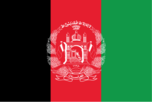
- <strong>description: </strong>three equal vertical bands of black (left), red, and green, with the national emblem in white centered on the red band and slightly overlapping the other bands; the emblem shows a mosque with a pulpit and flags on either side; below the mosque are Eastern Arabic numerals for the solar year 1298 (1919 in the Gregorian calendar, the year of Afghan independence from the UK); a border of wheat sheaves circles the mosque; above the mosque is an Arabic inscription of the Shahada (Muslim creed), with rays of the rising sun over the Takbir (Arabic expression meaning "God is great"); under the mosque is a scroll with the name Afghanistan<br><br><strong>meaning:</strong> black stands for the past, and red for the blood shed for independence; green can represent hope for the future, agricultural prosperity, or Islam<br><br><strong>history:</strong> Afghanistan had more changes to its national flag in the 20th century -- 19 by one count -- than any other country; the colors black, red, and green appeared on most of them
- note
- <strong>note: </strong>the United States has not recognized the Taliban or any other entity as the government of Afghanistan and, accordingly, continues to display the flag of Afghanistan as set forth in the country's constitution of 2004
Flag description
The flag of the Islamic Emirate of Afghanistan has a white field with Arabic inscriptions — the Shahada — in black across its center.
Flag image
- svg
- https://upload.wikimedia.org/wikipedia/commons/5/5c/Flag_of_the_Taliban.svg
Government type
theocratic; the United States does not recognize the Taliban Government
Independence
19 August 1919 (from UK control over Afghan foreign affairs)
International law organization participation
has not submitted an ICJ jurisdiction declaration; formerly accepted ICCt jurisdiction
International organization participation
Afghanistan is a member of the following organizations but Taliban representatives do not participate: ADB, CICA, CP, ECO, EITI (candidate country), FAO, G-77, IAEA, IBRD, ICAO, ICC (NGOs), ICCt, ICRM, IDA, IDB, IFAD, IFC, IFRCS, ILO, IMF, Interpol, IOC, IOM, IPU, ISO (correspondent), ITSO, ITU, ITUC (NGOs), MIGA, NAM, OIC, OPCW, OSCE (partner), SAARC, SACEP, SCO (dialogue member), UN, UNAMA, UNCTAD, UNESCO, UNHCR, UNIDO, UNWTO, UPU, WCO, WFTU (NGOs), WHO, WIPO, WMO, WTO
Judicial branch
- Highest court(s)
- the Taliban are purported to have appointed clerics, including a "Chief Justice," to Afghanistan's Supreme Court
- Subordinate courts
- provincial courts, religious courts, and specialty courts
Legal system
the Taliban is implementing its own interpretation of Islamic law, which is partially based on the Hanifi school of Islamic jurisprudence and have enforced strict punishments; before the Taliban takeover, Afghanistan had a mixed legal system of civil, customary, and Islamic law (2021)
Legislative branch
<strong>note:</strong> Afghanistan’s bicameral National Assembly consisted of the House of Elders and House of the People but was dissolved after the Taliban took control of Afghanistan in August 2021
National color(s)
red, green, black
National heritage
- Note
- <strong>note:</strong> the monumental 6th- and 7th-century Buddha statues at Bamyan were destroyed by the Taliban in 2001
- Selected World Heritage Site locales
- Minaret of Jam; Buddhas of Bamyan
- Total World Heritage Sites
- 2 (both cultural)
National holiday
previous: Independence Day, 19 August (1919); under the Taliban Government, 15 August (2022) is declared a national holiday, marking the anniversary of the victory of the Afghan jihad<br><br>
National symbol(s)
lion
Political parties
- the Taliban Government enforces an authoritarian state and has banned other political parties<br><br>the Taliban have banned other political parties but have allowed some party leaders, including the head of Hezb-e-Islami, Gulbuddin Hekmatyar, to continue to live and work in Afghanistan; Hekmatyar likely continues to enjoy some political support from loyalists; leaders of other parties, including Jamiat-e-Islami’s Salahuddin Rabbani and Jumbesh’s Rashid Dostum, operate from abroad but likely also command some following within Afghanistan
- note
- <strong>note:</strong> before 15 August 2021, the Ministry of Justice had licensed 72 political parties as of April 2019
Start of week
Monday
Suffrage
18 years of age; universal
UN Member
Yes
Economy
Agricultural products
- wheat, milk, grapes, watermelons, potatoes, cantaloupes/melons, vegetables, rice, onions, maize (2023)
- note
- <b>note:</b> top ten agricultural products based on tonnage
Budget
- Expenditures
- $7.411 billion (2017 est.)
- Note
- <b>note:</b> central government revenues (excluding grants) and expenses converted to US dollars at average official exchange rate for year indicated
- Revenues
- $9.093 billion (2017 est.)
Currency
- code
- AFN
- name
- Afghan afghani (AFN) [؋]
Current account balance
- Current account balance 2018
- -$3.897 billion (2018 est.)
- Current account balance 2019
- -$3.792 billion (2019 est.)
- Current account balance 2020
- -$3.137 billion (2020 est.)
- Note
- <b>note:</b> balance of payments - net trade and primary/secondary income in current dollars
Debt - external
- $3.34 billion
- Debt - external 2023
- $2.717 billion (2023 est.)
- Note
- <strong>note:</strong> present value of external debt in current US dollars
Economic overview
<p>low-income South Asian economy; economy stable after major contraction due to Taliban takeover, but recovery remains fragile; widespread poverty and obstacles to human development; import-reliant for food, fuel, and machinery; ongoing sanctions, suspended development aid, and frozen reserve assets</p>
Exchange rates
- Currency
- afghanis (AFA) per US dollar -
- Exchange rates 2016
- 67.866 (2016 est.)
- Exchange rates 2017
- 68.027 (2017 est.)
- Exchange rates 2018
- 72.083 (2018 est.)
- Exchange rates 2019
- 77.738 (2019 est.)
- Exchange rates 2020
- 76.814 (2020 est.)
Exports
- $2.89 billion
- Exports 2018
- $1.609 billion (2018 est.)
- Exports 2019
- $1.516 billion (2019 est.)
- Exports 2020
- $1.476 billion (2020 est.)
- Note
- <b>note:</b> balance of payments - exports of goods and services in current dollars
Exports - commodities
- coal, grapes, tropical fruits, gum resins, other nuts (2023)
- note
- <b>note:</b> top five export commodities based on value in dollars
Exports - partners
- Pakistan 42%, India 40%, China 4%, UAE 2%, Turkey 2% (2023)
- note
- <b>note:</b> top five export partners based on percentage share of exports
Foreign direct investment
- net inflows
- $20.6 million
GDP - composition, by end use
- Exports of goods and services
- 16.9% (2023 est.)
- Government consumption
- 21.2% (2023 est.)
- Household consumption
- 98.1% (2023 est.)
- Imports of goods and services
- -50.7% (2023 est.)
- Investment in fixed capital
- 15.2% (2023 est.)
- Investment in inventories
- 0.1% (2023 est.)
- Note
- <strong>note:</strong> figures may not total 100% due to rounding or gaps in data collection
GDP - composition, by sector of origin
- Agriculture
- 34.7% (2023 est.)
- Industry
- 13.4% (2023 est.)
- Note
- <b>note:</b> figures may not total 100% due to non-allocated consumption not captured in sector-reported data
- Services
- 46.4% (2023 est.)
GDP (official exchange rate)
- $17.152 billion (2023 est.)
- note
- <b>note:</b> data in current dollars at official exchange rate
GDP per capita (nominal)
$414
GNI (gross national income)
$17.23 billion
GNI per capita
$370
Gross domestic investment
15 % of GDP
Imports
- $8.7 billion
- Imports 2018
- $7.988 billion (2018 est.)
- Imports 2019
- $7.371 billion (2019 est.)
- Imports 2020
- $6.983 billion (2020 est.)
- Note
- <b>note:</b> balance of payments - imports of goods and services in current dollars
Imports - commodities
- wheat flours, tobacco, palm oil, broadcasting equipment, synthetic fabric (2023)
- note
- <b>note:</b> top five import commodities based on value in dollars
Imports - partners
- UAE 28%, Pakistan 15%, China 15%, Uzbekistan 12%, Kazakhstan 9% (2023)
- note
- <b>note:</b> top five import partners based on percentage share of imports
Industrial production growth rate
- 1.8% (2023 est.)
- note
- <b>note:</b> annual % change in industrial value added based on constant local currency
Industries
small-scale production of bricks, textiles, soap, furniture, shoes, fertilizer, apparel, food products, non-alcoholic beverages, mineral water, cement; handwoven carpets; natural gas, coal, copper
Inflation rate (consumer prices)
- -6.6%
- Inflation rate (consumer prices) 2022
- 13.7% (2022 est.)
- Inflation rate (consumer prices) 2023
- -4.6% (2023 est.)
- Inflation rate (consumer prices) 2024
- -6.6% (2024 est.)
- Note
- <b>note:</b> annual % change based on consumer prices
Labor force
- 9.133 million (2024 est.)
- note
- <b>note:</b> number of people ages 15 or older who are employed or seeking work
- total
- 9.43 million persons
Labor force - by occupation
- agriculture
- 51.63%
- industry
- 18.9%
- services
- 29.47%
Population below poverty line
- 54.5% (2016 est.)
- note
- <b>note:</b> % of population with income below national poverty line
Public debt
- Public debt 2016
- 7.8% of GDP (2016 est.)
Real GDP (purchasing power parity)
- $91.27 billion
- Note
- <b>note:</b> data in 2021 dollars
- Real GDP (purchasing power parity) 2021
- $85.768 billion (2021 est.)
- Real GDP (purchasing power parity) 2022
- $80.416 billion (2022 est.)
- Real GDP (purchasing power parity) 2023
- $82.238 billion (2023 est.)
Real GDP growth rate
- 2.27%
- Note
- <b>note:</b> annual GDP % growth based on constant local currency
- Real GDP growth rate 2021
- -20.7% (2021 est.)
- Real GDP growth rate 2022
- -6.2% (2022 est.)
- Real GDP growth rate 2023
- 2.3% (2023 est.)
Real GDP per capita
- $2,202
- Note
- <b>note:</b> data in 2021 dollars
- Real GDP per capita 2021
- $2,100 (2021 est.)
- Real GDP per capita 2022
- $2,000 (2022 est.)
- Real GDP per capita 2023
- $2,000 (2023 est.)
Remittances
- $320 million
- Note
- <b>note:</b> personal transfers and compensation between resident and non-resident individuals/households/entities
- Remittances 2021
- 2.2% of GDP (2021 est.)
- Remittances 2022
- 2.2% of GDP (2022 est.)
- Remittances 2023
- 1.9% of GDP (2023 est.)
Reserves of foreign exchange and gold
- Note
- <b>note:</b> holdings of gold (year-end prices)/foreign exchange/special drawing rights in current dollars
- Reserves of foreign exchange and gold 2018
- $8.207 billion (2018 est.)
- Reserves of foreign exchange and gold 2019
- $8.498 billion (2019 est.)
- Reserves of foreign exchange and gold 2020
- $9.749 billion (2020 est.)
Taxes and other revenues
- 9.9% (of GDP) (2017 est.)
- note
- <b>note:</b> central government tax revenue as a % of GDP
Unemployment rate
- 13.35%
- Note
- <b>note:</b> % of labor force seeking employment
- Unemployment rate 2022
- 14.1% (2022 est.)
- Unemployment rate 2023
- 14% (2023 est.)
- Unemployment rate 2024
- 13.3% (2024 est.)
Youth unemployment rate (ages 15-24)
- Female
- 27% (2024 est.)
- Male
- 15.8% (2024 est.)
- Note
- <b>note:</b> % of labor force ages 15-24 seeking employment
- Total
- 16.7% (2024 est.)
Energy
Coal
- Consumption
- 503,000 metric tons (2023 est.)
- Exports
- 265,000 metric tons (2023 est.)
- Imports
- 2,000 metric tons (2023 est.)
- Production
- 767,000 metric tons (2023 est.)
- Proven reserves
- 66 million metric tons (2023 est.)
Electricity
- Consumption
- 6.468 billion kWh (2023 est.)
- Imports
- 6.221 billion kWh (2023 est.)
- Installed generating capacity
- 627,000 kW (2023 est.)
- Transmission/distribution losses
- 725.652 million kWh (2023 est.)
Electricity access
- Electrification - rural areas
- 81.7%
- Electrification - total population
- 85.3% (2022 est.)
- Electrification - urban areas
- 95.9%
Electricity generation sources
- Fossil fuels
- 13.3% of total installed capacity (2023 est.)
- hydroelectric
- 71.66%
- Hydroelectricity
- 77% of total installed capacity (2023 est.)
- nuclear
- 0%
- renewable
- 78.23%
- Solar
- 9.7% of total installed capacity (2023 est.)
Energy consumption per capita
- Total energy consumption per capita 2023
- 3.38 million Btu/person (2023 est.)
Natural gas
- Consumption
- 80.2 million cubic meters (2020 est.)
- Production
- 80.2 million cubic meters (2020 est.)
- Proven reserves
- 49.554 billion cubic meters (2021 est.)
Petroleum
- Refined petroleum consumption
- 58,000 bbl/day (2023 est.)
Renewable energy consumption
20%
Communications
Broadband - fixed subscriptions
- per 100 inhabitants
- 0 per 100
- Subscriptions per 100 inhabitants
- (2023 est.) less than 1
- Total
- 33,000 (2023 est.)
Broadcast media
under the Taliban, independent media outlets have decreased and are probably self-censoring; the Ministry of Information and Culture monitors all mass media; television and radio are key media platforms; only about a fifth of Afghans use the internet, mostly through smartphones (2023)
Internet country code
.af
Internet users
- Percent of population
- 18% (2023 est.)
Telephone calling code
+93
Telephones - fixed lines
- Subscriptions per 100 inhabitants
- (2023 est.) less than 1
- Total subscriptions
- 182,000 (2023 est.)
Telephones - mobile cellular
- subscriptions per 100
- 56 per 100
- Subscriptions per 100 inhabitants
- 60 (2024 est.)
- Total subscriptions
- 25.6 million (2024 est.)
Transportation
Air transport
- passengers carried
- 1.03 million passengers
- registered carrier departures
- 6,427 departures
Airports
68 (2025)
Civil aircraft registration country code prefix
YA
Driving side
Right
Heliports
8 (2025)
Vehicle registration code
AFG
Military and Security
Land forces
- armored vehicles
- tanks
Military - note
the Taliban’s key security priorities are border and internal security; specific issues have included tensions with Pakistan along their shared border, armed anti-Taliban resistance elements, and the Islamic State of Iraq and ash-Sham - Khorasan (ISIS-K) terrorist group (2025)
Military and security forces
- the Taliban claims authority over a Ministry of Defense and a National Army (aka Army of the Islamic Emirate of Afghanistan, Islamic Emirate Army, or Afghan Army); it has also formed police forces under a Ministry of Interior (2025)
- active duty personnel
- 165,000
- percent of total labor force
- 1.82 %
Military and security service personnel strengths
the Taliban claims to have 190,000 under the Ministry of Defense and 215,000 under the Ministry of Interior (2025)
Military equipment inventories and acquisitions
the Taliban military and security forces are equipped with armaments captured in 2021 from the Afghan National Defense and Security Forces, which were largely equipped with Russian/Soviet-era and US material (2025)
Military expenditures
- 2 % of GDP
- current USD
- $278,250,788
- Military Expenditures 2015
- 2.9% of GDP (2015)
- Military Expenditures 2016
- 3.1% of GDP (2016)
- Military Expenditures 2017
- 3.3% of GDP (2017)
- Military Expenditures 2018
- 3.2% of GDP (2018)
- Military Expenditures 2019
- 3.3% of GDP (2019)
- percent of central government expenditure
- 10.27 %
- percent of GDP
- 1.83 % of GDP
Military service age and obligation
- service is voluntary; there is no conscription (2023)
- note
- <strong>note: </strong>the Taliban dismissed nearly all women from the former Afghan National Defense and Security Forces, except those serving in detention facilities and assisting with body searches
Military strength ranking
- PowerIndex score
- 2.7342
Transnational Issues
Illicit drugs
- USG identification
- <br>major illicit drug-producing and/or drug-transit country<br><br>major precursor-chemical producer (2025)
Refugees and internally displaced persons
- IDPs
- 5,457,183 (2024 est.)
- Refugees
- 21,236 (2024 est.)
Trafficking in persons
- Tier rating
- Tier 3 — Afghanistan does not fully meet the minimum standards for the elimination of trafficking and is not making significant efforts to do so, therefore, Afghanistan remained on Tier 3; for more details, go to: https://www.state.gov/reports/2025-trafficking-in-persons-report/afghanistan/
Terrorism
Terrorist group(s)
- Haqqani Network; Harakat ul-Mujahidin; Harakat ul-Jihad-i-Islami; Islamic Jihad Union (IJU); Islamic Movement of Uzbekistan (IMU); Islamic State of Iraq and ash-Sham-Khorasan Province (ISIS-K); Islamic Revolutionary Guard Corps (IRGC)/Qods Force; Jaish-e-Mohammed; Jaysh al Adl (Jundallah); Lashkar i Jhangvi; Lashkar-e Tayyiba; al-Qa’ida; al-Qa'ida in the Indian Subcontinent (AQIS); Tehrik-e-Taliban Pakistan (TTP)
- note
- <strong><strong>note 1: </strong></strong>as of 2024, Afghanistan was assessed to be a place of global significance for terrorism, with approximately 20 designated and non-designated terrorist groups operating in the country<strong><strong><br></strong></strong><strong><br>note 2:</strong> details about the history, aims, leadership, organization, areas of operation, tactics, targets, weapons, size, and sources of support of the group(s) appear(s) in the Terrorism reference guide
Environment
Carbon dioxide emissions
- From coal and metallurgical coke
- 930,000 metric tonnes of CO2 (2023 est.)
- From petroleum and other liquids
- 6.827 million metric tonnes of CO2 (2023 est.)
- Total emissions
- 7.757 million metric tonnes of CO2 (2023 est.)
Environmental issues
limited natural freshwater resources; inadequate potable water; soil degradation; overgrazing; deforestation (cut down for fuel and building materials); desertification; air and water pollution in urban areas
International environmental agreements
- Party to
- Biodiversity, Climate Change, Climate Change-Kyoto Protocol, Climate Change-Paris Agreement, Comprehensive Nuclear Test Ban, Desertification, Endangered Species, Environmental Modification, Hazardous Wastes, Marine Dumping-London Convention, Nuclear Test Ban, Ozone Layer Protection
- Signed, but not ratified
- Law of the Sea, Marine Life Conservation
Particulate matter emissions
84 micrograms per cubic meter (2019 est.)
Protected areas
4 % of total land area
Renewable electricity output
7 % of total
Total renewable water resources
65.33 billion cubic meters (2022 est.)
Total water withdrawal
- 43 % of internal resources
- Agricultural
- 20 billion cubic meters (2022 est.)
- Industrial
- 169.5 million cubic meters (2022 est.)
- Municipal
- 203.4 million cubic meters (2022 est.)
Waste and recycling
- Municipal solid waste generated annually
- 5.629 million tons (2024 est.)
- Percent of municipal solid waste recycled
- 11.1% (2022 est.)