Introduction
<p>Mexico was the site of several advanced Amerindian civilizations -- including the Olmec, Toltec, Teotihuacan, Zapotec, Maya, and Aztec -- until Spain conquered and colonized the area in the early 16th century. Administered as the Viceroyalty of New Spain for three centuries, it achieved independence early in the 19th century. Elections held in 2000 marked the first time since Mexican Revolution in 1910 that an opposition candidate -- Vicente FOX of the National Action Party (PAN) -- defeated the party in government, the Institutional Revolutionary Party (PRI). He was succeeded in 2006 by another PAN candidate Felipe CALDERON, but Enrique PEÑA NIETO regained the presidency for the PRI in 2012. Left-leaning anti-establishment politician and former mayor of Mexico City (2000-05) Andrés Manuel LÓPEZ OBRADOR, from the National Regeneration Movement (MORENA), became president in 2018.</p> <p>The US-Mexico-Canada Agreement (USMCA, or T-MEC by its Spanish acronym) entered into force in 2020 and replaced its predecessor, the North American Free Trade Agreement (NAFTA). Mexico amended its constitution in 2019 to facilitate the implementation of the labor components of USMCA.</p> <p>Mexico is currently the US's second-largest goods trading partner, after Canada. Ongoing economic and social concerns include low real wages, high underemployment, inequitable income distribution, and few advancement opportunities, particularly for the largely indigenous population in the impoverished southern states. Since 2007, Mexico's powerful transnational criminal organizations have engaged in a struggle to control criminal markets, resulting in tens of thousands of drug-related homicides and forced disappearances.</p>
Geography
- Land
- 1,943,945 sq km
- Total
- 1,964,375 sq km
- Water
- 20,430 sq km
slightly less than three times the size of Texas
varies from tropical to desert
9,330 km
North America
- Highest point
- Volcan Pico de Orizaba 5,636 m
- Lowest point
- Laguna Salada -10 m
- Mean elevation
- 1,111 m
23 00 N, 102 00 W
<strong>note 1:</strong> strategic location on southern border of the US; Mexico is one of the countries along the Ring of Fire, which is a belt bordering the Pacific Ocean that contains about 75% of the world's volcanoes and up to 90% of the world's earthquakes<br><br><strong>note 2: </strong>the Sac Actun cave system at 348 km (216 mi) is the longest underwater cave in the world and the second longest cave worldwide, after Mammoth Cave in the United States (see "Geography - note" under United States)<br><br><strong>note 3:</strong> the prominent Yucatán Peninsula that divides the Gulf of America from the Caribbean Sea is shared by Mexico, Guatemala, and Belize; on the northern coast of Yucatan near the town of Chicxulub lie the remnants of a massive asteroid or comet crater about 150 km (93 mi) in diameter and extending into the Gulf of America; the impact is believed to have initiated a worldwide climate disruption that caused a mass extinction of 75% of the earth's plant and animal species, including the non-avian dinosaurs
59,910 sq km (2022)
- Border countries
- Belize 276 km; Guatemala 958 km; US 3,155 km
- number of neighbors
- 3
- Total
- 4,389 km
- Agricultural land
- 50.7% (2023 est.)
- Agricultural land: arable land
- arable land: 10.3% (2023 est.)
- Agricultural land: permanent crops
- permanent crops: 2.3% (2023 est.)
- Agricultural land: permanent pasture
- permanent pasture: 38.1% (2023 est.)
- arable land
- 10.3%
- Forest
- 34.2% (2023 est.)
- Other
- 15.1% (2023 est.)
- permanent crops
- 2.27%
No
North America, bordering the Caribbean Sea and the Gulf of America, between Belize and the United States and bordering the North Pacific Ocean, between Guatemala and the United States
Atlantic and Gulf Coastal Plains Aquifer
- Fresh water lake(s)
- Laguna de Chapala - 1,140 sq km
- Salt water lake(s)
- Laguna de Terminos - 1,550 sq km
Rio Grande river mouth (shared with US [s]) - 3,057 km; Colorado river mouth (shared with US [s]) - 2,333 km<br><br><strong>note:</strong> [s] after country name indicates river source; [m] after country name indicates river mouth
- Atlantic Ocean drainage
- <em>(Gulf of America)</em> Rio Grande/Bravo (607,965 sq km)
- Pacific Ocean drainage
- <em>(Gulf of California)</em> Colorado (703,148 sq km)
- Google Maps
- https://goo.gl/maps/s5g7imNPMDEePxzbA
- OpenStreetMap
- https://www.openstreetmap.org/relation/114686
North America
- Contiguous zone
- 24 nm
- Continental shelf
- 200 nm or to the edge of the continental margin
- Exclusive economic zone
- 200 nm
- Territorial sea
- 12 nm
tsunamis along the Pacific coast; volcanoes and destructive earthquakes in the center and south; hurricanes on the Pacific, Gulf of America, and Caribbean coasts <br><br><strong>volcanism:</strong> volcanic activity in the central-southern part of the country; the volcanoes in Baja California are mostly dormant; Colima (3,850 m) is Mexico's most active volcano and is responsible for periodic evacuations of nearby villagers; it has been deemed a Decade Volcano by the International Association of Volcanology and Chemistry of the Earth's Interior, worthy of study due to its explosive history and close proximity to human populations; Popocatepetl (5,426 m) poses a threat to Mexico City; other historically active volcanoes include Barcena, Ceboruco, El Chichon, Michoacan-Guanajuato, Pico de Orizaba, San Martin, Socorro, and Tacana; see note 2 under "Geography - note"
petroleum, silver, antimony, copper, gold, lead, zinc, natural gas, timber
most of the population is found in the middle of the country between the states of Jalisco and Veracruz; approximately a quarter of the population lives in and around Mexico City
North America
high, rugged mountains; low coastal plains; high plateaus; desert
- UTC-08:00, UTC-07:00, UTC-06:00
- number of time zones
- 3
People and Society
- 0-14 years
- 23.3% (male 15,647,805/female 14,754,004)
- 15-64 years
- 68.6% (male 43,651,105/female 45,983,174)
- 65 years and over
- 8.2% (2024 est.) (male 4,600,228/female 6,103,611)
- Beer
- 3.72 liters of pure alcohol (2019 est.)
- Other alcohols
- 0.15 liters of pure alcohol (2019 est.)
- Spirits
- 0.19 liters of pure alcohol (2019 est.)
- Total
- 4.25 liters of pure alcohol (2019 est.)
- Wine
- 0.19 liters of pure alcohol (2019 est.)
14.73 births/1,000 population (2025 est.)
- Women married by age 15
- 3.6% (2018)
- Women married by age 18
- 20.7% (2018)
12.5%
4.2% (2022 est.)
53% (2023 est.)
- 6.04 deaths/1,000 population (2025 est.)
- adult female
- 97 per 1,000
- adult male
- 197 per 1,000
- Elderly dependency ratio
- 11.9 (2024 est.)
- Potential support ratio
- 8.4 (2024 est.)
- Total dependency ratio
- 45.9 (2024 est.)
- Youth dependency ratio
- 33.9 (2024 est.)
- improved total
- 42.97%
- Improved: rural
- rural: 98.4% of population (2022 est.)
- Improved: total
- total: 99.7% of population (2022 est.)
- Improved: urban
- urban: 100% of population (2022 est.)
- Unimproved: rural
- rural: 1.6% of population (2022 est.)
- Unimproved: total
- total: 0.3% of population (2022 est.)
- Unimproved: urban
- urban: 0% of population (2022 est.)
- Education expenditure (% GDP)
- 4.1% of GDP (2022 est.)
- Education expenditure (% national budget)
- 14.2% national budget (2022 est.)
4 % of GDP
- Mestizo (Indigenous-Spanish) 62%, predominantly Indigenous 21%, Indigenous 7%, other 10% (mostly European) (2012 est.)
- note
- <strong>note:</strong> Mexico does not collect census data on ethnicity
0.9 (2025 est.)
- 6 % of GDP
- Health expenditure (as % of GDP)
- 6.1% of GDP (2021)
- Health expenditure (as % of national budget)
- 10.4% of national budget (2022 est.)
0.3%
1 beds/1,000 population (2021 est.)
- Female
- 10.9 deaths/1,000 live births
- Male
- 13.4 deaths/1,000 live births
- neonatal
- 8 deaths/1,000 live births
- Total
- 12.3 deaths/1,000 live births (2025 est.)
- Languages
- Spanish only 93.8%, Spanish and indigenous languages (including Mayan, Nahuatl, and others) 5.4%, indigenous only 0.6%, unspecified 0.2% (2020 est.)
- Major-language sample(s)
- <br>La Libreta Informativa del Mundo, la fuente indispensable de información básica. (Spanish)<br><br>The World Factbook, the indispensable source for basic information.
- number of languages
- 1
- Female
- 77.7 years
- Male
- 71.6 years
- Total population
- 74.6 years (2024 est.)
- Female
- 94% (2020 est.)
- Male
- 96% (2020 est.)
- Total population
- 95% (2020 est.)
22.281 million MEXICO CITY (capital), 5.420 million Guadalajara, 5.117 million Monterrey, 3.345 million Puebla, 2.626 million Toluca de Lerdo, 2.260 million Tijuana (2023)
42 deaths/100,000 live births (2023 est.)
- Female
- 32.7 years
- Male
- 28.8 years
- Total
- 31 years (2025 est.)
21.3 years (2008 est.)
- Adjective
- Mexican
- Noun
- Mexican(s)
-0.59 migrant(s)/1,000 population (2025 est.)
28.9% (2016)
2.59 physicians/1,000 population (2022)
- Female
- 66,840,789
- Male
- 63,899,138
- Total
- 130,739,927 (2024 est.)
0.81% (2025 est.)
Catholic 77.7%, no religion 10.6%, other Evangelical Churches 7.5%, Jehovah Witness 1.2%; less than 1 percent: Pentecostal, Seventh Day Adventist, Historics, not specified, Latter Day Saints, other religions (2020 est.)
- improved total
- 62.75%
- Improved: rural
- rural: 98.2% of population (2022 est.)
- Improved: total
- total: 99.7% of population (2022 est.)
- Improved: urban
- urban: 100% of population (2022 est.)
- Unimproved: rural
- rural: 1.8% of population (2022 est.)
- Unimproved: total
- total: 0.3% of population (2022 est.)
- Unimproved: urban
- urban: 0% of population (2022 est.)
- Female
- 15 years (2022 est.)
- Male
- 14 years (2022 est.)
- Total
- 15 years (2022 est.)
- 0-14 years
- 1.06 male(s)/female
- 15-64 years
- 0.95 male(s)/female
- 65 years and over
- 0.75 male(s)/female
- At birth
- 1.05 male(s)/female
- Total population
- 0.96 male(s)/female (2024 est.)
- Female
- 6.3% (2025 est.)
- Male
- 21.8% (2025 est.)
- Total
- 13.8% (2025 est.)
1.85 children born/woman (2025 est.)
- Rate of urbanization
- 1.4% annual rate of change (2020-25 est.)
- Urban population
- 81.6% of total population (2023)
- measles
- 80%
Government
32 states (<em>estados</em>, singular - <em>estado</em>); Aguascalientes, Baja California, Baja California Sur, Campeche, Chiapas, Chihuahua, Coahuila, Colima, Cuidad de Mexico, Durango, Guanajuato, Guerrero, Hidalgo, Jalisco, Mexico, Michoacán, Morelos, Nayarit, Nuevo Leon, Oaxaca, Puebla, Queretaro, Quintana Roo, San Luis Potosi, Sinaloa, Sonora, Tabasco, Tamaulipas, Tlaxcala, Veracruz, Yucatan, Zacatecas
- Daylight saving time
- DST was permanently removed in October 2022
- Etymology
- name may derive from one of the Nahuatl (Aztec) names for the capital city, Metztlixihtlico, which probably meant "the center of the moon;" alternatively, it may come from Mexica, the original name of the Aztec people
- Geographic coordinates
- 19 26 N, 99 08 W
- Name
- Mexico City (Ciudad de Mexico)
- Time difference
- UTC-6 (1 hour behind Washington, DC, during Standard Time)
- Time zone note
- Mexico has four time zones
- Citizenship by birth
- yes
- Citizenship by descent only
- yes
- Dual citizenship recognized
- not specified
- Residency requirement for naturalization
- 5 years
- svg
- https://mainfacts.com/media/images/coats_of_arms/mx.svg
- Amendment process
- proposed by the Congress of the Union; passage requires approval by at least two thirds of the members present and approval by a majority of the state legislatures
- History
- several previous; latest approved 5 February 1917
- alternative spellings
- MX, Mexicanos, United Mexican States, Estados Unidos Mexicanos
- Conventional long form
- United Mexican States
- Conventional short form
- Mexico
- Etymology
- name may derive from one of the Nahuatl (Aztec) names for the capital city, Metztlixihtlico, which probably meant "the center of the moon;" alternatively, it may come from Mexica, the original name of the Aztec people
- FIFA code
- MEX
- Former
- Mexican Republic, Mexican Empire
- Local long form
- Estados Unidos Mexicanos
- local long form (spa)
- Estados Unidos Mexicanos
- Local short form
- Mexico
- Chief of mission
- Ambassador Ronald D. JOHNSON (since 19 May 2025)
- Consulate(s) general
- Ciudad Juárez, Guadalajara, Hermosillo, Matamoros, Mérida, Monterrey, Nogales, Nuevo Laredo, Tijuana
- Email address and website
- <br>ACSMexicoCity@state.gov<br><br>https://mx.usembassy.gov/
- Embassy
- Paseo de la Reforma 305, Colonia Cuauhtémoc, 06500 Mexico, CDMX
- FAX
- (011) 52-55-5080-2005
- Mailing address
- 8700 Mexico City Place, Washington DC 20521-8700
- Telephone
- (011) [52]-55-5080-2000
- Chancery
- 1911 Pennsylvania Avenue NW, Washington, DC 20006
- Chief of mission
- Ambassador Esteban MOCTEZUMA Barragán (since 20 April 2021)
- Consulate(s)
- Albuquerque (NM), Boise (ID), Brownsville (TX), Calexico (CA), Del Rio (TX), Detroit (MI), Douglas (AZ), Eagle Pass (TX), Fresno (CA), Indianapolis (IN), Kansas City (MO), Las Vegas (NV), Little Rock (AR), Los Angeles (CA), McAllen (TX), Milwaukee (WI), New Orleans (LA), Oklahoma City (OK), Omaha (NE), Orlando (FL), Oxnard (CA), Philadelphia (PA), Portland (OR), Presidio (TX), Salt Lake City (UT), San Bernardino (CA), Santa Ana (CA), Seattle (WA), St. Paul (MN), Tucson (AZ), Yuma (AZ)
- Consulate(s) general
- Atlanta (GA), Austin (TX), Boston (MA), Chicago (IL), Dallas (TX), Denver (GA), El Paso (TX), Houston (TX), Laredo (TX), Miami (FL), New York (NY), Nogales (AZ), Phoenix (AZ), Raleigh (NC), Sacramento (CA), San Antonio (TX), San Diego (CA), San Francisco (CA), San Jose (CA), San Juan (Puerto Rico)
- Email address and website
- <br>mexembusa@sre.gob.mx<br><br>https://embamex.sre.gob.mx/eua/index.php/en/
- FAX
- [1] (202) 728-1698
- Note
- <strong> </strong>
- Telephone
- [1] (202) 728-1600
- Cabinet
- Cabinet appointed by the president
- Chief of state
- President Claudia SHEINBAUM Pardo (since 1 October 2024)
- Election results
- <br><em>2024: </em>Claudia SHEINBAUM Pardo elected president; percent of vote - Claudia SHEINBAUM Pardo (MORENA) 59.4%, Xóchitl GÁLVEZ Ruiz (PAN) 27.9%, Jorge Álvarez MÁYNEZ (MC) 10.4%, other 2.3%<em><br><br>2018:</em> Andrés Manuel LÓPEZ OBRADOR elected president; percent of vote - Andrés Manuel LÓPEZ OBRADOR (MORENA) 53.2%, Ricardo ANAYA Cortés (PAN) 22.3%, José Antonio MEADE Kuribreña (PRI) 16.4%, Jaime RODRÍGUEZ Calderón (independent) 5.2%, other 2.9%<br><br><em>2012:</em> Enrique PEÑA NIETO elected president; percent of vote - Enrique PEÑA NIETO (PRI) 38.2%, Andrés Manuel LÓPEZ OBRADOR (PRD) 31.6%, Josefina Eugenia VÁZQUEZ Mota (PAN) 25.4%, other 4.8%
- Election/appointment process
- president directly elected by simple-majority popular vote for a single 6-year term
- Expected date of next election
- 2030
- Head of government
- President Claudia SHEINBAUM Pardo (since 1 October 2024)
- Most recent election date
- 2 June 2024
- Note
- <strong>note:</strong> the president is both chief of state and head of government
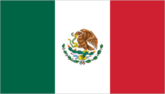
<strong>description:</strong> three equal vertical bands of green (left side), white, and red; Mexico's coat of arms (an eagle with a snake in its beak, perched on a cactus) is centered in the white band<br><br><strong>meaning:</strong> green stands for hope, joy, and love; white for peace and honesty; red for hardiness, bravery, strength, and valor
The flag of Mexico is composed of three equal vertical bands of green, white and red, with the national coat of arms centered in the white band.
- svg
- https://flagcdn.com/mx.svg
federal presidential republic
16 September 1810 (declared independence from Spain); 27 September 1821 (recognized by Spain)
accepts compulsory ICJ jurisdiction with reservations; accepts ICCt jurisdiction
ACS, APEC, Australia Group, BCIE, BIS, CABEI, CAN (observer), Caricom (observer), CD, CDB, CE (observer), CELAC, CSN (observer), EBRD, FAO, FATF, G-3, G-15, G-20, G-24, G-5, IADB, IAEA, IBRD, ICAO, ICC (national committees), ICCt, ICRM, IDA, IFAD, IFC, IFRCS, IHO, ILO, IMF, IMO, IMSO, Interpol, IOC, IOM, IPU, ISO, ITSO, ITU, ITUC (NGOs), LAES, LAIA, MIGA, NAFTA, NAM (observer), NEA, NSG, OAS, OECD, OPANAL, OPCW, Pacific Alliance, Paris Club (associate), PCA, SICA (observer), UN, UNASUR (observer), UNCTAD, UNESCO, UNHCR, UNIDO, Union Latina (observer), UNOOSA, UNWTO, UPU, USMCA, Wassenaar Arrangement, WCO, WFTU (NGOs), WHO, WIPO, WMO, WTO
- Highest court(s)
- Supreme Court of Justice or Suprema Corte de Justicia de la Nación (consists of the chief justice and 11 justices and organized into civil, criminal, administrative, and labor panels) and the Electoral Tribunal of the Federal Judiciary (organized into the superior court, with 7 judges including the court president, and 5 regional courts, each with 3 judges)
- Judge selection and term of office
- Supreme Court justices nominated by the president of the republic and approved by two-thirds vote of the members present in the Senate; justices serve 15-year terms; Electoral Tribunal superior and regional court judges nominated by the Supreme Court and elected by two-thirds vote of members present in the Senate; superior court president elected from among its members to hold office for a 4-year term; other judges of the superior and regional courts serve staggered, 9-year terms
- Note
- <strong>note:</strong> in April 2021, the Mexican congress passed a judicial reform which changed 7 articles of the constitution and preceded a new Organic Law on the Judicial Branch of the Federation
- Subordinate courts
- federal level includes circuit, collegiate, and unitary courts; state and district level courts
civil law system with US constitutional law influence; judicial review of legislative acts
- Legislative structure
- bicameral
- Legislature name
- Congress of the Union (Congreso de la Unión)
- Note
- <strong>note: </strong>as of the 2018 election, senators will be eligible for a second term and deputies up to 4 consecutive terms
- Chamber name
- Chamber of Deputies (Cámara de Diputados)
- Electoral system
- mixed system
- Expected date of next election
- June 2027
- Most recent election date
- 6/2/2024
- Number of seats
- 500 (all directly elected)
- Parties elected and seats per party
- National Regeneration Movement (MORENA) (236); Ecologist Green Party of Mexico (PVEM) (77); National Action Party (PAN) (72); Labour Party (PT) (51); Institutional Revolutionary Party (PRI) (35); Citizens' Movement (MC) (27); Other (2)
- Percentage of women in chamber
- 50.2%
- Scope of elections
- full renewal
- Term in office
- 3 years
- Chamber name
- Senate (Cámara de Senadores)
- Electoral system
- mixed system
- Expected date of next election
- June 2030
- Most recent election date
- 6/2/2024
- Number of seats
- 128 (all directly elected)
- Parties elected and seats per party
- National Regeneration Movement (MORENA) (60); National Action Party (PAN) (22); Institutional Revolutionary Party (PRI) (16); Ecologist Green Party of Mexico (PVEM) (14); Labour Party (PT) (9); Other (7)
- Percentage of women in chamber
- 50%
- Scope of elections
- full renewal
- Term in office
- 6 years
<p>Adopted in 1968, Mexico’s coat of arms is also used as the Seal of the United Mexican States. The Mexican Golden Eagle, a national symbol, is perched on a prickly pear cactus and eats a snake. Beneath the eagle, oak and laurel leaves are joined by a ribbon in the national colors. The image symbolizes the triumph of good over evil.</p>
green, white, red
- Selected World Heritage Site locales
- Historic Mexico City (c); Earliest 16th-Century Monasteries on the Slopes of Popocatepetl (c); Teotihuacan (c); Whale Sanctuary of El Vizcaino (n); Monarch Butterfly Biosphere Reserve (n); Tehuacán-Cuicatlán Valley (m); Historic Puebla (c); El Tajin (c); Historic Tlacotalpan (c); Historic Oaxaca and Monte Albán (c); Palenque (c); Chichen-Itza (c); Uxmal (c); Wixárika Route through Sacred Sites to Wirikuta (Tatehuarí Huajuyé) (c)
- Total World Heritage Sites
- 36 (28 cultural, 6 natural, 2 mixed)
Independence Day, 16 September (1810)
golden eagle, dahlia
Citizen's Movement (Movimiento Ciudadano) or MC<br>Institutional Revolutionary Party (Partido Revolucionario Institucional) or PRI<br>Labor Party (Partido del Trabajo) or PT<br>Mexican Green Ecological Party (Partido Verde Ecologista de México) or PVEM<br>Movement for National Regeneration (Movimiento Regeneración Nacional) or MORENA<br>National Action Party (Partido Acción Nacional) or PAN<br>Party of the Democratic Revolution (Partido de la Revolución Democrática) or PRD
Monday
18 years of age; universal and compulsory
Yes
Economy
- sugarcane, maize, milk, oranges, sorghum, tomatoes, chicken, chillies/peppers, wheat, lemons/limes (2023)
- note
- <b>note:</b> top ten agricultural products based on tonnage
- On alcohol and tobacco
- 2.3% of household expenditures (2023 est.)
- On food
- 25.7% of household expenditures (2023 est.)
- Expenditures
- $417.843 billion (2023 est.)
- Note
- <b>note:</b> central government revenues (excluding grants) and expenditures converted to US dollars at average official exchange rate for year indicated
- Revenues
- $342.571 billion (2023 est.)
- code
- MXN
- name
- Mexican peso (MXN) [$]
- $-16,740,199,413
- Current account balance 2022
- -$17.701 billion (2022 est.)
- Current account balance 2023
- -$5.611 billion (2023 est.)
- Current account balance 2024
- -$5.986 billion (2024 est.)
- Note
- <b>note:</b> balance of payments - net trade and primary/secondary income in current dollars
- $591.26 billion
- Debt - external 2023
- $306.308 billion (2023 est.)
- Note
- <b>note:</b> present value of external debt in current US dollars
<p>upper-middle-income economy; highly integrated with US via trade and nearshore manufacturing; weak domestic demand, fiscal consolidation, and trade uncertainty contributing to sluggish growth; low unemployment; challenges from income inequality, corruption, and cartel-based violence</p>
- Currency
- Mexican pesos (MXN) per US dollar -
- Exchange rates 2020
- 21.486 (2020 est.)
- Exchange rates 2021
- 20.272 (2021 est.)
- Exchange rates 2022
- 20.127 (2022 est.)
- Exchange rates 2023
- 17.759 (2023 est.)
- Exchange rates 2024
- 18.305 (2024 est.)
- $681.35 billion
- Exports 2022
- $630.347 billion (2022 est.)
- Exports 2023
- $649.729 billion (2023 est.)
- Exports 2024
- $680.798 billion (2024 est.)
- Note
- <b>note:</b> balance of payments - exports of goods and services in current dollars
- cars, vehicle parts/accessories, crude petroleum, trucks, computers (2023)
- note
- <b>note:</b> top five export commodities based on value in dollars
- USA 76%, Canada 5%, China 2%, Germany 2%, Spain 1% (2023)
- note
- <b>note:</b> top five export partners based on percentage share of exports
- net inflows
- $45.47 billion
- Exports of goods and services
- 36.8% (2024 est.)
- Government consumption
- 11.2% (2024 est.)
- Household consumption
- 70.3% (2024 est.)
- Imports of goods and services
- -37.9% (2024 est.)
- Investment in fixed capital
- 24.2% (2024 est.)
- Investment in inventories
- 0% (2024 est.)
- Note
- <b>note:</b> figures may not total 100% due to rounding or gaps in data collection
- Agriculture
- 3.8% (2024 est.)
- Industry
- 31.6% (2024 est.)
- Note
- <b>note:</b> figures may not total 100% due to non-allocated consumption not captured in sector-reported data
- Services
- 58.2% (2024 est.)
- $1.853 trillion (2024 est.)
- note
- <b>note:</b> data in current dollars at official exchange rate
$14,186
- 45.4 (2018)
- Gini Index coefficient - distribution of family income 2022
- 43.5 (2022 est.)
- Note
- <b>note:</b> index (0-100) of income distribution; higher values represent greater inequality
$1.81 trillion
$12,850
24 % of GDP
- Highest 10%
- 34.4% (2022 est.)
- Lowest 10%
- 2.1% (2022 est.)
- Note
- <b>note:</b> % share of income accruing to lowest and highest 10% of population
- $703.29 billion
- Imports 2022
- $672.914 billion (2022 est.)
- Imports 2023
- $674.695 billion (2023 est.)
- Imports 2024
- $697.067 billion (2024 est.)
- Note
- <b>note:</b> balance of payments - imports of goods and services in current dollars
- vehicle parts/accessories, refined petroleum, integrated circuits, broadcasting equipment, cars (2023)
- note
- <b>note:</b> top five import commodities based on value in dollars
- USA 46%, China 20%, Germany 4%, Japan 3%, S. Korea 3% (2023)
- note
- <b>note:</b> top five import partners based on percentage share of imports
- 0.2% (2024 est.)
- note
- <b>note:</b> annual % change in industrial value added based on constant local currency
food and beverages, tobacco, chemicals, iron and steel, petroleum, mining, textiles, clothing, motor vehicles, consumer durables, tourism
- 4.72%
- Inflation rate (consumer prices) 2022
- 7.9% (2022 est.)
- Inflation rate (consumer prices) 2023
- 5.5% (2023 est.)
- Inflation rate (consumer prices) 2024
- 4.7% (2024 est.)
- Note
- <b>note:</b> annual % change based on consumer prices
- 60.959 million (2024 est.)
- note
- <b>note:</b> number of people ages 15 or older who are employed or seeking work
- total
- 61.71 million persons
- agriculture
- 11.4%
- industry
- 24.52%
- services
- 64.08%
- 36.3% (2022 est.)
- note
- <b>note:</b> % of population with income below national poverty line
- 45 % of GDP
- Note
- <b>note:</b> central government debt as a % of GDP
- Public debt 2023
- 45.1% of GDP (2023 est.)
- $3.43 trillion
- Note
- <b>note:</b> data in 2021 dollars
- Real GDP (purchasing power parity) 2022
- $2.751 trillion (2022 est.)
- Real GDP (purchasing power parity) 2023
- $2.842 trillion (2023 est.)
- Real GDP (purchasing power parity) 2024
- $2.883 trillion (2024 est.)
- 1.43%
- Note
- <b>note:</b> annual GDP % growth based on constant local currency
- Real GDP growth rate 2022
- 3.7% (2022 est.)
- Real GDP growth rate 2023
- 3.3% (2023 est.)
- Real GDP growth rate 2024
- 1.5% (2024 est.)
- $26,185
- Note
- <b>note:</b> data in 2021 dollars
- Real GDP per capita 2022
- $21,400 (2022 est.)
- Real GDP per capita 2023
- $21,900 (2023 est.)
- Real GDP per capita 2024
- $22,000 (2024 est.)
- $67.64 billion
- Note
- <b>note:</b> personal transfers and compensation between resident and non-resident individuals/households/entities
- Remittances 2022
- 4.2% of GDP (2022 est.)
- Remittances 2023
- 3.7% of GDP (2023 est.)
- Remittances 2024
- 3.7% of GDP (2024 est.)
- $232.04 billion
- Note
- <b>note:</b> holdings of gold (year-end prices)/foreign exchange/special drawing rights in current dollars
- Reserves of foreign exchange and gold 2022
- $201.119 billion (2022 est.)
- Reserves of foreign exchange and gold 2023
- $214.317 billion (2023 est.)
- Reserves of foreign exchange and gold 2024
- $232.035 billion (2024 est.)
19 % of GDP
14 % of GDP
- 14.2% (of GDP) (2023 est.)
- note
- <b>note:</b> central government tax revenue as a % of GDP
- 2.67%
- Note
- <b>note:</b> % of labor force seeking employment
- Unemployment rate 2022
- 3.3% (2022 est.)
- Unemployment rate 2023
- 2.8% (2023 est.)
- Unemployment rate 2024
- 2.8% (2024 est.)
- Female
- 6.1% (2024 est.)
- Male
- 5.2% (2024 est.)
- Note
- <b>note:</b> % of labor force ages 15-24 seeking employment
- Total
- 5.5% (2024 est.)
Energy
- Consumption
- 15.132 million metric tons (2023 est.)
- Exports
- 4,000 metric tons (2023 est.)
- Imports
- 8.809 million metric tons (2023 est.)
- Production
- 6.296 million metric tons (2023 est.)
- Proven reserves
- 1.16 billion metric tons (2023 est.)
- Consumption
- 332.042 billion kWh (2023 est.)
- consumption per capita
- 2,609 kWh
- Exports
- 1.97 billion kWh (2023 est.)
- Imports
- 4.863 billion kWh (2023 est.)
- Installed generating capacity
- 105.586 million kW (2023 est.)
- Transmission/distribution losses
- 45.47 billion kWh (2023 est.)
- Electrification - rural areas
- 100%
- Electrification - total population
- 100% (2022 est.)
- Electrification - urban areas
- 99.8%
- Biomass and waste
- 1% of total installed capacity (2023 est.)
- Fossil fuels
- 79.6% of total installed capacity (2023 est.)
- Geothermal
- 1.1% of total installed capacity (2023 est.)
- hydroelectric
- 5.45%
- Hydroelectricity
- 5.2% of total installed capacity (2023 est.)
- Nuclear
- 3.2% of total installed capacity (2023 est.)
- renewable
- 24.39%
- Solar
- 4.2% of total installed capacity (2023 est.)
- Wind
- 5.7% of total installed capacity (2023 est.)
- 1,560 kg of oil equivalent
- Total energy consumption per capita 2023
- 57.539 million Btu/person (2023 est.)
- Consumption
- 97.118 billion cubic meters (2023 est.)
- Exports
- 27.92 million cubic meters (2023 est.)
- Imports
- 64.289 billion cubic meters (2023 est.)
- Production
- 33.118 billion cubic meters (2023 est.)
- Proven reserves
- 180.322 billion cubic meters (2021 est.)
- Net capacity of operational nuclear reactors
- 1.55GW (2025 est.)
- Number of operational nuclear reactors
- 2 (2025)
- Percent of total electricity production
- 4.9% (2023 est.)
- Crude oil estimated reserves
- 5.786 billion barrels (2021 est.)
- Refined petroleum consumption
- 1.741 million bbl/day (2024 est.)
- Total petroleum production
- 2.101 million bbl/day (2023 est.)
13%
Communications
- per 100 inhabitants
- 20 per 100
- Subscriptions per 100 inhabitants
- 21 (2023 est.)
- Total
- 26.6 million (2023 est.)
telecom reform in 2013 ended a quasi-monopoly; now 885 TV stations and 1,841 radio stations, most privately owned; foreign satellite and cable operators are available; completed transition to digital in 2016 (2022)
.mx
- Percent of population
- 81% (2023 est.)
#####
+52
- Subscriptions per 100 inhabitants
- 20 (2023 est.)
- Total subscriptions
- 25.637 million (2023 est.)
- subscriptions per 100
- 112 per 100
- Subscriptions per 100 inhabitants
- 100 (2022 est.)
- Total subscriptions
- 140 million (2023 est.)
Transportation
- passengers carried
- 78.76 million passengers
- registered carrier departures
- 556,879 departures
1,580 (2025)
XA
Right
488 (2025)
- By type
- bulk carrier 4, general cargo 11, oil tanker 32, other 627
- Total
- 674 (2023)
- Key ports
- Acapulco, Ensenada, Manzanillo, Mazatlan, Tampico, Tuxpan, Veracruz
- Large
- 0
- Medium
- 7
- Ports with oil terminals
- 21
- Size unknown
- 4
- Small
- 10
- Total ports
- 35 (2024)
- Very small
- 14
- Standard gauge
- 23,389 km (2017) 1.435-m gauge (27 km electrified)
- Total
- 23,389 km (2017)
MEX
Military and Security
- armored vehicles
- tanks
the Mexican military is responsible for defending the independence, integrity, and sovereignty of Mexico, as well as providing for internal security, disaster response, humanitarian assistance, and socio-economic development; internal security duties are a key focus, particularly combating narcotics trafficking and organized crime groups, as well as border control and immigration enforcement; the constitution was amended in 2019 to grant the president the authority to use the armed forces to protect internal and national security, and courts have upheld the legality of the armed forces’ role in law enforcement activities in support of civilian authorities through 2028; the military also provides security for strategic facilities, such as oil production infrastructure, and administers most of the country's land and sea ports and customs services, plus a state-owned development bank; in addition, President LÓPEZ OBRADOR placed the military in charge of a growing number of infrastructure projects, such as building and operating a new airport for Mexico City and sections of a train line in the country’s southeast (2025)
- the Mexican Armed Forces (Fuerzas Armadas de México) are divided between the Secretariat of National Defense and the Secretariat of the Navy:<br><br>Secretariat of National Defense (Secretaria de Defensa Nacional, SEDENA): Army (Ejercito), Mexican Air Force (Fuerza Aerea Mexicana, FAM), National Guard (Guardia Nacional); Secretariat of the Navy (Secretaria de Marina, SEMAR): Mexican Navy (Armada de Mexico (ARM), includes Naval Air Force (FAN), Mexican Naval Infantry Corps (Cuerpo de Infanteria de Marina, Mexmar or CIM))<br><br>Secretariat of Security and Civilian Protection/SEDENA: National Guard (2025)
- active duty personnel
- 341,000
- note
- <strong>note:</strong> the National Guard was formed in 2019 of personnel from the former Federal Police (disbanded in December 2019) and military police units of the Army and Navy
- percent of total labor force
- 0.64 %
information varies; approximately 260,000 active-duty Armed Forces; approximately 110,000 National Guard personnel (2025)
the Mexican military inventory includes a mix of domestically produced and imported armaments from a variety of mostly Western suppliers, particularly the US; Mexico's defense industry produces light armored vehicles and some naval vessels, as well as small arms and other miscellaneous equipment (2025)
- 1 % of GDP
- current USD
- $16,726,425,452
- Military Expenditures 2020
- 0.6% of GDP (2020 est.)
- Military Expenditures 2021
- 0.7% of GDP (2021 est.)
- Military Expenditures 2022
- 0.7% of GDP (2022 est.)
- Military Expenditures 2023
- 0.7% of GDP (2023 est.)
- Military Expenditures 2024
- 0.9% of GDP (2024 est.)
- percent of central government expenditure
- 2.97 %
- percent of GDP
- 0.89 % of GDP
18 years of age (16 with parental consent) for voluntary service for men and women; men at age 18 subject to lottery-based 12-month compulsory military service (2025)
- PowerIndex score
- 0.6401
Transnational Issues
- USG identification
- <br>major illicit drug-producing and/or drug-transit country<br><br>major precursor-chemical producer (2025)
- IDPs
- 390,250 (2024 est.)
- Refugees
- 417,546 (2024 est.)
- Stateless persons
- 13 (2024 est.)
Space
1962-1977 - sounding rocket program<br><br>1985 - first Mexican in space on US Space Shuttle; first communications satellite (Morelos-1) built by US and released from the US Space Shuttle<br><br>2015 - first successful launch of MEXSAT series of communications satellites by the US<br><br>2021 - signed US-led Artemis Accords for space and lunar exploration<br><br>2024 - contributed five autonomous micro-robots (Colmena project) on failed US commercial Moon lander mission
Mexican Space Agency (Agencia Espacial Mexicana or AEM; established 2010 and began operating in 2013) (2025)
has a national space policy with a focus on expanding Mexico's commercial space sector, including acquiring satellites and developing specialists, technologies, and infrastructure; manufactures and operates communications and scientific satellites; conducts research on a range of space-related capabilities and technologies, including astronomy, astrophysics, Earth and weather sciences, remote sensing, robotics, satellite payloads, and telecommunications; works with a variety of foreign space agencies and commercial space industries, including those of Argentina, Brazil, Chile, the ESA, individual ESA member states (particularly France, Germany, and the UK), India, Japan, Peru, Russia, Ukraine, and the US; led effort to establish the Latin American and Caribbean Space Agency and hosts its headquarters (2025)
Terrorism
- Gulf Cartel (CDG); Jalisco Cartel New Generation (CJNG); La Mara Salvatruche (MS-13); Northeast Cartel (CDN); The New Family Michoacana (LNFM); Sinaloa Cartel; United Cartels (CU)
- note
- <strong>note:</strong> details about the history, aims, leadership, organization, areas of operation, tactics, targets, weapons, size, and sources of support of the group(s) appear(s) in the Terrorism reference guide
Environment
- From coal and metallurgical coke
- 32.087 million metric tonnes of CO2 (2023 est.)
- From consumed natural gas
- 180.684 million metric tonnes of CO2 (2023 est.)
- From petroleum and other liquids
- 228.279 million metric tonnes of CO2 (2023 est.)
- Total emissions
- 441.049 million metric tonnes of CO2 (2023 est.)
- scarcity of hazardous waste disposal facilities; natural freshwater resources scarce and polluted in north, inaccessible and poor quality in center and extreme southeast; urban river pollution from raw sewage and industrial effluents; deforestation; widespread erosion; desertification; serious air and water pollution in urban areas; land subsidence in Valley of Mexico caused by groundwater depletion
- note
- <strong>note:</strong> the government considers the lack of clean water and deforestation as national security issues
- Global geoparks and regional networks
- Comarca Minera, Hidalgo; Mixteca Alta, Oaxaca (2023)
- Total global geoparks and regional networks
- 2
- Party to
- Biodiversity, Climate Change, Climate Change-Kyoto Protocol, Climate Change-Paris Agreement, Comprehensive Nuclear Test Ban, Desertification, Endangered Species, Hazardous Wastes, Law of the Sea, Marine Dumping-London Convention, Marine Dumping-London Protocol, Marine Life Conservation, Nuclear Test Ban, Ozone Layer Protection, Ship Pollution, Tropical Timber 2006, Wetlands, Whaling
- Signed, but not ratified
- none of the selected agreements
- Agriculture
- 2,372.1 kt (2019-2021 est.)
- Energy
- 1,389 kt (2022-2024 est.)
- Other
- 49.8 kt (2019-2021 est.)
- Waste
- 1,832.6 kt (2019-2021 est.)
17.8 micrograms per cubic meter (2019 est.)
20 % of total land area
14 % of total
461.888 billion cubic meters (2022 est.)
- 22 % of internal resources
- Agricultural
- 68.523 billion cubic meters (2022)
- Industrial
- 7.953 billion cubic meters (2022)
- Municipal
- 13.33 billion cubic meters (2022)
- Municipal solid waste generated annually
- 53.1 million tons (2024 est.)
- Percent of municipal solid waste recycled
- 9.6% (2022 est.)