Introduction
Several eastern Baltic tribes merged in medieval times to form the ethnic core of the Latvian people (ca. 8th-12th centuries A.D.). The region subsequently came under the control of Germans, Poles, Swedes, and finally Russians. A Latvian republic emerged following World War I, but the USSR annexed it in 1940 -- an action never recognized by the US and many other countries. Latvia reestablished its independence in 1991 after the breakup of the Soviet Union. Although the last Russian troops left in 1994, the status of the Russian minority (some 25% of the population) remains of concern to Moscow. Latvia joined both NATO and the EU in 2004; it joined the euro zone in 2014 and the OECD in 2016.
Geography
- Land
- 62,249 sq km
- Total
- 64,589 sq km
- Water
- 2,340 sq km
slightly larger than West Virginia
maritime; wet, moderate winters
498 km
Europe
- Highest point
- Gaizina Kalns 312 m
- Lowest point
- Baltic Sea 0 m
- Mean elevation
- 87 m
57 00 N, 25 00 E
most of the country is composed of fertile low-lying plains with some hills in the east
- 6 sq km (2016)
- note
- <strong>note:</strong> land in Latvia is often too wet and in need of drainage not irrigation; approximately 16,000 sq km or 85% of agricultural land has been improved by drainage
- Border countries
- Belarus 161 km; Estonia 333 km; Lithuania 544 km; Russia 332 km
- number of neighbors
- 4
- Total
- 1,370 km
- Agricultural land
- 31.7% (2023 est.)
- Agricultural land: arable land
- arable land: 21.9% (2023 est.)
- Agricultural land: permanent crops
- permanent crops: 0.2% (2023 est.)
- Agricultural land: permanent pasture
- permanent pasture: 9.7% (2023 est.)
- arable land
- 21.85%
- Forest
- 55.5% (2023 est.)
- Other
- 12.8% (2023 est.)
- permanent crops
- 0.16%
No
Eastern Europe, bordering the Baltic Sea, between Estonia and Lithuania
- Google Maps
- https://goo.gl/maps/iQpUkH7ghq31ZtXe9
- OpenStreetMap
- https://www.openstreetmap.org/relation/72594
Europe
- Continental shelf
- 200 m depth or to the depth of exploitation
- Exclusive economic zone
- limits as agreed to by Estonia, Finland, Latvia, Sweden, and Russia
- Territorial sea
- 12 nm
large percentage of agricultural fields can become waterlogged and require drainage
peat, limestone, dolomite, amber, hydropower, timber, arable land
largest concentration of people is found in and around the port and capital city of Riga; small agglomerations are scattered throughout the country
Northern Europe
low plain
- UTC+02:00
- number of time zones
- 1
People and Society
- 0-14 years
- 14.7% (male 136,482/female 128,492)
- 15-64 years
- 63% (male 562,754/female 572,850)
- 65 years and over
- 22.2% (2024 est.) (male 137,746/female 262,922)
- Beer
- 4.9 liters of pure alcohol (2019 est.)
- Other alcohols
- 1 liters of pure alcohol (2019 est.)
- Spirits
- 5.3 liters of pure alcohol (2019 est.)
- Total
- 12.9 liters of pure alcohol (2019 est.)
- Wine
- 1.7 liters of pure alcohol (2019 est.)
7.24 births/1,000 population (2025 est.)
0.5%
0.3% (2021 est.)
49.6% (2021 est.)
- 14.68 deaths/1,000 population (2025 est.)
- adult female
- 76 per 1,000
- adult male
- 227 per 1,000
- Elderly dependency ratio
- 33 (2025 est.)
- Potential support ratio
- 3 (2025 est.)
- Total dependency ratio
- 56.2 (2025 est.)
- Youth dependency ratio
- 23.3 (2025 est.)
- improved total
- 97.01%
- Improved: rural
- rural: 98.9% of population (2022 est.)
- Improved: total
- total: 98.9% of population (2022 est.)
- Improved: urban
- urban: 98.9% of population (2022 est.)
- Unimproved: rural
- rural: 1.1% of population (2022 est.)
- Unimproved: total
- total: 1.1% of population (2022 est.)
- Unimproved: urban
- urban: 1.1% of population (2022 est.)
- Education expenditure (% GDP)
- 4.3% of GDP (2022 est.)
- Education expenditure (% national budget)
- 9.9% national budget (2022 est.)
4 % of GDP
Latvian 62.7%, Russian 24.5%, Belarusian 3.1%, Ukrainian 2.2%, Polish 2%, Lithuanian 1.1%, other 1.8%, unspecified 2.6% (2021 est.)
0.61 (2025 est.)
- 7 % of GDP
- Health expenditure (as % of GDP)
- 9% of GDP (2021)
- Health expenditure (as % of national budget)
- 12.1% of national budget (2022 est.)
0.19%
5.3 beds/1,000 population (2020 est.)
- Female
- 4.3 deaths/1,000 live births
- Male
- 5.1 deaths/1,000 live births
- neonatal
- 2 deaths/1,000 live births
- Total
- 2.4 deaths/1,000 live births (2025 est.)
- Languages
- Latvian (official) 56.3%, Russian 33.8%, other 0.6% (includes Polish, Ukrainian, and Belarusian), unspecified 9.4% (2011 est.)
- Major-language sample(s)
- <br>World Factbook, neaizstājams avots pamata informāciju. (Latvian)<br><br>The World Factbook, the indispensable source for basic information.
- Note
- <strong>note:</strong> data represent language usually spoken at home
- number of languages
- 1
- Female
- 81 years
- Male
- 72 years
- Total population
- 76.4 years (2024 est.)
621,000 RIGA (capital) (2023)
19 deaths/100,000 live births (2023 est.)
- Female
- 49.2 years
- Male
- 41.6 years
- Total
- 43.8 years (2025 est.)
27.3 years (2020 est.)
- Adjective
- Latvian
- Noun
- Latvian(s)
-5.3 migrant(s)/1,000 population (2025 est.)
23.6% (2016)
3.4 physicians/1,000 population (2022)
- Female
- 1,011,785
- Male
- 876,654
- Total
- 1,888,439 (2025 est.)
-1.27% (2025 est.)
Lutheran 36.2%, Roman Catholic 19.5%, Orthodox 19.1%, other Christian 1.6%, other 0.1%, unspecified/none 23.5% (2017 est.)
- improved total
- 92.53%
- Female
- 17 years (2023 est.)
- Male
- 15 years (2023 est.)
- Total
- 16 years (2023 est.)
- 0-14 years
- 1.06 male(s)/female
- 15-64 years
- 0.98 male(s)/female
- 65 years and over
- 0.52 male(s)/female
- At birth
- 1.05 male(s)/female
- Total population
- 0.87 male(s)/female (2024 est.)
- Female
- 16.4% (2025 est.)
- Male
- 43.5% (2025 est.)
- Total
- 28.8% (2025 est.)
1.25 children born/woman (2025 est.)
- Rate of urbanization
- -0.68% annual rate of change (2020-25 est.)
- Urban population
- 68.7% of total population (2023)
- measles
- 98%
Government
36 municipalities (<em>novadi</em>, singular - <em>novads</em>) and 7 state cities (<em>valstpilsetu pasvaldibas</em>, singular - <em>valstspilsetas pasvaldiba</em>) <br><br><strong>municipalities:</strong> Adazi, Aizkraukle, Aluksne, Augsdaugava, Balvi, Bauska, Cesis, Dienvidkurzeme, Dobele, Gulbene, Jekabpils, Jelgava, Kekava, Kraslava, Kuldiga, Limbazi, Livani, Ludza, Madona, Marupe, Ogre, Olaine, Preili, Rezekne, Ropazi, Salaspils, Saldus, Saulkrasti, Sigulda, Smiltene, Talsi, Tukums, Valka, Valmiera, Varaklani, Ventspils <br><br><strong>cities:</strong> Daugavpils, Jelgava, Jurmala, Liepaja, Rezekne, Riga, Ventspils
- Daylight saving time
- +1hr, begins last Sunday in March; ends last Sunday in October
- Etymology
- the name's origin is unclear; it may derive from the Old Lithuanian word <em>ringa</em>, meaning "bend" or "curve" and referring to the city's location on the Western Dvina River; alternatively, it may come from the Latvian word <em>ridzina</em>, meaning "stream"
- Geographic coordinates
- 56 57 N, 24 06 E
- Name
- Riga
- Time difference
- UTC+2 (7 hours ahead of Washington, DC, during Standard Time)
- Citizenship by birth
- no
- Citizenship by descent only
- at least one parent must be a citizen of Latvia
- Dual citizenship recognized
- no
- Residency requirement for naturalization
- 5 years
- svg
- https://mainfacts.com/media/images/coats_of_arms/lv.svg
- Amendment process
- proposed by two thirds of Parliament members or by petition of one tenth of qualified voters submitted through the president; passage requires at least two-thirds majority vote of Parliament in each of three readings; amendment of constitutional articles, including national sovereignty, language, the parliamentary electoral system, and constitutional amendment procedures, requires passage in a referendum by majority vote of at least one half of the electorate
- History
- several previous (pre-1991 independence); after independence was restored in 1991, parts of the 1922 constitution were reintroduced on 4 May 1990 and fully reintroduced on 6 July 1993
- alternative spellings
- LV, Republic of Latvia, Latvijas Republika
- Conventional long form
- Republic of Latvia
- Conventional short form
- Latvia
- Etymology
- the name originates from the Latgalians, one of four eastern Baltic tribes that formed the ethnic core of the Latvian people (ca. 8th-12th centuries A.D.)
- FIFA code
- LVA
- Former
- Latvian Soviet Socialist Republic (while occupied by the USSR)
- Local long form
- Latvijas Republika
- local long form (lav)
- Latvijas Republikas
- Local short form
- Latvija
- Chief of mission
- Ambassador (vacant); Chargé d’Affaires Julia JACOBY (since December 2025)
- Email address and website
- <br>askconsular-riga@state.gov<br><br>https://lv.usembassy.gov/
- Embassy
- 1 Samnera Velsa Street (former Remtes), Riga LV-1510
- FAX
- [371] 6710-7050
- Mailing address
- 4520 Riga Place, Washington DC 20521-4520
- Telephone
- [371] 6710-7000
- Chancery
- 2306 Massachusetts Avenue NW, Washington, DC 20008
- Chief of mission
- Ambassador Elita KUZMA (since 18 September 2024)
- Email address and website
- <br>embassy.usa@mfa.gov.lv<br><br>https://www2.mfa.gov.lv/en/usa
- FAX
- [1] (202) 328-2860
- Telephone
- [1] (202) 328-2840
- Cabinet
- Cabinet of Ministers nominated by the prime minister, appointed by Parliament
- Chief of state
- President Edgars RINKEVICS (since 8 July 2023)
- Election results
- <em><br>2023: </em>Edgars RINKEVICS elected president in the third round; Parliament vote - Edgars RINKEVICS (Unity Party) 52, Uldis Pīlēns (independent) 25; Evika SILINA confirmed as prime minister 53-39<br><em><br>2019:</em> Egils LEVITS elected president; Parliament vote - Egils LEVITS (independent) 61, Didzis SMITS (KPV LV) 24, Juris JANSONS (independent) 8; Krisjanis KARINS confirmed as prime minister 61-39
- Election/appointment process
- president indirectly elected by Parliament for a 4-year term (eligible for a second term); prime minister appointed by the president, confirmed by Parliament
- Expected date of next election
- 2027
- Head of government
- Prime Minister Evika SILINA (since 15 September 2023)
- Most recent election date
- 31 May 2023
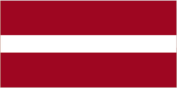
<strong>description:</strong> three horizontal bands of maroon (top), white (half-width), and maroon<br><br><strong>history:</strong> the flag is one of the older banners in the world -- a medieval chronicle mentions Latvian tribes using a red standard with a white stripe around 1280
The flag of Latvia has a carmine-red field with a thin white horizontal band across the middle of the field.
- svg
- https://flagcdn.com/lv.svg
parliamentary republic
18 November 1918 (from Soviet Russia); 4 May 1990 (declared from the Soviet Union); 6 September 1991 (recognized by the Soviet Union)
has not submitted an ICJ jurisdiction declaration; accepts ICCt jurisdiction
Australia Group, BA, BIS, CBSS, CD, CE, EAPC, EBRD, ECB, EIB, EMU, ESA (cooperating state), EU, FAO, IAEA, IBRD, ICAO, ICC (NGOs), ICCt, ICRM, IDA, IFC, IFRCS, IHO, ILO, IMF, IMO, IMSO, Interpol, IOC, IOM, IPU, ISO (correspondent), ITU, ITUC (NGOs), MIGA, NATO, NIB, NSG, OAS (observer), OIF (observer), OPCW, OSCE, PCA, Schengen Convention, UN, UNCTAD, UNESCO, UNHCR, UNWTO, UPU, Wassenaar Arrangement, WCO, WHO, WIPO, WMO, WTO
- Highest court(s)
- Supreme Court (consists of the Senate with 36 judges); Constitutional Court (consists of 7 judges)
- Judge selection and term of office
- Supreme Court judges nominated by chief justice and confirmed by the Saeima; judges serve until age 70, but term can be extended 2 years; Constitutional Court judges - 3 nominated by Saeima members, 2 by Cabinet ministers, and 2 by plenum of Supreme Court; all judges confirmed by Saeima majority vote; Constitutional Court president and vice president serve in their positions for 3 years; all judges serve 10-year terms; mandatory retirement at age 70
- Subordinate courts
- district (city) and regional courts
civil law system with traces of socialist legal traditions and practices
- Electoral system
- proportional representation
- Expected date of next election
- October 2026
- Legislative structure
- unicameral
- Legislature name
- Parliament (Saeima)
- Most recent election date
- 10/1/2022
- Number of seats
- 100 (all directly elected)
- Parties elected and seats per party
- New Unity (VIENOTIBA) (26); Union of Farmers and Greens (ZZS) (16); United List - Latvian Green Party, Latvian Regional Alliance, Liepāja Party (15); National Alliance of All for Latvia!" - "For Fatherland and Freedom / LNNK" (NA) (13); For Stability! (11); Progressives (10); Latvia First (9)
- Percentage of women in chamber
- 31%
- Scope of elections
- full renewal
- Term in office
- 4 years
maroon, white
- Selected World Heritage Site locales
- Historic Center of Riga; Struve Geodetic Arc; Old town of Kuldīga
- Total World Heritage Sites
- 3 (all cultural)
- Independence Day (Republic of Latvia Proclamation Day), 18 November (1918)
- note
- <strong>note:</strong> 18 November 1918 was the date Latvia established its statehood and independence from Soviet Russia; 4 May 1990 was the date it declared the restoration of statehood and independence from the Soviet Union
white wagtail (bird)
For Stability or S!<br>For Latvia's Development or LA<br>Harmony or S<br>Honor to Serve Riga! or GKR<br>Latvia First or LPV<br>National Alliance or NA<br>New Unity or JV<br>People. Land. Statehood. or TZV<br>The Progressives or PRO<br>Union of Greens and Farmers or ZZS<br>United List or AS<br>We for Talsi and Municipality or MTuN
Monday
18 years of age; universal
Yes
Economy
- wheat, milk, rapeseed, barley, oats, potatoes, rye, beans, peas, chicken (2023)
- note
- <b>note:</b> top ten agricultural products based on tonnage
- On alcohol and tobacco
- 7.1% of household expenditures (2023 est.)
- On food
- 19.6% of household expenditures (2023 est.)
- Expenditures
- $15.432 billion (2023 est.)
- Note
- <b>note:</b> central government revenues (excluding grants) and expenditures converted to US dollars at average official exchange rate for year indicated
- Revenues
- $14.58 billion (2023 est.)
- code
- EUR
- name
- euro (EUR) [€]
- $-687,874,801
- Current account balance 2022
- -$2.082 billion (2022 est.)
- Current account balance 2023
- -$1.663 billion (2023 est.)
- Current account balance 2024
- -$923.266 million (2024 est.)
- Note
- <b>note:</b> balance of payments - net trade and primary/secondary income in current dollars
<p>high-income EU and eurozone member; weak recovery following economic contraction, with slight increase in private consumption and uncertain trade environment; challenges from skilled-labor shortages, capital market access, large informal sector, and green and digital transitions</p>
- Currency
- euros (EUR) per US dollar -
- Exchange rates 2020
- 0.876 (2020 est.)
- Exchange rates 2021
- 0.845 (2021 est.)
- Exchange rates 2022
- 0.95 (2022 est.)
- Exchange rates 2023
- 0.925 (2023 est.)
- Exchange rates 2024
- 0.924 (2024 est.)
- $28.54 billion
- Exports 2022
- $29.364 billion (2022 est.)
- Exports 2023
- $28.294 billion (2023 est.)
- Exports 2024
- $28.117 billion (2024 est.)
- Note
- <b>note:</b> balance of payments - exports of goods and services in current dollars
- wood, wheat, broadcasting equipment, packaged medicine, natural gas (2023)
- note
- <b>note:</b> top five export commodities based on value in dollars
- Lithuania 19%, Estonia 6%, Russia 6%, Germany 6%, Sweden 5% (2023)
- note
- <b>note:</b> top five export partners based on percentage share of exports
- net inflows
- $1.51 billion
- Exports of goods and services
- 66.5% (2023 est.)
- Government consumption
- 20.2% (2023 est.)
- Household consumption
- 62.7% (2023 est.)
- Imports of goods and services
- -70.2% (2023 est.)
- Investment in fixed capital
- 24.7% (2023 est.)
- Investment in inventories
- -0.1% (2023 est.)
- Note
- <b>note:</b> figures may not total 100% due to rounding or gaps in data collection
- Agriculture
- 4.1% (2024 est.)
- Industry
- 19.9% (2024 est.)
- Note
- <b>note:</b> figures may not total 100% due to non-allocated consumption not captured in sector-reported data
- Services
- 63.1% (2024 est.)
- $43.521 billion (2024 est.)
- note
- <b>note:</b> data in current dollars at official exchange rate
$23,409
- 35.1 (2018)
- Gini Index coefficient - distribution of family income 2022
- 33.7 (2022 est.)
- Note
- <b>note:</b> index (0-100) of income distribution; higher values represent greater inequality
$42.78 billion
$21,630
21 % of GDP
- Highest 10%
- 25.8% (2022 est.)
- Lowest 10%
- 2.6% (2022 est.)
- Note
- <b>note:</b> % share of income accruing to lowest and highest 10% of population
- $29.24 billion
- Imports 2022
- $31.206 billion (2022 est.)
- Imports 2023
- $29.875 billion (2023 est.)
- Imports 2024
- $29.234 billion (2024 est.)
- Note
- <b>note:</b> balance of payments - imports of goods and services in current dollars
- refined petroleum, cars, packaged medicine, broadcasting equipment, natural gas (2023)
- note
- <b>note:</b> top five import commodities based on value in dollars
- Lithuania 18%, Germany 11%, Poland 10%, Estonia 8%, Finland 5% (2023)
- note
- <b>note:</b> top five import partners based on percentage share of imports
- -4% (2024 est.)
- note
- <b>note:</b> annual % change in industrial value added based on constant local currency
processed foods, processed wood products, textiles, processed metals, pharmaceuticals, railroad cars, synthetic fibers, electronics
- 1.27%
- Inflation rate (consumer prices) 2022
- 17.3% (2022 est.)
- Inflation rate (consumer prices) 2023
- 8.9% (2023 est.)
- Inflation rate (consumer prices) 2024
- 1.3% (2024 est.)
- Note
- <b>note:</b> annual % change based on consumer prices
- 954,900 (2024 est.)
- note
- <b>note:</b> number of people ages 15 or older who are employed or seeking work
- total
- 946,983 persons
- agriculture
- 6.66%
- industry
- 21.84%
- services
- 71.5%
- 22.5% (2022 est.)
- note
- <b>note:</b> % of population with income below national poverty line
- Note
- <strong>note:</strong> data cover general government debt, and includes debt instruments issued (or owned) by government entities, including sub-sectors of central government, state government, local government, and social security funds
- Public debt 2017
- 36.3% of GDP (2017 est.)
- $80.98 billion
- Note
- <b>note:</b> data in 2021 dollars
- Real GDP (purchasing power parity) 2022
- $70.817 billion (2022 est.)
- Real GDP (purchasing power parity) 2023
- $72.838 billion (2023 est.)
- Real GDP (purchasing power parity) 2024
- $72.516 billion (2024 est.)
- -0.05%
- Note
- <b>note:</b> annual GDP % growth based on constant local currency
- Real GDP growth rate 2022
- 1.8% (2022 est.)
- Real GDP growth rate 2023
- 2.9% (2023 est.)
- Real GDP growth rate 2024
- -0.4% (2024 est.)
- $43,394
- Note
- <b>note:</b> data in 2021 dollars
- Real GDP per capita 2022
- $37,700 (2022 est.)
- Real GDP per capita 2023
- $38,800 (2023 est.)
- Real GDP per capita 2024
- $38,900 (2024 est.)
- $1.34 billion
- Note
- <b>note:</b> personal transfers and compensation between resident and non-resident individuals/households/entities
- Remittances 2022
- 3.4% of GDP (2022 est.)
- Remittances 2023
- 2.9% of GDP (2023 est.)
- Remittances 2024
- 3.1% of GDP (2024 est.)
- $5.14 billion
- Note
- <b>note:</b> holdings of gold (year-end prices)/foreign exchange/special drawing rights in current dollars
- Reserves of foreign exchange and gold 2022
- $4.46 billion (2022 est.)
- Reserves of foreign exchange and gold 2023
- $4.957 billion (2023 est.)
- Reserves of foreign exchange and gold 2024
- $5.141 billion (2024 est.)
32 % of GDP
17 % of GDP
- 16.7% (of GDP) (2023 est.)
- note
- <b>note:</b> central government tax revenue as a % of GDP
- 6.57%
- Note
- <b>note:</b> % of labor force seeking employment
- Unemployment rate 2022
- 6.9% (2022 est.)
- Unemployment rate 2023
- 6.5% (2023 est.)
- Unemployment rate 2024
- 6.8% (2024 est.)
- Female
- 11.9% (2024 est.)
- Male
- 13% (2024 est.)
- Note
- <b>note:</b> % of labor force ages 15-24 seeking employment
- Total
- 12.5% (2024 est.)
Energy
- Consumption
- 20,000 metric tons (2023 est.)
- Exports
- 12,000 metric tons (2023 est.)
- Imports
- 39,000 metric tons (2023 est.)
- Consumption
- 6.822 billion kWh (2023 est.)
- consumption per capita
- 3,617 kWh
- Exports
- 3.271 billion kWh (2023 est.)
- Imports
- 4.075 billion kWh (2023 est.)
- Installed generating capacity
- 3.428 million kW (2023 est.)
- Transmission/distribution losses
- 342.238 million kWh (2023 est.)
- Electrification - total population
- 100% (2022 est.)
- Biomass and waste
- 10.4% of total installed capacity (2023 est.)
- Fossil fuels
- 22.4% of total installed capacity (2023 est.)
- hydroelectric
- 59.4%
- Hydroelectricity
- 59.3% of total installed capacity (2023 est.)
- nuclear
- 0%
- renewable
- 63.6%
- Solar
- 3.8% of total installed capacity (2023 est.)
- Wind
- 4.2% of total installed capacity (2023 est.)
- 2,240 kg of oil equivalent
- Total energy consumption per capita 2023
- 65.908 million Btu/person (2023 est.)
- Consumption
- 786.523 million cubic meters (2023 est.)
- Imports
- 786.523 million cubic meters (2023 est.)
- Refined petroleum consumption
- 33,000 bbl/day (2024 est.)
- Total petroleum production
- 2,000 bbl/day (2023 est.)
44%
Communications
- per 100 inhabitants
- 26 per 100
- Subscriptions per 100 inhabitants
- 26 (2023 est.)
- Total
- 489,000 (2023 est.)
several national and regional commercial TV stations are foreign-owned, 2 national TV stations are publicly owned; system supplemented by privately owned regional and local TV stations; cable and satellite multi-channel TV services with domestic and foreign broadcasts available; publicly owned broadcaster operates 4 radio networks with dozens of stations; dozens of private broadcasters also operate radio stations
.lv
- Percent of population
- 92% (2023 est.)
LV-####
+371
- Subscriptions per 100 inhabitants
- 8 (2023 est.)
- Total subscriptions
- 142,000 (2023 est.)
- subscriptions per 100
- 120 per 100
- Subscriptions per 100 inhabitants
- 121 (2024 est.)
- Total subscriptions
- 2.27 million (2024 est.)
Transportation
- passengers carried
- 4.48 million passengers
- registered carrier departures
- 43,243 departures
55 (2025)
YL
Right
5 (2025)
- By type
- container ship 2, general cargo 30, oil tanker 10, other 41
- Total
- 83 (2023)
- Key ports
- Lielupe, Liepaja, Riga, Salacgriva, Ventspils
- Large
- 1
- Medium
- 2
- Ports with oil terminals
- 3
- Small
- 0
- Total ports
- 5 (2024)
- Very small
- 2
- Total
- 2,216 km (2020) 257 km electrified
LV
Military and Security
- armored vehicles
- tanks
the National Armed Forces are responsible for the defense of the country’s sovereignty and territory; they also have some domestic security responsibilities, including coast guard functions, search and rescue, humanitarian assistance, and providing support to other internal security services; the Military Police provides protection to the president and other government officials, foreign dignitaries, and key facilities; Latvia’s primary external security focus is Russia<br><br>in 2004, Latvia joined NATO and the EU, both of which it depends on to play a decisive role in Latvia’s security policy; the Latvian military has participated in EU and NATO missions abroad and regularly conducts training and exercises with EU and NATO partner forces; Latvia also hosts NATO partner forces; since 2017, it has hosted a Canadian-led multinational NATO ground force battlegroup as part of the Alliance’s Enhanced Forward Presence initiative; in addition, NATO has provided air protection for Latvia since 2004 through its Baltics Air Policing mission<br><br>Latvia is a member of the UK-led Joint Expeditionary Force, a pool of high-readiness military forces from 10 Baltic and Scandinavian countries designed to respond to a wide range of contingencies in the North Atlantic, Baltic Sea, and High North regions (2025)
- National Armed Forces (Nacionalie Brunotie Speki or NBS): Land Forces (Latvijas Sauszemes Speki), Naval Force (Latvijas Juras Speki, includes Coast Guard (Latvijas Kara Flote)), Air Force (Latvijas Gaisa Speki), National Guard (aka Land Guard or Zemessardze)<br><br>Ministry of Interior: State Police, State Border Guards, State Security Service (2025)
- active duty personnel
- 9,000
- note
- <strong>note: </strong>the State Border Guard may become part of the armed forces during an emergency
- percent of total labor force
- 0.92 %
approximately 9,000 active-duty military personnel (2025)
140 Kosovo (KFOR/NATO) (2025)
the Latvian military's inventory consists of European and US armaments (2025)
- 3 % of GDP
- current USD
- $1,425,694,079
- Military Expenditures 2021
- 2.2% of GDP (2021 est.)
- Military Expenditures 2022
- 2.3% of GDP (2022 est.)
- Military Expenditures 2023
- 3% of GDP (2023 est.)
- Military Expenditures 2024
- 3.4% of GDP (2024 est.)
- Military Expenditures 2025
- 3.7% of GDP (2025 est.)
- percent of central government expenditure
- 7.49 %
- percent of GDP
- 3.26 % of GDP
- mandatory military service for all men 18-24; men and women 18-27 may volunteer for military service; service length 11 months in the Armed Forces or National Guard, or 5 years in the National Guard as a whole, with a minimum of 21 days of individual training and a maximum of 7 days of collective training each year (2026)
- note
- <strong>note 1:</strong> conscription was reintroduced in 2024<br><br><strong>note 2:</strong> as of 2024, women comprised about 16.5% of the military's full-time personnel
- PowerIndex score
- 2.2316
Transnational Issues
- Refugees
- 49,483 (2024 est.)
- Stateless persons
- 173,891 (2024 est.)
Environment
- From coal and metallurgical coke
- 41,000 metric tonnes of CO2 (2023 est.)
- From consumed natural gas
- 1.526 million metric tonnes of CO2 (2023 est.)
- From petroleum and other liquids
- 4.861 million metric tonnes of CO2 (2023 est.)
- Total emissions
- 6.427 million metric tonnes of CO2 (2023 est.)
some soil, water, and air pollution
- Party to
- Air Pollution, Air Pollution-Heavy Metals, Air Pollution-Multi-effect Protocol, Air Pollution-Persistent Organic Pollutants, Biodiversity, Climate Change, Climate Change-Kyoto Protocol, Climate Change-Paris Agreement, Comprehensive Nuclear Test Ban, Desertification, Endangered Species, Hazardous Wastes, Law of the Sea, Ozone Layer Protection, Ship Pollution, Tropical Timber 2006, Wetlands
- Signed, but not ratified
- none of the selected agreements
15.6 micrograms per cubic meter (2019 est.)
18 % of total land area
17 % of total
34.94 billion cubic meters (2022 est.)
- 1 % of internal resources
- Agricultural
- 50.098 million cubic meters (2022)
- Industrial
- 30.291 million cubic meters (2022)
- Municipal
- 91.945 million cubic meters (2022)
- Municipal solid waste generated annually
- 839,700 tons (2024 est.)
- Percent of municipal solid waste recycled
- 31.3% (2022 est.)