Introduction
A land of vast distances and rich natural resources, Canada became a self-governing dominion in 1867, while retaining ties to the British crown. Canada gained legislative independence from Britain in 1931 and formalized its constitutional independence from the UK when it passed the Canada Act in 1982. Economically and technologically, the nation has developed in parallel with the US, its neighbor to the south across the world's longest international border. Canada faces the political challenges of meeting public demands for quality improvements in health care, education, social services, and economic competitiveness, as well as responding to the particular concerns of predominantly francophone Quebec. Canada also aims to develop its diverse energy resources while maintaining its commitment to the environment.
Geography
- Land
- 9,093,507 sq km
- Total
- 9,984,670 sq km
- Water
- 891,163 sq km
slightly larger than the US
varies from temperate in south to subarctic and arctic in north
- 202,080 km
- note
- <strong>note:</strong> the Canadian Arctic Archipelago -- consisting of 36,563 islands, several of them among the world's largest -- gives Canada the longest coastline in the world
North America
- Highest point
- Mount Logan 5,959 m
- Lowest point
- Atlantic/Pacific/Arctic Oceans 0 m
- Mean elevation
- 487 m
60 00 N, 95 00 W
<strong>note 1:</strong> second-largest country in the world (after Russia) and largest in the Americas; strategic location between Russia and US via north polar route; approximately 90% of the population is concentrated within 160 km (100 mi) of the US border <br><br><strong>note 2:</strong> Canada has more fresh water than any other country, and almost 9% of Canadian territory is water; Canada has at least 2 million and possibly over 3 million lakes, more than all other countries combined
9,045 sq km (2015)
- Border countries
- US 8,891 km (includes 2,475 km with Alaska); Denmark (Greenland) 1.3 km
- number of neighbors
- 1
- Total
- 8,892 km
- Agricultural land
- 6.5% (2023 est.)
- Agricultural land: arable land
- arable land: 4.3% (2023 est.)
- Agricultural land: permanent crops
- permanent crops: 0% (2023 est.)
- Agricultural land: permanent pasture
- permanent pasture: 2.1% (2023 est.)
- arable land
- 4.34%
- Forest
- 42% (2023 est.)
- Other
- 51.4% (2023 est.)
- permanent crops
- 0.02%
No
Northern North America, bordering the North Atlantic Ocean on the east, North Pacific Ocean on the west, and the Arctic Ocean on the north, north of the conterminous US
Northern Great Plains Aquifer
- Fresh water lake(s)
- Huron* - 35,972 sq km; Great Bear Lake - 31,328 sq km; Superior* - 28,754 sq km; Great Slave Lake - 28,568 sq km; Lake Winnipeg - 24,387 sq km; Erie* - 12,776 sq km; Ontario* - 9,790 sq km; Lake Athabasca - 7,935 sq km; Reindeer Lake - 6,650 sq km; Nettilling Lake - 5,542 sq km<br>note - Great Lakes* area shown as Canadian waters
Mackenzie - 4,241 km; Yukon river source (shared with the US [m]) - 3,185 km; Saint Lawrence river mouth (shared with US) - 3,058 km; Nelson - 2,570 km; Columbia river source (shared with the US [m]) - 1,953 km; Churchill - 1,600 km; Fraser - 1,368 km; Ottawa - 1,271 km; Athabasca - 1,231 km; North Saskatchewan - 1,220 km; Liard - 1,115 km<br><br><strong>note:</strong> [s] after country name indicates river source; [m] after country name indicates river mouth
- Arctic Ocean drainage
- Mackenzie (1,706,388 sq km)
- Atlantic Ocean drainage
- Mississippi* <em>(Gulf of America)</em> (3,202,185 sq km, Canada only 32,000 sq km), Nelson <em>(Hudson Bay)</em> (1,093,141 sq km), Saint Lawrence* (1,049,636 sq km, Canada only 839,200 sq km)
- Note
- <strong>note:</strong> watersheds shared with the US shown with *
- Pacific Ocean drainage
- Yukon* (847,620 sq km, Canada only 823,800 sq km), Columbia* (657,501 sq km, Canada only 103,000 sq km)
- Google Maps
- https://goo.gl/maps/jmEVLugreeqiZXxbA
- OpenStreetMap
- https://www.openstreetmap.org/relation/1428125
North America
- Contiguous zone
- 24 nm
- Continental shelf
- 200 nm or to the edge of the continental margin
- Exclusive economic zone
- 200 nm
- Territorial sea
- 12 nm
continuous permafrost in north is a serious obstacle to development; cyclonic storms form east of the Rocky Mountains, a result of the mixing of air masses from the Arctic, Pacific, and North American interior, and produce most of the country's rain and snow east of the mountains <br><br><strong>volcanism:</strong> the vast majority of volcanoes in Western Canada's Coast Mountains remain dormant
bauxite, iron ore, nickel, zinc, copper, gold, lead, uranium, rare earth elements, molybdenum, potash, diamonds, silver, fish, timber, wildlife, coal, petroleum, natural gas, hydropower
vast majority of the population lives in a discontinuous band within approximately 300 km (186 mi) of the southern border with the United States; the most populated province is Ontario, followed by Quebec and British Columbia
North America
mostly plains with mountains in west, lowlands in southeast
- UTC-08:00, UTC-07:00, UTC-06:00, UTC-05:00, UTC-04:00, UTC-03:30
- number of time zones
- 6
People and Society
- 0-14 years
- 15.5% (male 3,098,478/female 2,929,148)
- 15-64 years
- 63.4% (male 12,382,422/female 12,227,512)
- 65 years and over
- 21% (2024 est.) (male 3,753,829/female 4,403,424)
- Beer
- 3.5 liters of pure alcohol (2019 est.)
- Other alcohols
- 0.4 liters of pure alcohol (2019 est.)
- Spirits
- 2.1 liters of pure alcohol (2019 est.)
- Total
- 8 liters of pure alcohol (2019 est.)
- Wine
- 2 liters of pure alcohol (2019 est.)
9.12 births/1,000 population (2025 est.)
51.6% (2021 est.)
- 7.75 deaths/1,000 population (2025 est.)
- adult female
- 55 per 1,000
- adult male
- 95 per 1,000
- Elderly dependency ratio
- 33.9 (2025 est.)
- Potential support ratio
- 2.9 (2025 est.)
- Total dependency ratio
- 57.7 (2025 est.)
- Youth dependency ratio
- 23.8 (2025 est.)
- improved total
- 96.89%
- Improved: rural
- rural: 99.1% of population (2022 est.)
- Improved: total
- total: 99.2% of population (2022 est.)
- Improved: urban
- urban: 99.3% of population (2022 est.)
- Unimproved: rural
- rural: 0.9% of population (2022 est.)
- Unimproved: total
- total: 0.8% of population (2022 est.)
- Unimproved: urban
- urban: 0.7% of population (2022 est.)
- Education expenditure (% GDP)
- 4.9% of GDP (2022 est.)
- Education expenditure (% national budget)
- 10.7% national budget (2022 est.)
5 % of GDP
- Canadian 15.6%, English 14.7%, Scottish 12.1%, French 11%, Irish 12.1%, German 8.1%, Chinese 4.7%, Italian 4.3%, First Nations 1.7%, Indian 3.7%, Ukrainian 3.5%, Metis 1.5% (2021 est.)
- note
- <strong>note:</strong> percentages add up to more than 100% because respondents were able to identify more than one ethnic origin
0.7 (2025 est.)
- 11 % of GDP
- Health expenditure (as % of GDP)
- 11.2% of GDP (2022)
- Health expenditure (as % of national budget)
- 19.5% of national budget (2022 est.)
0.1%
2.6 beds/1,000 population (2020 est.)
- Female
- 4 deaths/1,000 live births
- Male
- 4.5 deaths/1,000 live births
- neonatal
- 3 deaths/1,000 live births
- Total
- 3.8 deaths/1,000 live births (2025 est.)
- Languages
- English (official) 87.1%, French (official) 29.1%, Chinese languages 4.2%, Spanish 3.2%, Punjabi 2.6%, Arabic 2.4%, Tagalog 2.3%, Italian 1.5% (2022 est.)
- Major-language sample(s)
- <br>The World Factbook, the indispensable source for basic information. (English)<br><br>The World Factbook, une source indispensable d'informations de base. (French)
- number of languages
- 2
- Female
- 86.6 years
- Male
- 81.9 years
- Total population
- 84.2 years (2024 est.)
6.372 million Toronto, 4.308 million Montreal, 2.657 million Vancouver, 1.640 million Calgary, 1.544 million Edmonton, 1.437 million OTTAWA (capital) (2023)
12 deaths/100,000 live births (2023 est.)
- Female
- 43.8 years
- Male
- 41.4 years
- Total
- 42.8 years (2025 est.)
29.4 years (2019 est.)
- Adjective
- Canadian
- Noun
- Canadian(s)
5.91 migrant(s)/1,000 population (2025 est.)
29.4% (2016)
2.82 physicians/1,000 population (2023)
- Female
- 19,671,739
- Male
- 19,515,416
- Total
- 39,187,155 (2025 est.)
0.73% (2025 est.)
Christian 53.3%, Muslim 4.9%, Hindu 2.3%, Sikh 2.1%, Buddhist 1%, Jewish 0.9%, Traditional (North American Indigenous) 0.2%, other religions and traditional spirituality 0.6%, none 34.6% (2021 est.)
- improved total
- 81.3%
- Improved: rural
- rural: 98.8% of population (2022 est.)
- Improved: total
- total: 98.6% of population (2022 est.)
- Improved: urban
- urban: 98.6% of population (2022 est.)
- Unimproved: rural
- rural: 1.2% of population (2022 est.)
- Unimproved: total
- total: 1.4% of population (2022 est.)
- Unimproved: urban
- urban: 1.4% of population (2022 est.)
- Female
- 17 years (2022 est.)
- Male
- 15 years (2022 est.)
- Total
- 16 years (2022 est.)
- 0-14 years
- 1.06 male(s)/female
- 15-64 years
- 1.01 male(s)/female
- 65 years and over
- 0.85 male(s)/female
- At birth
- 1.05 male(s)/female
- Total population
- 0.98 male(s)/female (2024 est.)
- Female
- 8% (2025 est.)
- Male
- 12.3% (2025 est.)
- Total
- 10.1% (2025 est.)
1.43 children born/woman (2025 est.)
- Rate of urbanization
- 0.95% annual rate of change (2020-25 est.)
- Urban population
- 81.9% of total population (2023)
- measles
- 92%
Government
10 provinces and 3 territories*; Alberta, British Columbia, Manitoba, New Brunswick, Newfoundland and Labrador, Northwest Territories*, Nova Scotia, Nunavut*, Ontario, Prince Edward Island, Québec, Saskatchewan, Yukon*
- Daylight saving time
- +1hr, begins second Sunday in March; ends first Sunday in November
- Etymology
- the city lies on the south bank of the Ottawa River, from which it derives its name; the river name comes from the Algonquin word <em>adawe</em>, meaning "to trade"
- Geographic coordinates
- 45 25 N, 75 42 W
- Name
- Ottawa
- Time difference
- UTC-5 (same time as Washington, DC, during Standard Time)
- Time zone note
- Canada has six time zones
- Citizenship by birth
- yes
- Citizenship by descent only
- yes
- Dual citizenship recognized
- yes
- Residency requirement for naturalization
- minimum of 3 of last 5 years resident in Canada
- svg
- https://mainfacts.com/media/images/coats_of_arms/ca.svg
- Amendment process
- proposed by either house of Parliament or by the provincial legislative assemblies; there are 5 methods for passage though most require approval by both houses of Parliament, approval of at least two thirds of the provincial legislative assemblies and assent and formalization as a proclamation by the governor general in council; the most restrictive method is reserved for amendments affecting fundamental sections of the constitution, such as the office of the monarch or the governor general, and the constitutional amendment procedures, which require unanimous approval by both houses and by all the provincial assemblies, and assent of the governor general in council
- History
- consists of unwritten and written acts, customs, judicial decisions, and traditions dating from 1763; the written part of the constitution consists of the Constitution Act of 29 March 1867, which created a federation of four provinces, and the Constitution Act of 17 April 1982
- alternative spellings
- CA
- Conventional long form
- none
- Conventional short form
- Canada
- Etymology
- the name is probably derived from the Huron or Iroquois word <em>kanata</em>, meaning village or camp
- FIFA code
- CAN
- local long form (eng)
- Canada
- Chief of mission
- Ambassador Pete HOEKSTRA (since 29 April 2025)
- Consulate(s)
- Winnipeg
- Consulate(s) general
- Calgary, Halifax, Montreal, Quebec City, Toronto, Vancouver
- Email address and website
- <br>OttawaNIV@state.gov<br><br>https://ca.usembassy.gov/
- Embassy
- 490 Sussex Drive, Ottawa, Ontario K1N 1G8
- FAX
- [1] (613) 241-7845
- Mailing address
- 5480 Ottawa Place, Washington DC 20521-5480
- Telephone
- [1] (613) 688-5335
- Chancery
- 501 Pennsylvania Avenue NW, Washington, DC 20001
- Chief of mission
- Ambassador Kirsten HILLMAN (since 17 July 2020)
- Consulate(s) general
- Atlanta, Boston, Chicago, Dallas, Denver, Detroit, Los Angeles, Miami, Minneapolis, New York, San Francisco, Seattle
- Email address and website
- <br>ccs.scc@international.gc.ca<br><br>https://www.international.gc.ca/country-pays/us-eu/washington.aspx?lang=eng
- FAX
- [1] (202) 682-7738
- Telephone
- [1] (844) 880-6519
- Trade office(s)
- Houston, Palo Alto (CA), San Diego; note - there are trade offices in the Consulates General
- Cabinet
- Federal Ministry chosen by the prime minister usually from among members of his/her own party sitting in Parliament
- Chief of state
- King CHARLES III (since 8 September 2022); represented by Governor General Mary SIMON (since 26 July 2021)
- Election/appointment process
- the monarchy is hereditary; governor general appointed by the monarch on the advice of the prime minister for a 5-year term; after legislative elections, the governor general usually designates the leader of the majority party or majority coalition in the House of Commons as prime minister
- Head of government
- Prime Minister Mark CARNEY (since 14 March 2025)
- Note
- <strong>note:</strong> the governor general position is largely ceremonial
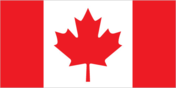
<strong>description:</strong> two vertical bands of red on each side, with a white square between them; a large 11-pointed red maple leaf is centered in the white square<br><br><strong>meaning:</strong> the maple leaf is a national symbol
The flag of Canada is composed of a red vertical band on the hoist and fly sides and a central white square that is twice the width of the vertical bands. A large eleven-pointed red maple leaf is centered in the white square.
- svg
- https://flagcdn.com/ca.svg
federal parliamentary democracy (Parliament of Canada) under a constitutional monarchy; a Commonwealth realm; federal and state authorities and responsibilities regulated in constitution
1 July 1867 (union of British North American colonies); 11 December 1931 (recognized by UK per Statute of Westminster)
accepts compulsory ICJ jurisdiction with reservations; accepts ICCt jurisdiction
ADB (nonregional member), AfDB (nonregional member), APEC, Arctic Council, ARF, ASEAN (dialogue partner), Australia Group, BIS, C, CD, CDB, CE (observer), EAPC, EBRD, EITI (implementing country), FAO, FATF, G-7, G-8, G-10, G-20, IADB, IAEA, IBRD, ICAO, ICC (national committees), ICCt, ICRM, IDA, IEA, IFAD, IFC, IFRCS, IGAD (partners), IHO, ILO, IMF, IMO, IMSO, Interpol, IOC, IOM, IPU, ISO, ITSO, ITU, ITUC (NGOs), MIGA, MINUSTAH, MONUSCO, NAFTA, NATO, NEA, NSG, OAS, OECD, OIF, OPCW, OSCE, Pacific Alliance (observer), Paris Club, PCA, PIF (partner), UN, UNCTAD, UNESCO, UNFICYP, UNHCR, UNMISS, UNOOSA, UNRWA, UNTSO, UPU, USMCA, Wassenaar Arrangement, WCO, WFTU (NGOs), WHO, WIPO, WMO, WTO, ZC
- Highest court(s)
- Supreme Court of Canada (consists of the chief justice and 8 judges)
- Judge selection and term of office
- chief justice and judges appointed by the prime minister in council; all judges appointed for life with mandatory retirement at age 75
- Note
- <strong>note:</strong> in 1999, the Nunavut Court -- a circuit court with the power of a provincial superior court, as well as a territorial court -- was established to serve isolated settlements
- Subordinate courts
- federal level: Federal Court of Appeal; Federal Court; Tax Court; federal administrative tribunals; Courts Martial; provincial/territorial level: provincial superior, appeals, first instance, and specialized courts
common law system except in Quebec, where civil law based on the French civil code prevails
- Legislative structure
- bicameral
- Legislature name
- Parliament of Canada - Parlement du Canada
- Chamber name
- House of Commons
- Electoral system
- plurality/majority
- Expected date of next election
- October 2029
- Most recent election date
- 4/28/2025
- Number of seats
- 343 (all directly elected)
- Parties elected and seats per party
- Liberal Party (169); Conservative Party (144); Bloc Québécois (BQ) (22); Other (30)
- Percentage of women in chamber
- 30.3%
- Scope of elections
- full renewal
- Term in office
- 4 years
- Chamber name
- Senate
- Number of seats
- 105 (all appointed)
- Percentage of women in chamber
- 54.8%
<p>The current design of the Royal Coat of Arms of Canada was adopted in 1921 and references the four nations that helped found Canada. England is represented with royal lions, a union flag, and a rose, and Scotland with a royal lion, a unicorn, and a thistle. Ireland’s symbols include a harp and a shamrock, and France’s symbols are a royal fleur-de-lis and a royal flag. The maple leaves are the Canadian national symbol. A red circle displays the motto <em>Desiderantes Meliorem Patriam</em> (Desiring a Better Country), and a blue ribbon displays <em>A Mari usque ad Mare</em> (From Sea to Sea).</p>
red, white
- Selected World Heritage Site locales
- L'Anse aux Meadows (c); Canadian Rocky Mountain Parks (n); Dinosaur Provincial Park (n); Historic District of Old Quebec (c); Old Town Lunenburg (c); Wood Buffalo National Park (n); Head-Smashed-In Buffalo Jump (c); Gros Morne National Park (n); Pimachiowin Aki (m)
- Total World Heritage Sites
- 22 (10 cultural, 11 natural, 1 mixed) (2021)
Canada Day, 1 July (1867)
maple leaf, beaver
Bloc Québécois<br>Conservative Party of Canada or CPC<br>Green Party of Canada<br>Liberal Party of Canada<br>New Democratic Party
Sunday
18 years of age; universal
Yes
Economy
- wheat, rapeseed, maize, milk, barley, soybeans, potatoes, peas, oats, pork (2023)
- note
- <b>note:</b> top ten agricultural products based on tonnage
- On alcohol and tobacco
- 3.5% of household expenditures (2023 est.)
- On food
- 9.7% of household expenditures (2023 est.)
- Expenditures
- $417.421 billion (2023 est.)
- Note
- <b>note:</b> central government revenues (excluding grants) and expenditures converted to US dollars at average official exchange rate for year indicated
- Revenues
- $428.312 billion (2023 est.)
- code
- CAD
- name
- Canadian dollar (CAD) [$]
- $-10,348,860,554
- Current account balance 2022
- -$6.318 billion (2022 est.)
- Current account balance 2023
- -$13.764 billion (2023 est.)
- Current account balance 2024
- -$10.349 billion (2024 est.)
- Note
- <b>note:</b> balance of payments - net trade and primary/secondary income in current dollars
<p>high-income economy and second-largest US trading partner; key timber, oil, and gas industries; trade uncertainties and weak business investments contributing to economic slowdown; high and growing public debt; inflation moderating but remains above target range</p>
- Currency
- Canadian dollars (CAD) per US dollar -
- Exchange rates 2020
- 1.341 (2020 est.)
- Exchange rates 2021
- 1.254 (2021 est.)
- Exchange rates 2022
- 1.302 (2022 est.)
- Exchange rates 2023
- 1.35 (2023 est.)
- Exchange rates 2024
- 1.369 (2024 est.)
- $727.92 billion
- Exports 2022
- $743.782 billion (2022 est.)
- Exports 2023
- $724.754 billion (2023 est.)
- Exports 2024
- $727.831 billion (2024 est.)
- Note
- <b>note:</b> balance of payments - exports of goods and services in current dollars
- crude petroleum, cars, gold, natural gas, refined petroleum (2023)
- note
- <b>note:</b> top five export commodities based on value in dollars
- USA 71%, China 5%, UK 3%, Japan 2%, Mexico 2% (2023)
- note
- <b>note:</b> top five export partners based on percentage share of exports
- net inflows
- $63.05 billion
- Exports of goods and services
- 33.3% (2023 est.)
- Government consumption
- 20.9% (2023 est.)
- Household consumption
- 54.4% (2023 est.)
- Imports of goods and services
- -33.3% (2023 est.)
- Investment in fixed capital
- 22.9% (2023 est.)
- Investment in inventories
- 1% (2023 est.)
- Note
- <b>note:</b> figures may not total 100% due to rounding or gaps in data collection
- Agriculture
- 1.6% (2021 est.)
- Industry
- 25.3% (2021 est.)
- Note
- <b>note:</b> figures may not total 100% due to non-allocated consumption not captured in sector-reported data
- Services
- 66.4% (2021 est.)
- $2.241 trillion (2024 est.)
- note
- <b>note:</b> data in current dollars at official exchange rate
$54,340
- 33.3 (2017)
- Gini Index coefficient - distribution of family income 2020
- 29.9 (2020 est.)
- Note
- <b>note:</b> index (0-100) of income distribution; higher values represent greater inequality
$2.21 trillion
$53,400
23 % of GDP
- Highest 10%
- 23.4% (2020 est.)
- Lowest 10%
- 3.5% (2020 est.)
- Note
- <b>note:</b> % share of income accruing to lowest and highest 10% of population
- $733.81 billion
- Imports 2022
- $731.058 billion (2022 est.)
- Imports 2023
- $723.399 billion (2023 est.)
- Imports 2024
- $733.778 billion (2024 est.)
- Note
- <b>note:</b> balance of payments - imports of goods and services in current dollars
- cars, trucks, vehicle parts/accessories, refined petroleum, crude petroleum (2023)
- note
- <b>note:</b> top five import commodities based on value in dollars
- USA 51%, China 11%, Mexico 6%, Germany 3%, Japan 3% (2023)
- note
- <b>note:</b> top five import partners based on percentage share of imports
- 0% (2024 est.)
- note
- <b>note:</b> annual % change in industrial value added based on constant local currency
transportation equipment, chemicals, processed and unprocessed minerals, food products, wood and paper products, fish products, petroleum, natural gas
- 2.38%
- Inflation rate (consumer prices) 2022
- 6.8% (2022 est.)
- Inflation rate (consumer prices) 2023
- 3.9% (2023 est.)
- Inflation rate (consumer prices) 2024
- 2.4% (2024 est.)
- Note
- <b>note:</b> annual % change based on consumer prices
- 22.868 million (2024 est.)
- note
- <b>note:</b> number of people ages 15 or older who are employed or seeking work
- total
- 22.84 million persons
- agriculture
- 1.1%
- industry
- 18.75%
- services
- 80.15%
- 65 % of GDP
- Note
- <b>note:</b> central government debt as a % of GDP
- Public debt 2023
- 61.3% of GDP (2023 est.)
- $2.67 trillion
- Note
- <b>note:</b> data in 2021 dollars
- Real GDP (purchasing power parity) 2022
- $2.271 trillion (2022 est.)
- Real GDP (purchasing power parity) 2023
- $2.305 trillion (2023 est.)
- Real GDP (purchasing power parity) 2024
- $2.341 trillion (2024 est.)
- 1.55%
- Note
- <b>note:</b> annual GDP % growth based on constant local currency
- Real GDP growth rate 2022
- 4.2% (2022 est.)
- Real GDP growth rate 2023
- 1.5% (2023 est.)
- Real GDP growth rate 2024
- 1.5% (2024 est.)
- $64,610
- Note
- <b>note:</b> data in 2021 dollars
- Real GDP per capita 2022
- $58,300 (2022 est.)
- Real GDP per capita 2023
- $57,500 (2023 est.)
- Real GDP per capita 2024
- $56,700 (2024 est.)
- $851.44 million
- Note
- <b>note:</b> personal transfers and compensation between resident and non-resident individuals/households/entities
- Remittances 2022
- 0% of GDP (2022 est.)
- Remittances 2023
- 0% of GDP (2023 est.)
- Remittances 2024
- 0% of GDP (2024 est.)
- $119.78 billion
- Note
- <b>note:</b> holdings of gold (year-end prices)/foreign exchange/special drawing rights in current dollars
- Reserves of foreign exchange and gold 2022
- $106.952 billion (2022 est.)
- Reserves of foreign exchange and gold 2023
- $117.551 billion (2023 est.)
- Reserves of foreign exchange and gold 2024
- $119.778 billion (2024 est.)
21 % of GDP
14 % of GDP
- 13.8% (of GDP) (2023 est.)
- note
- <b>note:</b> central government tax revenue as a % of GDP
- 6.91%
- Note
- <b>note:</b> % of labor force seeking employment
- Unemployment rate 2022
- 5.3% (2022 est.)
- Unemployment rate 2023
- 5.5% (2023 est.)
- Unemployment rate 2024
- 6.5% (2024 est.)
- Female
- 12.1% (2024 est.)
- Male
- 13.8% (2024 est.)
- Note
- <b>note:</b> % of labor force ages 15-24 seeking employment
- Total
- 13% (2024 est.)
Energy
- Consumption
- 20.092 million metric tons (2023 est.)
- Exports
- 35.447 million metric tons (2023 est.)
- Imports
- 7.03 million metric tons (2023 est.)
- Production
- 50.687 million metric tons (2023 est.)
- Proven reserves
- 6.582 billion metric tons (2023 est.)
- Consumption
- 555.683 billion kWh (2023 est.)
- consumption per capita
- 14,460 kWh
- Exports
- 49.444 billion kWh (2023 est.)
- Imports
- 21.77 billion kWh (2023 est.)
- Installed generating capacity
- 161.988 million kW (2023 est.)
- Transmission/distribution losses
- 31.784 billion kWh (2023 est.)
- Electrification - total population
- 100% (2022 est.)
- Biomass and waste
- 1.4% of total installed capacity (2023 est.)
- Fossil fuels
- 18.9% of total installed capacity (2023 est.)
- hydroelectric
- 57%
- Hydroelectricity
- 58.6% of total installed capacity (2023 est.)
- Nuclear
- 13.7% of total installed capacity (2023 est.)
- renewable
- 67.02%
- Solar
- 1.4% of total installed capacity (2023 est.)
- Wind
- 6% of total installed capacity (2023 est.)
- 7,336 kg of oil equivalent
- Total energy consumption per capita 2023
- 311.599 million Btu/person (2023 est.)
- Consumption
- 131.887 billion cubic meters (2023 est.)
- Exports
- 82.537 billion cubic meters (2023 est.)
- Imports
- 29.058 billion cubic meters (2023 est.)
- Production
- 194.105 billion cubic meters (2023 est.)
- Proven reserves
- 2.067 trillion cubic meters (2021 est.)
- Net capacity of operational nuclear reactors
- 12.71GW (2025 est.)
- Number of nuclear reactors permanently shut down
- 8 (2025)
- Number of operational nuclear reactors
- 17 (2025)
- Percent of total electricity production
- 13.7% (2023 est.)
- Crude oil estimated reserves
- 170.3 billion barrels (2021 est.)
- Refined petroleum consumption
- 2.377 million bbl/day (2024 est.)
- Total petroleum production
- 5.688 million bbl/day (2023 est.)
23.8%
Communications
- per 100 inhabitants
- 43 per 100
- Subscriptions per 100 inhabitants
- 43 (2023 est.)
- Total
- 17 million (2023 est.)
2 public TV broadcasting networks, 1 in English and 1 in French, each with a large number of network affiliates; several private commercial networks, also with multiple network affiliates; a total of about 150 TV stations, accessible via multi-channel satellite and cable systems; mix of public and commercial radio, with over 1,000 licensed stations; public broadcaster Canadian Broadcasting Corporation (CBC) provides 4 radio networks, Radio Canada International, and radio services to ethnic populations in the north (2016)
.ca
- Percent of population
- 94% (2023 est.)
@#@ #@#
+1
- Subscriptions per 100 inhabitants
- 28 (2024 est.)
- Total subscriptions
- 11 million (2024 est.)
- subscriptions per 100
- 94 per 100
- Subscriptions per 100 inhabitants
- 94 (2024 est.)
- Total subscriptions
- 37.4 million (2024 est.)
Transportation
- passengers carried
- 88.62 million passengers
- registered carrier departures
- 1.08 million departures
1,459 (2025)
C
Right
506 (2025)
- By type
- bulk carrier 22, container ship 1, general cargo 78, oil tanker 15, other 600
- Total
- 716 (2023)
- Key ports
- Argentia, Canaport (St. John), Halifax, Hamilton, Montreal, New Westminster, Pond Inlet, Prince Rupert, Quebec, Sept Iles, St. John, Sydney, Thunder Bay, Toronto, Trois Rivieres, Vancouver, Victoria Harbor, Windsor
- Large
- 4
- Medium
- 14
- Ports with oil terminals
- 59
- Size unknown
- 59
- Small
- 58
- Total ports
- 284 (2024)
- Very small
- 149
- Standard gauge
- 49,422 km (2021) 1.435-m gauge
- Total
- 49,422 km (2021) note: 129 km electrified (2021)
CDN
Military and Security
- armored vehicles
- tanks
the Canadian Armed Forces (CAF) are responsible for external security; the CAF’s core missions include detecting, deterring, and defending against threats to or attacks on Canada; the military also provides assistance to civil authorities and law enforcement as needed for such missions as counterterrorism, search and rescue, and responding to natural disasters or other major emergencies; it regularly participates in bilateral and multinational training exercises with a variety of partners, including NATO (Canada is one of the original members) and the US; the CAF also contributes to international peacekeeping, stability, humanitarian, combat, and capacity building operations, principally through NATO, but also with the UN and other security partners<br><br>Canada is part of the North American Aerospace Defense Command (NORAD; established 1958); NORAD is a Canada/US bi-national military command responsible for monitoring and defending North American airspace; traditionally, a CAF officer has served as the deputy commander of NORAD; Canada’s defense relationship with the US extends back to the Ogdensburg Declaration of 1940, when the two countries formally agreed on military cooperation, including the establishment of the Permanent Joint Board on Defense (PJBD), which continues to be the highest-level bilateral defense forum between Canada and the US<br><br>British troops withdrew from Canada in 1871 as part of the US-UK Treaty of Washington; following the withdrawal, the first Canadian militia, known as the Royal Canadian Regiment, was organized in 1883 to protect Canadian territory and defend British interests abroad, which it did in the South African War (1899-1902), Canada’s first overseas conflict; militia units formed the backbone of the more than 425,000 Canadian soldiers that went to Europe during World War I in what was called the Canadian Expeditionary Force; the Royal Canadian Navy was created in 1910, while the Canadian Air Force was established in 1920 and became the Royal Canadian Air Force in 1924; the Canadian Army was officially founded in 1942; a unified Canadian Armed Forces was created in 1968 (2025)
- Canadian Forces: Canadian Army, Royal Canadian Navy, Royal Canadian Air Force (2025)
- active duty personnel
- 72,000
- note
- <strong>note 1: </strong>the CAF is comprised of both a Regular Force and a Reserve Force; the Reserve Force is comprised of the Primary Reserve, Canadian Rangers, Cadet Organizations Administration and Training Service, and the Supplementary Reserve; the Canadian Rangers are part of the Army Reserve Force and provide a limited presence in Canada's northern, coastal, and isolated areas for sovereignty, public safety, and surveillance roles <br><br><strong>note 2: </strong>the Royal Canadian Mounted Police (RCMP or "Mounties") are under the Department of Public Safety; the Coast Guard is under the Department of Fisheries and Oceans
- percent of total labor force
- 0.35 %
approximately 75,000 active-duty military personnel (2025)
- approximately 2,000 Latvia (NATO); the CAF also has air and naval assets supporting NATO missions (2025)
- note
- <strong>note:</strong> in 2024, Canada announced plans to have a full 2,000-person brigade deployed to Latvia by 2026
the CAF's inventory is a mix of domestically produced and imported weapons systems from Australia, Europe, Israel, the UK, and the US; in recent years, the leading supplier has been the US; Canada's defense industry develops, maintains, and produces a range of equipment, including aircraft, combat vehicles, naval vessels, and associated components; it also collaborates with the defense industries of allied countries such as the UK (2025)
- 1 % of GDP
- current USD
- $29,346,897,810
- Military Expenditures 2021
- 1.3% of GDP (2021 est.)
- Military Expenditures 2022
- 1.2% of GDP (2022 est.)
- Military Expenditures 2023
- 1.3% of GDP (2023 est.)
- Military Expenditures 2024
- 1.5% of GDP (2024 est.)
- Military Expenditures 2025
- 2% of GDP (2025 est.)
- percent of central government expenditure
- 3.08 %
- percent of GDP
- 1.31 % of GDP
- 17 years of age for men and women for voluntary military service (with parental consent); 16 years of age for Reserve and Military College applicants; Canadian citizenship or permanent residence status required; service obligation 3-9 years depending on the position (2025)
- note
- <strong>note 1:</strong> Canada opened up all military occupations to women in 2001; women in 2024 comprised about 16% of the CAF<br><br><strong>note 2: </strong>the CAF offers waivers to foreign nationals applying for military service only in exceptional cases — to individuals on international military exchanges, for example, or to candidates who have specialized skills in high demand
- PowerIndex score
- 0.5269
Transnational Issues
- USG identification
- <br>major precursor-chemical producer (2025)
- IDPs
- 1,981 (2024 est.)
- Refugees
- 561,551 (2024 est.)
- Stateless persons
- 8,166 (2024 est.)
Space
1959-1962 - launched first domestically built sounding rocket (Black Brant 1); first domestically designed and built satellite (Alouette) launched by US<br><br>1972-1973 - first domestic communications satellites (Anik A-1 and Anik A-2) launched by US, making Canada first country to employ satellites for domestic communications<br><br>1970s - began participating in US Space Shuttle (first Canadian in space on Shuttle in 1984) and US Mars probe/exploration programs<br><br>1995 - first Canadian-built, radar-capable remote sensing satellite (Radarsat-1) launched by US<br><br>2019 - began participating in US/NASA Lunar Gateway orbital station program; launched constellation of remote sensing satellites (RADARSAT Constellation Mission)<br><br>2020 - signed the US-led Artemis Accords for space exploration (active participant in planned Moon missions under the Artemis program)
Canadian Space Agency (CSA; established 1989) (2025)
- developing commercial space port sites in Nova Scotia and Newfoundland (2025)
- note
- <strong>note:</strong> the Churchill Rocket Research Range in Manitoba was used for rocket testing from 1956-1985
has a national space strategy and a long history of developing space-related technologies; designs, builds, operates, and tracks communications, remote sensing (RS), multi-mission, and scientific/testing satellites; has an astronaut program; involved in the development and production of advanced communications systems, lunar rovers, planetary probes, robotics, sensors, and space telescopes; participates in international space programs, including the International Space Station, the Hubble Space Telescope, the Square Kilometer Array radio telescope, and the James Webb Space Telescope; Cooperating State of the ESA since 1979 and participates in a variety of ESA programs, such as the Copernicus Earth observation project; works with numerous foreign space agencies and commercial entities, including those of Argentina, Brazil, individual ESA and EU member states, Japan, India, and particularly the US; has an active commercial space sector (2025)
Terrorism
- Hizballah; Islamic State of Iraq and ash-Sham (ISIS)
- note
- <strong>note:</strong> details about the history, aims, leadership, organization, areas of operation, tactics, targets, weapons, size, and sources of support of the group(s) appear(s) in the Terrorism reference guide
Environment
- From coal and metallurgical coke
- 32.486 million metric tonnes of CO2 (2023 est.)
- From consumed natural gas
- 259.171 million metric tonnes of CO2 (2023 est.)
- From petroleum and other liquids
- 294.196 million metric tonnes of CO2 (2023 est.)
- Total emissions
- 585.853 million metric tonnes of CO2 (2023 est.)
air pollution and acid rain from vehicle emissions, coal-burning, and metal smelting severely affecting lakes and forests; seawater pollution from agriculture, industry, mining, and forestry
- Global geoparks and regional networks
- Perce; Stonehammer; Tumbler Ridge; Cliffs of Fundy; Discovery (2023)
- Total global geoparks and regional networks
- 5
- Party to
- Air Pollution, Air Pollution-Heavy Metals, Air Pollution-Multi-effect Protocol, Air Pollution-Nitrogen Oxides, Air Pollution-Persistent Organic Pollutants, Air Pollution-Sulphur 85, Air Pollution-Sulphur 94, Antarctic-Environmental Protection, Antarctic-Marine Living Resources, Antarctic Treaty, Biodiversity, Climate Change, Climate Change-Paris Agreement, Comprehensive Nuclear Test Ban, Desertification, Endangered Species, Environmental Modification, Hazardous Wastes, Law of the Sea, Marine Dumping-London Convention, Marine Dumping-London Protocol, Nuclear Test Ban, Ozone Layer Protection, Ship Pollution, Wetlands
- Signed, but not ratified
- Air Pollution-Volatile Organic Compounds, Marine Life Conservation
- Agriculture
- 1,049.8 kt (2019-2021 est.)
- Energy
- 2,787.3 kt (2022-2024 est.)
- Other
- 39.3 kt (2019-2021 est.)
- Waste
- 816.7 kt (2019-2021 est.)
6.7 micrograms per cubic meter (2019 est.)
12 % of total land area
8 % of total
2.902 trillion cubic meters (2022 est.)
- 1 % of internal resources
- Agricultural
- 3.859 billion cubic meters (2022 est.)
- Industrial
- 27.357 billion cubic meters (2022 est.)
- Municipal
- 4.869 billion cubic meters (2022 est.)
- Municipal solid waste generated annually
- 25.103 million tons (2024 est.)
- Percent of municipal solid waste recycled
- 23.1% (2022 est.)