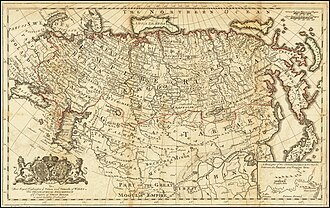
The history of Russia begins with the histories of the East Slavs. The traditional start date of specifically Russian history is the establishment of the Rus' state in the north in the year 862, ruled by Varangians. In 882, Prince Oleg of Novgorod seized Kiev, uniting the northern and southern lands of the Eastern Slavs under one authority, moving the governance center to Kiev by the end of the 10th century, and maintaining northern and southern parts with significant autonomy from each other. The state adopted Christianity from the Byzantine Empire in 988, beginning the synthesis of Byzantine, Slavic and Scandinavian cultures that defined Russian culture for the next millennium. Kievan Rus' ultimately disintegrated as a state due to the Mongol invasions in 1237–1240. After the 13th century, Moscow emerged as a significant political and cultural force, driving the unification of Russian territories. By the end of the 15th century, many of the petty principalities around Moscow had been united with the Grand Duchy of Moscow, which took full control of its own sovereignty under Ivan the Great.

Our Partners
Trusted partner applications powering global data and insights